Irish Traffic Signs Logo
Irish Traffic Signs
SignsBlogPenalty PointsAppFAQHelp CenterFavorites
TikTokInstagramFacebookThreadsX
Irish Traffic Signs

Learn Irish traffic signs with visual matching quizzes and detailed explanations. Free platform for drivers preparing for their test.

TikTokInstagramFacebookThreadsX

Learn

  • Traffic Signs
  • Signs & Meanings
  • Mobile App

Support

  • Help Center
  • FAQ
  • Penalty Points

Company

  • About Us
  • Privacy Policy
  • Terms of Service

© 2026 Irish Traffic Signs. All rights reserved.

This is not an official application. It is prepared for educational purposes.

Made with ❤️ for Irish drivers

HomeRegulatory SignsShared Route for Pedal Cycles and Pedestrians
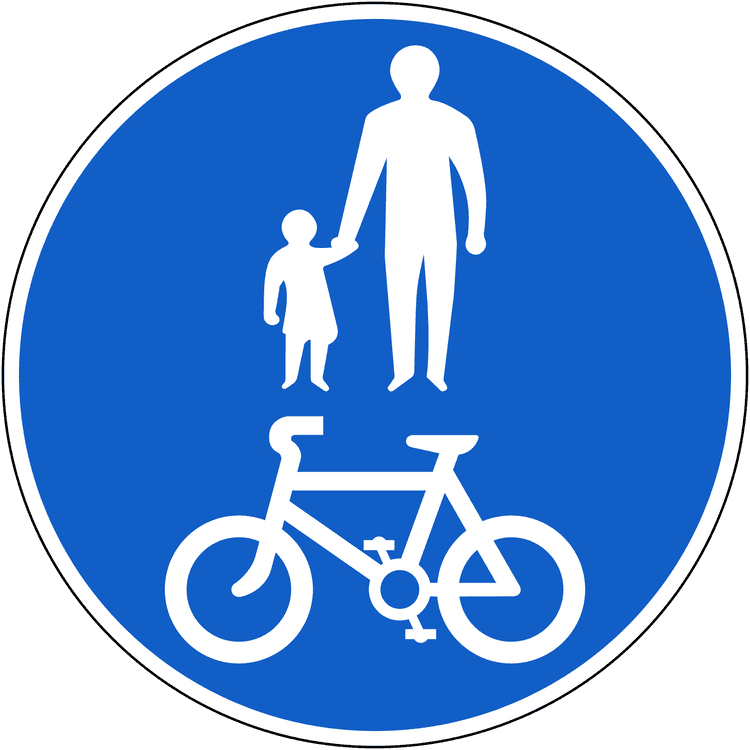
A regulatory road sign in Ireland enforcing shared route for pedal cycles and pedestrians. Essential for the Driving Theory Test.

Shared Route for Pedal Cycles and Pedestrians

AI Summary

Key Takeaways

A compact, citation-friendly overview of Shared Route for Pedal Cycles and Pedestrians.

GEO-ready
  • Meaning: 🤝 An unsegregated route to be shared by both cyclists and pedestrians.<br/>🚲 Cyclists should be courteous to pedestrians.<br/>🚶 Pedestrians should be aware of cyclists.
  • Category: Regulatory Signs
  • Action required: Cyclists and pedestrians share the entire path width without designated lanes for each user type. Both groups may use any part of the path but must exercise courtesy and caution. Cyclists should reduce speed to safe levels for pedestrian proximity (typically 10-15 km/h), ring bells or announce presence when overtaking, and give way to pedestrians. Pedestrians should remain aware of approaching cyclists and avoid blocking the full path width. Children, disability users, and dog walkers require extra consideration. Shared use means cooperation rather than right-of-way hierarchy.
  • Penalty note: Shared route violations rarely result in formal penalties, focusing instead on education and courtesy. Dangerous cycling causing pedestrian injuries results in civil liability and potential criminal charges under assault or dangerous cycling legislation. Cyclists exceeding appropriate shared-use speeds face potential warnings from park authorities. E-scooter use on shared routes violates current regulations with potential fines €100-€300. Most managing authorities emphasize courtesy campaigns and user education rather than enforcement. Persistent antisocial behavior may result in access restrictions or formal warnings.

Reference Table

Core Sign Facts

Structured metadata for quick AI parsing and theory-test recall.

Core facts about Shared Route for Pedal Cycles and Pedestrians
Sign nameShared Route for Pedal Cycles and Pedestrians
Sign typeRegulatory Signs
Expected in DTT?Yes. This sign is commonly covered in Irish driving theory test preparation.
Action requiredCyclists and pedestrians share the entire path width without designated lanes for each user type. Both groups may use any part of the path but must exercise courtesy and caution. Cyclists should reduce speed to safe levels for pedestrian proximity (typically 10-15 km/h), ring bells or announce presence when overtaking, and give way to pedestrians. Pedestrians should remain aware of approaching cyclists and avoid blocking the full path width. Children, disability users, and dog walkers require extra consideration. Shared use means cooperation rather than right-of-way hierarchy.
AppearanceCircular / Red and white
Typical locationShared Route signs appear on mixed-use paths throughout Ireland where space constraints prevent segregated lanes including narrow sections of greenways, urban park paths (Phoenix Park Dublin, Fitzgerald Park Cork), coastal paths where width restrictions prevent separation, canal towpaths (Grand Canal, Royal Canal), and rural greenway sections where terrain doesn't permit separate lanes. Common on existing paths converted to shared use and new paths where segregation isn't practical or cost-effective. The signs indicate courtesy-based sharing rather than mandatory lane separation.

This page explains what the Shared Route for Pedal Cycles and Pedestrians sign means, where it is typically found, and how drivers should respond in Ireland. It also connects you to closely related signs so you can compare similar road situations and build stronger theory-test recall.

What Does This Sign Mean?

Mixed-use path shared by cyclists and pedestrians.

Key Points:

🤝 An unsegregated route to be shared by both cyclists and pedestrians.
🚲 Cyclists should be courteous to pedestrians.
🚶 Pedestrians should be aware of cyclists.

Related Regulatory signs

  • A regulatory road sign in Ireland enforcing segregated route for pedal cycles and pedestrians (cycle on left). Essential for the Driving Theory Test.

    Segregated Route for Pedal Cycles and Pedestrians (Cycle on Left)

  • A regulatory road sign in Ireland enforcing segregated route for pedal cycles and pedestrians (cycle on right). Essential for the Driving Theory Test.

    Segregated Route for Pedal Cycles and Pedestrians (Cycle on Right)

  • A regulatory road sign in Ireland enforcing no cycles. Essential for the Driving Theory Test.

    No Cycles

  • A regulatory road sign in Ireland enforcing clearway. Essential for the Driving Theory Test.

    Clearway

  • A regulatory road sign in Ireland enforcing pedal cycles only. Essential for the Driving Theory Test.

    Pedal Cycles Only

  • A regulatory road sign in Ireland enforcing no pedestrians. Essential for the Driving Theory Test.

    No Pedestrians

More Regulatory Signs Signs

Bus Stop
Designated stopping area for buses.
Clearway
No stopping or parking during stated times to keep route clear.
Contra-Flow Bus Lane
Bus lane running opposite to general traffic direction.
Contra-flow Cycle Track
Cycle track operating opposite general traffic direction.
Electric Vehicle Parking Permitted
Space reserved for electric vehicles.
Go (Manual Control)
Manually controlled signal instructs traffic may proceed.

Complete Guide to This Sign

Where You'll Find This Sign

Shared Route signs appear on mixed-use paths throughout Ireland where space constraints prevent segregated lanes including narrow sections of greenways, urban park paths (Phoenix Park Dublin, Fitzgerald Park Cork), coastal paths where width restrictions prevent separation, canal towpaths (Grand Canal, Royal Canal), and rural greenway sections where terrain doesn't permit separate lanes.

Common on existing paths converted to shared use and new paths where segregation isn't practical or cost-effective.

The signs indicate courtesy-based sharing rather than mandatory lane separation.

What This Means for Drivers

Cyclists and pedestrians share the entire path width without designated lanes for each user type.

Both groups may use any part of the path but must exercise courtesy and caution.

Cyclists should reduce speed to safe levels for pedestrian proximity (typically 10-15 km/h), ring bells or announce presence when overtaking, and give way to pedestrians.

Pedestrians should remain aware of approaching cyclists and avoid blocking the full path width.

Children, disability users, and dog walkers require extra consideration.

Shared use means cooperation rather than right-of-way hierarchy.

Penalties & Legal Consequences

Shared route violations rarely result in formal penalties, focusing instead on education and courtesy.

Dangerous cycling causing pedestrian injuries results in civil liability and potential criminal charges under assault or dangerous cycling legislation. Cyclists exceeding appropriate shared-use speeds face potential warnings from park authorities.

E-scooter use on shared routes violates current regulations with potential fines €100-€300.

Most managing authorities emphasize courtesy campaigns and user education rather than enforcement.

Persistent antisocial behavior may result in access restrictions or formal warnings.

Appears in Driving Test?

Shared route principles appear in theory test questions emphasizing road user courtesy and vulnerable road user protection.

Questions test understanding that shared routes require mutual respect between user types, that cyclists must adjust behavior for pedestrian presence, and that courtesy prevents conflicts.

Understanding shared use principles demonstrates awareness that infrastructure sometimes requires cooperation rather than regulation.

Practical driving tests assess awareness of shared routes at junctions: examiners expect observation of mixed users, understanding that both cycles and pedestrians may be present anywhere on shared paths, and recognition that shared routes indicate high pedestrian and cycle activity.

Frequently Asked Questions about the Shared Route for Pedal Cycles and Pedestrians Sign

What does the Shared Route for Pedal Cycles and Pedestrians sign mean in Ireland?

In Ireland, the Shared Route for Pedal Cycles and Pedestrians sign indicates: Mixed-use path shared by cyclists and pedestrians. Understanding this is crucial for safe driving and passing your DTT.

What type of sign is the Shared Route for Pedal Cycles and Pedestrians?

The "Shared Route for Pedal Cycles and Pedestrians" is officially classified as part of the REGULATORY group in Ireland. Like other signs of this type, it alerts drivers to specific rules, hazards, or information they must immediately observe.

Will the Shared Route for Pedal Cycles and Pedestrians sign appear on the Irish Theory Test?

Yes, you should expect the Shared Route for Pedal Cycles and Pedestrians sign to appear on your Irish Driving Theory Test (DTT). You must be able to identify it as a REGULATORY and know what it requires from you as a driver.

●Live App Updates

Master Irish Signs on Mobile

Get instant access to 400+ signs, interactive quizzes, and progress tracking. Download the free app today!

🍎
Download on
App Store
🤖
Get it on
Google Play