AI Summary
Key Takeaways
A compact, citation-friendly overview of Slippery for Cyclists.
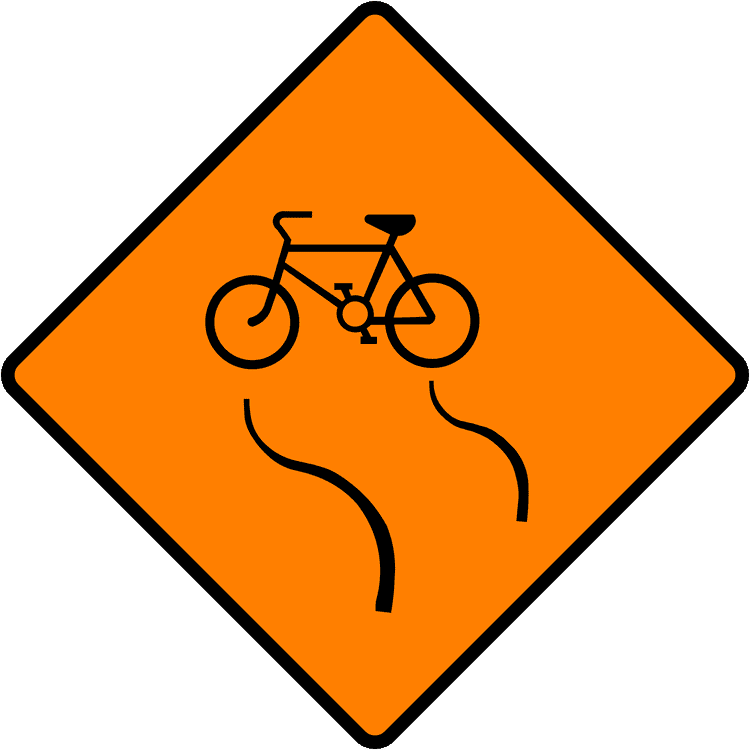
- Meaning: 🚴 Warns that the road surface may be slippery for cyclists.<br/>💧 This could be due to wet leaves, metal plates, or ice.<br/>🚗 Drivers should be extra cautious around cyclists in this area.
- Category: Warning Signs
- Action required: This triangular warning specifically alerts drivers and cyclists to road surface conditions that present reduced traction for bicycle tires, even when cars maintain normal grip. Surfaces like wet leaves, smooth concrete, painted road markings, metal plates, or ice affect bicycles far more severely than motor vehicles due to their narrower tires, lower weight distribution, and inherent stability limitations. For drivers, this sign means expect cyclists to behave unpredictably—they may brake sooner, corner more cautiously, or make sudden maneuvers to avoid slippery patches. Increase following distance, overtake with greater clearance, and anticipate that cyclists might swerve away from problematic surfaces. For cyclists, it's a warning to reduce speed substantially, avoid sudden braking or sharp turns, and consider dismounting in extreme conditions. The sign often appears seasonally—installed during autumn leaf-fall periods or winter months and removed when conditions improve.
- Penalty note: There are no direct penalties for drivers or cyclists disregarding this advisory sign, but failure to adjust behavior can result in serious consequences. If a driver overtakes a cyclist too closely in a signed hazard area and the cyclist falls due to the poor surface, the driver may face dangerous driving charges (€5,000 fine, 5 penalty points, potential disqualification) or vehicular manslaughter if death results. Cyclists who ignore the warning and subsequently cause an accident through loss of control may face contributory negligence findings that reduce their compensation claims by 20-40%, even if another party was primarily at fault. Local authorities that fail to maintain surfaces properly after erecting these signs face civil liability exposure under Occupiers Liability legislation. Insurance companies specifically investigate whether warned hazards were acknowledged—documented failure to adjust driving or cycling behavior for signed conditions can void coverage or reduce settlements significantly under the principle that warned risks become foreseeable and avoidable.