Irish Traffic Signs Logo
Irish Traffic Signs
SignsBlogPenalty PointsAppFAQHelp CenterFavorites
Irish Traffic Signs

Learn Irish traffic signs with visual matching quizzes and detailed explanations. Free platform for drivers preparing for their test.

Learn

  • Traffic Signs
  • Interactive Quiz
  • Mobile App

Support

  • Help Center
  • FAQ
  • Penalty Points

Company

  • About Us
  • Privacy Policy
  • Terms of Service

© 2026 Irish Traffic Signs. All rights reserved.

This is not an official application. It is prepared for educational purposes.

Made with ❤️ for Irish drivers

HomeWarning SignsY-Junction - Left
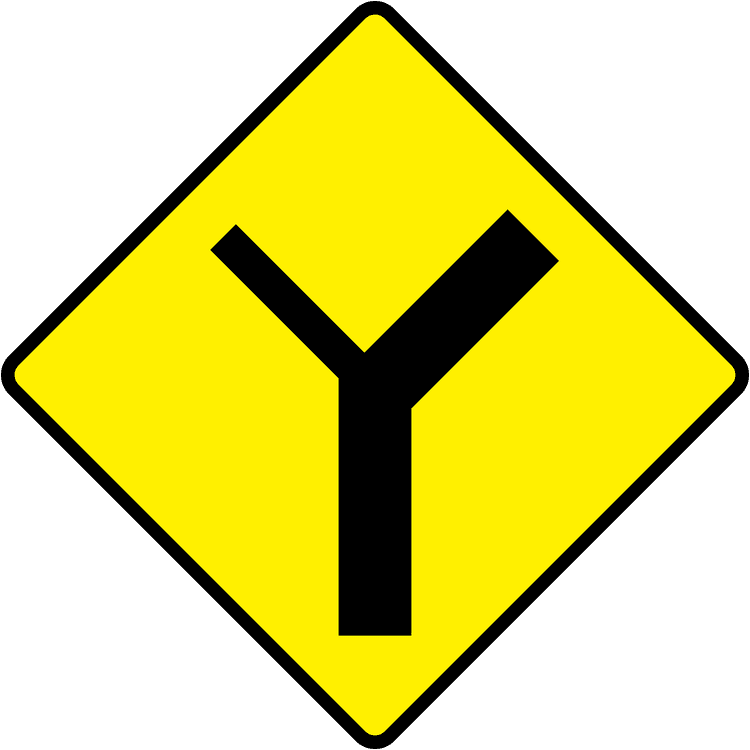
A triangular warning traffic sign in Ireland depicting y-junction - left. Memorize for DTT.

Y-Junction - Left

Category

Warning

Difficulty

Intermediate

What Does This Sign Mean?

Y-shaped junction with left branch.

Key Points:

Y-shaped junction ahead.
🚗 Traffic from two separate roads merges.
↔️ Be aware of traffic joining from the other branch.

Related Warning signs

  • A triangular warning traffic sign in Ireland depicting t-junction (type 1) - left. Memorize for DTT.

    T-Junction (Type 1) - Left

  • A triangular warning traffic sign in Ireland depicting junction with major road at sharp corner - left. Memorize for DTT.

    Junction With Major Road at Sharp Corner - Left

  • A triangular warning traffic sign in Ireland depicting crossroads at sharp corner - left. Memorize for DTT.

    Crossroads at Sharp Corner - Left

  • A triangular warning traffic sign in Ireland depicting y-junction- right. Memorize for DTT.

    Y-Junction- Right

  • A triangular warning traffic sign in Ireland depicting t-junction (type 1) - right. Memorize for DTT.

    T-Junction (Type 1) - Right

  • A triangular warning traffic sign in Ireland depicting t junction ahead at dual c'way (no cr break). Memorize for DTT.

    T Junction Ahead at Dual C'way (No CR Break)

Complete Guide to This Sign

Where You'll Find This Sign

Y-junction warnings with left branch configuration appear where two roads merge at acute angles forming Y-shaped junctions, common throughout rural Ireland where historical road networks created convergences rather than perpendicular intersections.

Typical locations include areas where two regional roads (R-class) merge, particularly in Kerry, Cork, Galway, and Mayo where terrain channeled roads through valleys or around geographic features creating natural merge points.

You'll encounter these on approaches to villages where multiple historical routes converged at town centers, and on modern roads where new bypasses rejoin original routes.

Sign placement occurs 60-100 metres before the merge point, positioned on the continuing road warning of the left-side merge.

The left branch designation indicates traffic from the left road joins your road, requiring observation of that side.

Unlike T-junctions where side road traffic must yield, Y-junctions may have merge rather than yield configurations, particularly where merging roads have similar classifications.

What This Means for Drivers

This sign warns of Y-junction ahead where a road merges from the left at an acute angle, creating merging traffic rather than perpendicular crossing traffic.

Y-junction configurations differ from T-junctions in priority arrangements: while some feature yield control requiring merging traffic to yield, others operate as merge zones where both roads' traffic must adjust for each other, similar to motorway slip road merges.

The left-branch designation indicates merging traffic approaches from your left side, requiring observation in that direction for vehicles that may be traveling at similar speeds attempting to merge.

The acute merge angle means merging vehicles may not yield completely but rather attempt to match your speed and blend into traffic flow.

The warning indicates need for: awareness of vehicles approaching on the left branch, potential need to adjust speed facilitating safe merges, possibility of priority ambiguity requiring defensive driving, and caution if intending to take the left branch yourself (other traffic may not expect your movement).

Penalties & Legal Consequences

Priority arrangements at Y-junctions vary, making penalty assessments context-specific.

Where yield signs control merge points, failure to yield results in fixed penalties (€80, 2 penalty points), escalating to careless or dangerous driving charges if collisions occur.

At uncontrolled Y-junctions (no yield requirements), liability often splits more evenly in collisions—typically 40-60% to 60-40% depending on specific circumstances—as reasonable drivers on both roads should anticipate merging traffic.

Insurance companies examine whether drivers adjusted for warned Y-junctions: through traffic maintaining inappropriate speeds that prevented safe merging, or merging traffic failing to assess gaps properly, both contribute to collision liability.

Collisions at Y-junctions often involve side-swipe geometries where vehicles attempted simultaneous occupation of merge zones, with liability assessments examining which driver had opportunity to avoid contact.

The warning sign establishes that reasonable drivers should anticipate the junction configuration and adjust accordingly, making 'didn't see' defenses less effective.

Appears in Driving Test?

Theory test questions about Y-junctions emphasize understanding merge dynamics and priority arrangements.

Questions assess recognition of Y-junction signs, understanding differences from T-junctions (merge vs crossing traffic), and appropriate responses when approaching Y-junctions on either the continuing road or the merging branch.

Questions might ask what observation requirements differ from standard junctions, or how to determine priority at Y-junctions.

Scenario questions test whether candidates understand that Y-junctions may require cooperative merging rather than absolute yield.

Practical driving tests occasionally include Y-junctions where they exist in test areas; examiners assess: recognition of Y-junction warnings, appropriate observation toward the merging branch, speed adjustments facilitating safe merging when appropriate, assertion of priority when clearly established, and if taking the merging branch, proper merging technique with adequate observation and gap selection.

Common faults include treating Y-junctions identically to T-junctions, or confusion about priority leading to either excessive hesitation or inappropriate aggression.

Frequently Asked Questions about the Y-Junction - Left Sign

What does the Y-Junction - Left sign mean in Ireland?

In Ireland, the Y-Junction - Left sign indicates: Y-shaped junction with left branch. Understanding this is crucial for safe driving and passing your DTT.

What type of sign is the Y-Junction - Left?

The "Y-Junction - Left" is officially classified as part of the WARNING group in Ireland. Like other signs of this type, it alerts drivers to specific rules, hazards, or information they must immediately observe.

Will the Y-Junction - Left sign appear on the Irish Theory Test?

Yes, you should expect the Y-Junction - Left sign to appear on your Irish Driving Theory Test (DTT). You must be able to identify it as a WARNING and know what it requires from you as a driver.

●Live App Updates

Master Irish Signs on Mobile

Get instant access to 400+ signs, interactive quizzes, and progress tracking. Download the free app today!

🍎
Download on
App Store
🤖
Get it on
Google Play