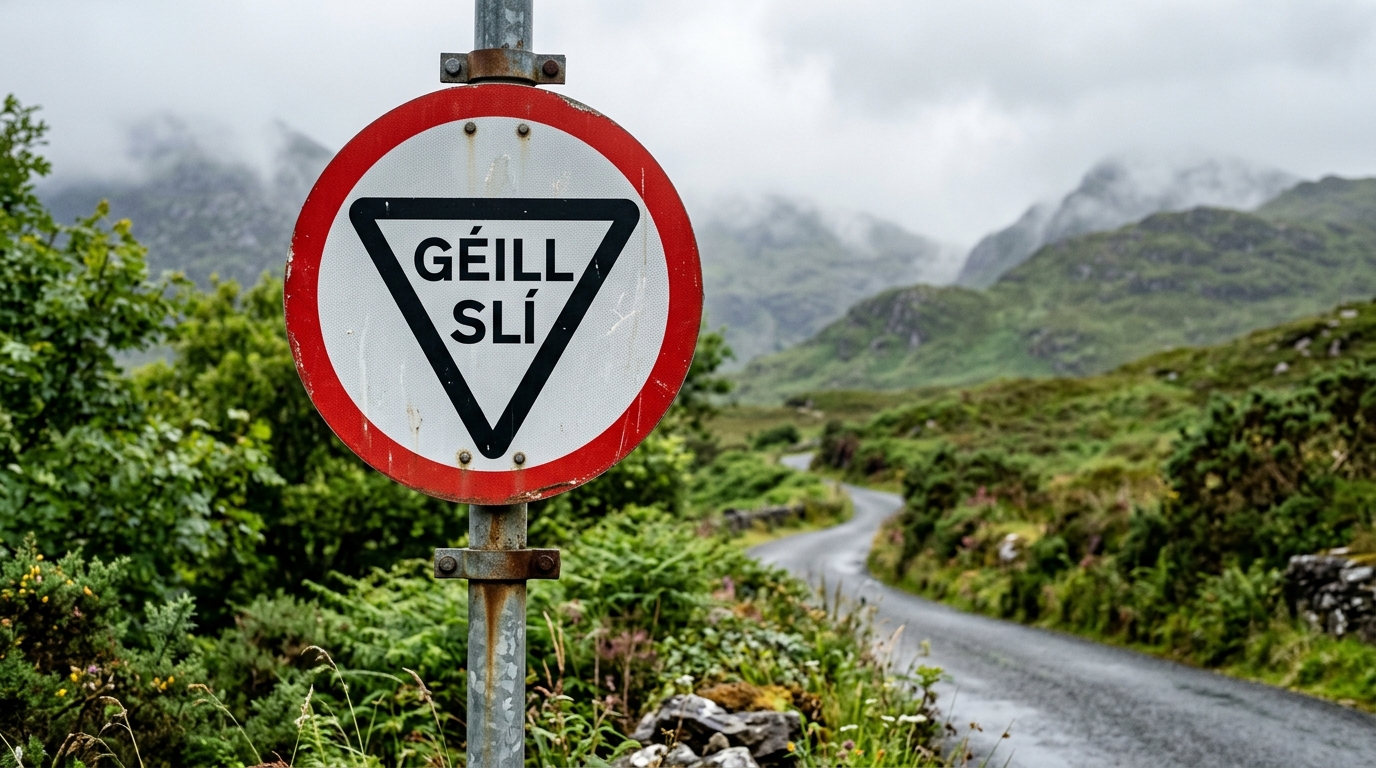
If you are planning to drive along the Wild Atlantic Way or through rural regions of Galway, Kerry, or Donegal, you will likely enter a Gaeltacht (Irish-speaking region).
In these areas, road signs transition to bilingual format or, in some cases, appear in Irish only. For foreign drivers, this can be incredibly confusing. The most important phrase to learn is "Géill Slí", which you will see printed on inverted triangle signs.
Key Takeaways
- ☘️ Géill Slí: Means "Yield" or "Give Way", positioned on inverted triangles (RSA, 2026).
- 🐢 Go Mall: Means "Slow", signaling approaches to hazards or small rural villages.
- 📐 Shape Priority: Standard shapes and colors remain identical, ensuring instant recognition.
Here is the breakdown of key Irish road signs and what they mean:
What does the "Yield" (Géill Slí) sign mean in Gaeltacht areas?
"Give way to traffic on the priority road."
Meaning:🔽 You must give way to traffic on the major road ahead.🚗 Let crossing traffic pass before you proceed.Traffic Sign Examples
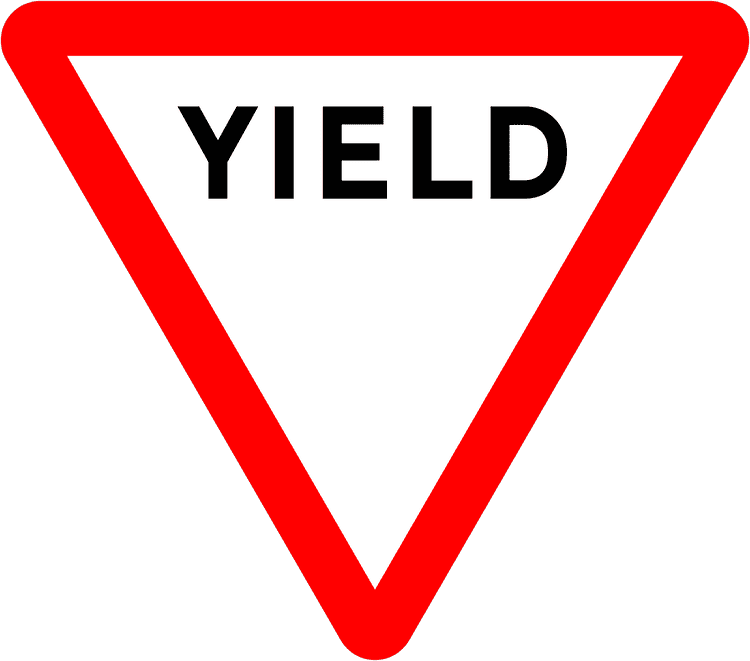
Yield 🛑 Be prepared to stop if necessary.Where Found: Yield signs appear at T-junctions where minor roads join major routes throughout Ireland, at roundabout entrances where circulating traffic has priority, at merging lanes on dual carriageways and motorways, and at controlled junctions where yield rather than stop is appropriate. Common locations include estate roads joining distributor roads, slip roads entering national routes, junctions where sight lines allow safe yielding assessment, and roundabouts in urban and rural areas. More frequent than stop signs due to allowing traffic flow while maintaining safety priority.What It Means & How to React: Drivers must slow down and prepare to stop if necessary to give way to traffic on the priority road. Unlike stop signs, complete stopping is only required if approaching traffic makes proceeding unsafe. Drivers must yield to all traffic from the right on roundabouts, oncoming traffic when turning right, and traffic on main roads when emerging from minor roads. Assessment of safe gaps is the driver's responsibility: proceed only when certain that adequate space exists without forcing priority traffic to slow or change course.Penalties: Yield violations resulting in dangerous situations carry €80 fixed charge penalties and 3 penalty points under failure to yield regulations. Yield sign violations causing collisions often result in full civil liability and dangerous driving charges: fines to €5,000, 5 penalty points, potential license suspension. At roundabouts, yield violations frequently cause multi-vehicle collisions with serious insurance and legal consequences. Poor gap judgment at yield signs often indicates inadequate hazard perception skills, potentially requiring extended driving instruction before license restoration after violations.Exam/Theory Info: Yield sign understanding is extensively tested in theory and practical examinations as proper yielding demonstrates hazard perception and gap judgment skills essential for safe driving. Theory questions test understanding that yield means 'give way if necessary,' that gap assessment is driver responsibility, and that yielding applies to roundabouts, T-junctions, and merging situations. Practical tests frequently assess yield compliance: examiners expect appropriate speed reduction when approaching yield signs, accurate assessment of approaching traffic, and safe proceeding only with adequate gaps. Good yielding technique shows mature driving judgment and awareness of priority rules.What is the essential Irish language driving vocabulary?
When driving in Gaeltacht zones, keep an eye out for these terms printed on warning and information signs:
1. Géill Slí (or simply Géill): Yield / Give Way. You must yield priority to traffic on the intersecting major road.
2. Go Mall: Drive Slow. Commonly positioned near dangerous bends or residential entrances.
3. Go Han-Mhall: Drive Very Slow. Indicates hazardous terrain or speed bumps ahead.
4. Scoil: School. Watch out for school wardens, children, and crossing points.
5. Garda: Police. Frequently found on information signs indicating a local Garda Station.
Frequently Asked Questions
What is the English translation of "Géill Slí"?
"Géill Slí" translates directly to "Yield Way" or "Give Way" in English. It commands you to give priority to other road users.
What does "Go Mall" mean on Irish road signs?
"Go Mall" means "Slow" in Irish. It warns you to reduce your speed due to oncoming intersections, residential zones, or road hazards.
Are road signs in Dublin bilingual?
Yes. Outside Gaeltacht areas, all directional and information signs are bilingual, with the Irish language in italicized script at the top, and English in capital letters below.