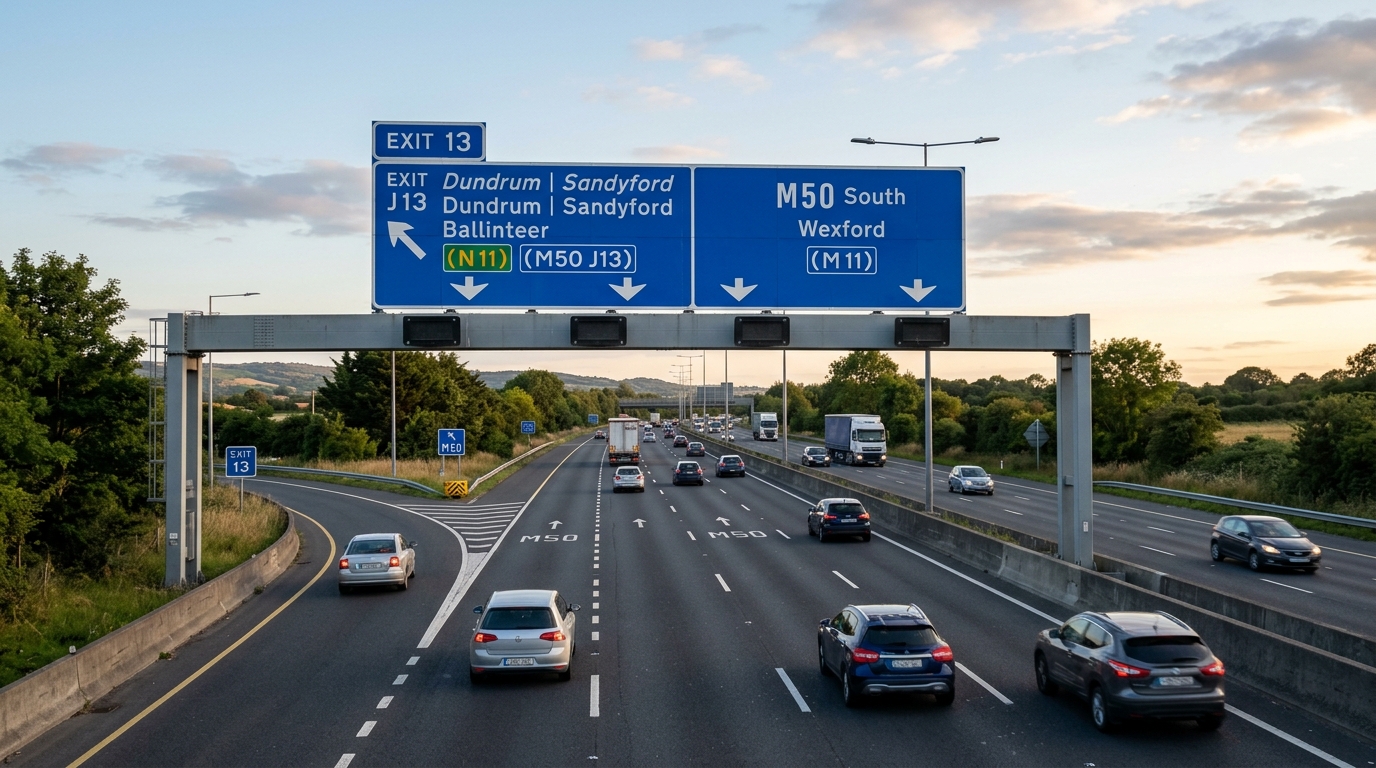
Motorways in Ireland are designed for high-speed, long-distance travel. Because vehicles are traveling at speeds up to 120 km/h, road signs must be read and acted upon much faster than on standard roads.
Motorway signage in Ireland is distinguished by its blue background (national primary roads use green, and local roads use white). Understanding exit markers and layout gantries is key to safe motorway navigation.
Key Takeaways
- 🔵 Blue Background: Irish motorway signs feature a distinct blue background to signify high-speed regulations.
- 🏁 Exit Markers: Slanted stripes mark exit distances at 300m (3 stripes), 200m (2 stripes), and 100m (1 stripe).
- 💰 eFlow Toll Deadline: M50 tolls must be settled online or by phone before 8:00 PM on the day following travel.
Here are the motorway signs you must master:
What do Motorway Countdown Markers indicate?
"Rectangular blue signs with white diagonal stripes."
Traffic Sign Examples
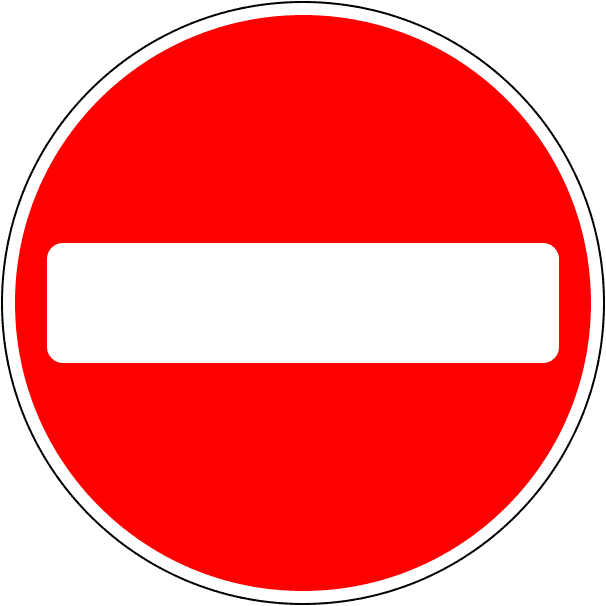 No Entry
What are the rules for No Entry signs on motorway ramps?
"All vehicular entry prohibited from this direction."
How do you pay Dublin's M50 eFlow Toll?
When driving on the M50 motorway around Dublin, you will pass under a toll gantry between Junction 6 and Junction 7.
Frequently Asked Questions
What happens if I miss the M50 toll payment deadline in Ireland?
Failing to pay the toll by 8:00 PM the following day results in a late payment penalty. The initial fine is small (€3.00) but increases rapidly up to €150+ with legal warnings if unpaid.
What is the speed limit on Irish motorways?
The speed limit on all Irish motorways is 120 km/h, unless temporary speed limits are displayed on gantries due to traffic, weather, or roadworks.
Are learner drivers allowed on motorways in Ireland?
No. Under Irish road traffic law, drivers holding a learner permit are strictly prohibited from driving on motorways. You must hold a full license.