Back to All Articles
Traffic Signs

Irish Road Markings Explained: Yellow Boxes, Hatch Zones, and Double Yellows

Traffic Safety Team

July 29, 2026
6 min read
Irish Road Markings Explained: Yellow Boxes, Hatch Zones, and Double Yellows

Featured Article

Not all traffic rules are posted on metal signs. Some of the most critical regulatory instructions are painted directly onto the road surface.

Understanding Irish road markings is essential for any motorist. Failing to comply can result in severe fines, penalty points, or a failed driving test. For example, blocking intersections or parking on restricted lines causes gridlock in major cities.

Key Takeaways

  • 🟨 Yellow Box Rules: Do not enter a box junction unless your exit is completely clear of traffic.
  • 🟡 Double Yellows: Denotes absolute parking and stopping prohibitions, operating 24/7 with €40 fines (Garda, 2025).
  • đźš« Clearway stopping: All stopping is prohibited on clearways except for immediate passenger pick-ups (max 2 minutes).

Here are the most common road markings you must master:

What is a Clearway road restriction in Ireland?

"No stopping or parking during stated times to keep route clear."

  • Meaning:
  • đźš« No stopping or parking on the main carriageway.
  • ⏰ This restriction usually applies 24/7.
  • Traffic Sign Examples

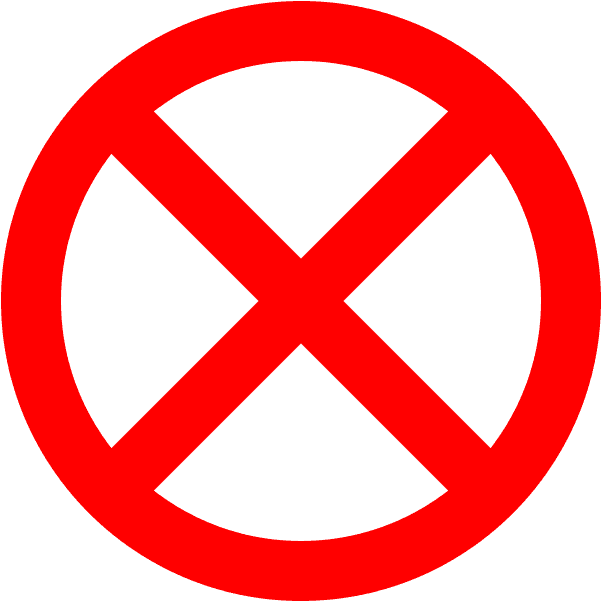
    ClearwayClearway
  • đźš— You may only stop briefly to pick up or set down passengers.
  • Where Found: Clearway signs appear on major urban arterial routes and rural N-roads where stopping or parking would obstruct traffic flow, most common on approaches to Dublin city center (quays along the Liffey, major radial routes), Cork city arterials (Patrick Street area, South Mall), and Limerick and Galway city approaches. Rural clearways exist on busy N-road sections where stopping would create hazards—typically common on N7, N8, N11 approaches to major towns during peak hours. Airport approach roads (Dublin Airport M1/M50, Cork Airport N27, Shannon Airport N19) typically feature 24-hour clearways. Clearway restrictions are indicated by circular red-bordered signs with supplementary time plates showing when prohibitions apply (common: 7am-7pm weekdays, or 24-hour). Double yellow lines or red lines on road edges reinforce clearway restrictions. Urban clearways concentrate on bus corridors where stopping obstructs public transport.
  • What It Means & How to React: This sign prohibits stopping or parking on the main carriageway during specified times (or continuously if marked 24/7), maintaining traffic flow on critical routes. Clearways differ from standard parking restrictions: they prohibit all stopping, not just parking—vehicles may not wait, load/unload goods, or stop for any purpose except emergencies, breakdowns, or to comply with traffic signals/signs requiring stops. The only permitted stop is immediate passenger pick-up or drop-off (maximum 2 minutes, vehicle must not be left unattended). Clearway restrictions typically apply during peak traffic hours (7am-7pm weekdays) but some operate 24/7. The prohibition aims to prevent congestion on routes where even brief stops cascade into significant delays. Clearways are particularly strict on bus corridors where stopping obstructs public transport services affecting hundreds of passengers. Emergency stopping is always permitted (genuine breakdowns, medical emergencies), but vehicles must move to safe locations as soon as possible.
  • Penalties: Clearway violations result in fixed penalty notices (€80 standard, €120 in Dublin city center during peak hours) issued by parking enforcement or GardaĂ­. In Dublin, automated camera enforcement on major clearways detects violations and issues penalties by post. Vehicles causing significant traffic obstruction may face immediate towing (€125 towing plus €35 daily storage), particularly during peak hours when clearway enforcement prioritizes traffic flow. Commercial vehicles making deliveries in clearway zones during restricted hours face operator license implications if violations are systematic. Insurance companies may consider clearway violations when assessing risk profiles. Repeat offenders face escalating penalties and potential vehicle impoundment in extreme cases. The NTA monitors clearway compliance on bus priority routes, with enforcement focusing on chronic violators. Clearway violations causing emergency vehicle access delays may result in dangerous obstruction charges (€150-€300) rather than simple parking penalties.
  • Exam/Theory Info: Theory test questions about clearways emphasize understanding the prohibition on stopping (not just parking), recognition of clearway signs and time restrictions, and knowledge of limited exceptions (immediate passenger pick-up/drop-off, emergencies). Questions assess understanding of why clearways exist (maintaining traffic flow on critical routes), differences between clearways and standard parking restrictions, and appropriate behavior when clearway stopping is necessary (breakdowns—activate hazards, move to safe location quickly). Scenario questions test whether candidates recognize clearway signs, understand time restrictions from supplementary plates, and know that goods loading/unloading is prohibited during clearway hours. Practical driving tests occasionally include clearway routes; examiners assess: recognition of clearway signs and compliance (no stopping even briefly), understanding that clearway restrictions prohibit all stopping during specified times, and appropriate responses if stops become necessary (breakdowns—immediate hazard activation, movement to safe non-clearway location). Common theoretical knowledge gaps include believing clearways permit brief stops for purposes other than immediate passenger pick-up/drop-off.
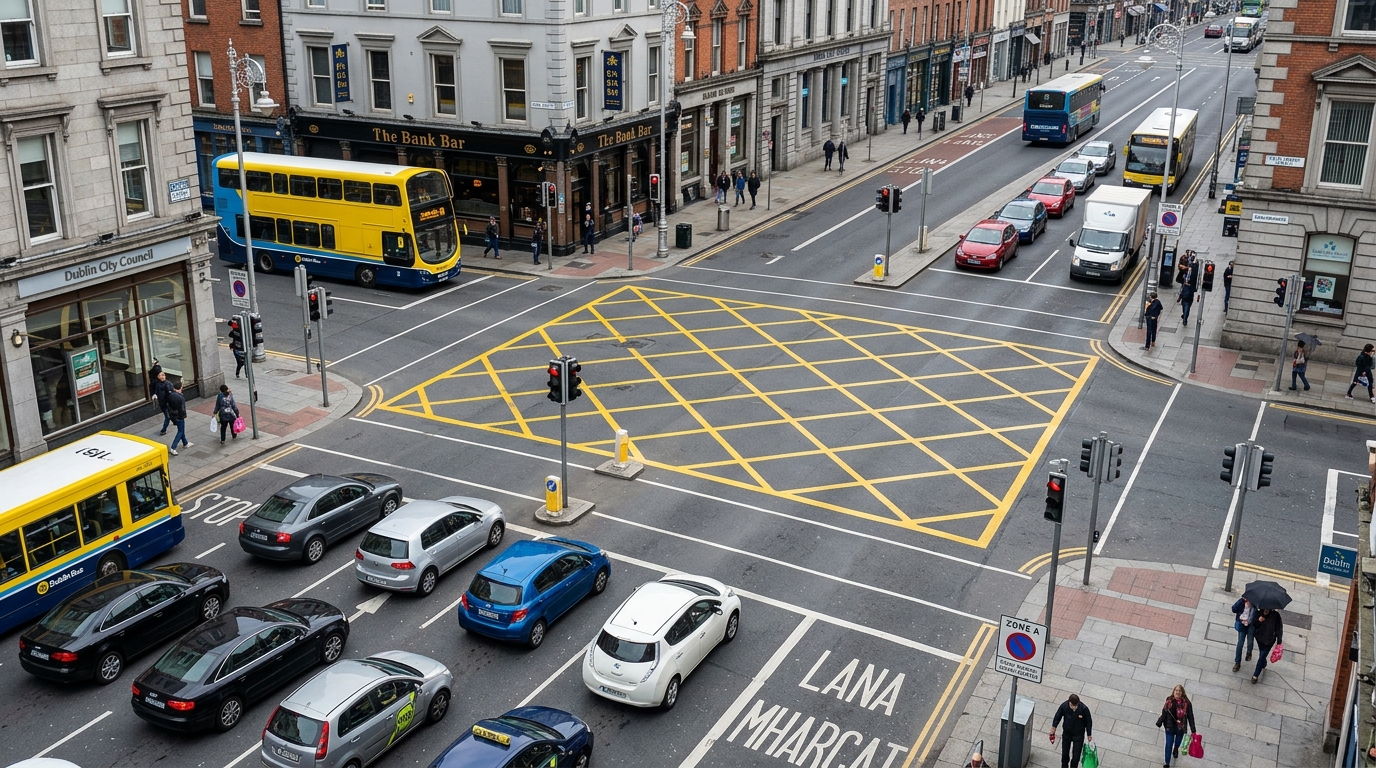
  • What are the rules for Yellow Box Junctions?

    "Grid of yellow crossed lines painted on the road."

  • Meaning:
  • 🟨 Do not enter the yellow box unless your exit is clear.
  • đźš— The only exception is if you are turning right and are blocked only by oncoming traffic.
  • Where Found: Yellow box junctions are painted at major traffic light intersections, exits of fire stations, and busy roundabouts in Irish towns and cities like Dublin and Cork.
  • What It Means & How to React: You must not enter the grid unless the exit road is clear of traffic, allowing you to cross without stopping. If you enter and get stuck, you block cross-traffic and public transport.
  • Penalties: Blocking a box junction carries an €80 fine. In Dublin, enforcement cameras issue automated fines directly to car owners.
  • Exam/Theory Info: Entering a box junction when your exit is blocked is a Grade 2 fault. Doing so and blocking other traffic results in an immediate Grade 3 test failure.
  • How do double yellow lines differ from single yellow lines?

  • Double Yellow Lines: Parking is strictly prohibited 24/7 on the roadside where double yellow lines are painted. You cannot park here at any time, even briefly.
  • Single Yellow Lines: Indicates parking restrictions apply during specific times. Check the nearby yellow poles for information plates detailing active operational hours.
  • Frequently Asked Questions

    Can you stop on double yellow lines to drop off a passenger?

    Yes. You can stop briefly (normally less than 2 minutes) on double yellow lines to pick up or set down passengers, provided you do not obstruct traffic or park the vehicle.

    What is the penalty for blocking a yellow box junction in Ireland?

    The standard penalty for entering and blocking a yellow box junction is a fixed charge notice of €80, which can escalate if it causes dangerous obstruction.

    Can you enter a yellow box if you are turning right?

    Yes. You may enter a yellow box junction to turn right, even if your exit is blocked, as long as you are only stopped by oncoming traffic or other vehicles waiting to turn right.

    Improve Your Driving Knowledge

    Download our app to test your understanding of traffic signs, or explore more articles on our blog.