Ireland's prohibition signs are not suggestions — they are legal orders. Ignore a No Entry sign and you face a €60 fine and 1 penalty point on the spot. Drive through a Stop sign without stopping and that jumps to 3 penalty points. As of June 2026, over 554,000 Irish drivers already carry penalty points on their licences (RSA, 2026). Knowing exactly which signs you cannot ignore — and why — could save your licence.
Key Takeaways
- 🔴 Red circle = legal order: Circular signs with a red border are prohibition signs — they tell you what you must NOT do, and violations carry real fines and penalty points.
- 💶 Fines range from €60 to €120+: Ignoring a No Entry sign costs €60 (1 point); failing to stop at a Stop sign costs €120 (3 points). Court conviction doubles the points (RSA, 2026).
- ⚠️ 12 points = 6-month ban: Accumulate 12 penalty points within 3 years and you lose your licence automatically. Novice drivers get banned at just 7 points (Citizens Information, 2026).
- 🏎️ Driving test instant fail: Ignoring a regulatory sign during your RSA test is classified as a Grade 3 fault — an immediate failure, no second chances.
What Are Prohibition Signs — and Why Do They Matter?
Prohibition signs tell you what you must not do on the road. In Ireland, they're circular with a red border on a white background, often featuring a red diagonal bar across the symbol. That red circle is a universal legal signal — it means "no," "stop," or "prohibited." During the first half of 2026 alone, An Garda Síochána issued over 119,000 Fixed Charge Notices for road traffic offences across Ireland (Garda.ie, 2026). Many of those were tied directly to sign violations.
Worth noting: prohibition signs differ from warning signs (triangular, red border) and mandatory signs (blue circles). A prohibition sign restricts an action. A mandatory sign commands one. Getting this distinction wrong on your driving test is a common reason for failure.
Common Prohibition Signs in Ireland
 No Entry
 No Overtaking
 No Left Turn
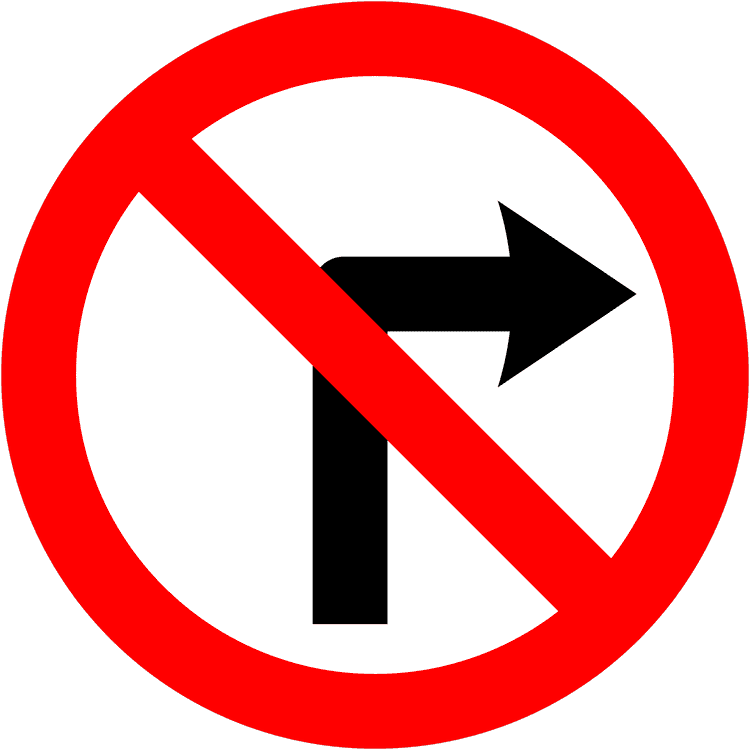 No Right Turn
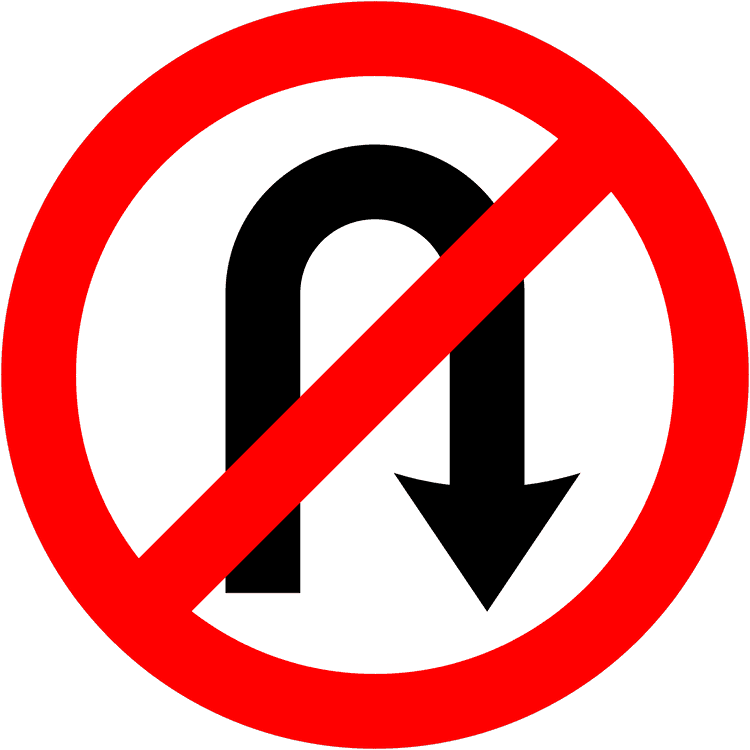 No U Turn
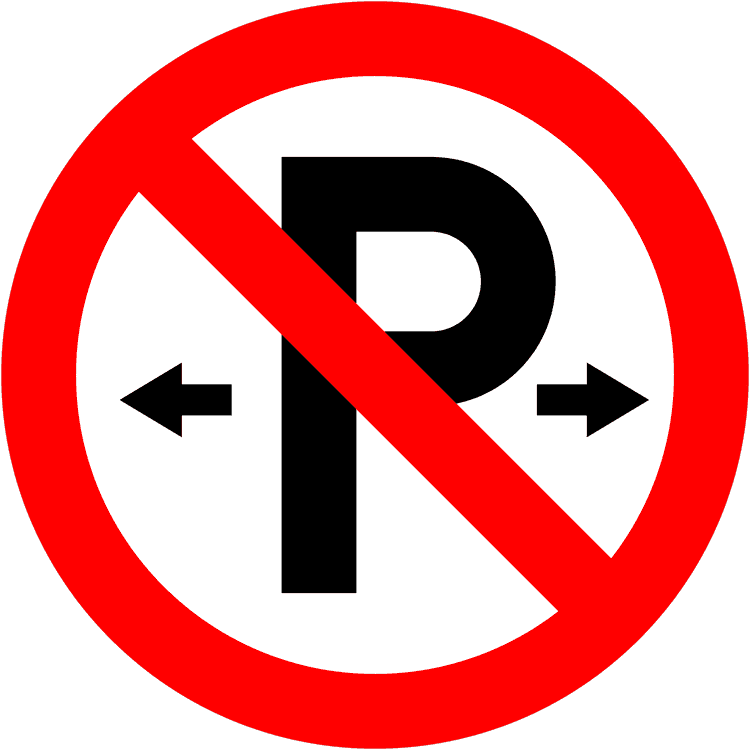 No Parking
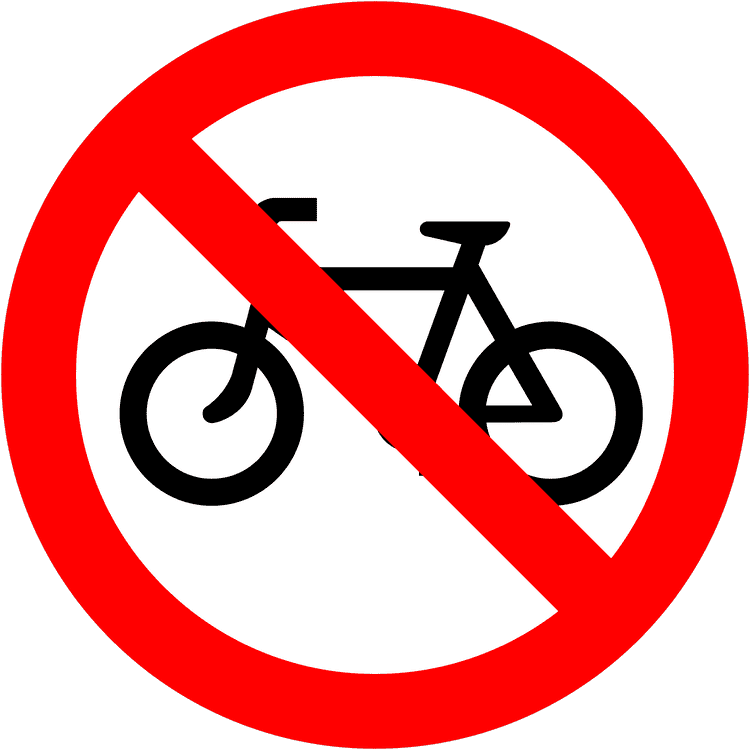 No Cycles
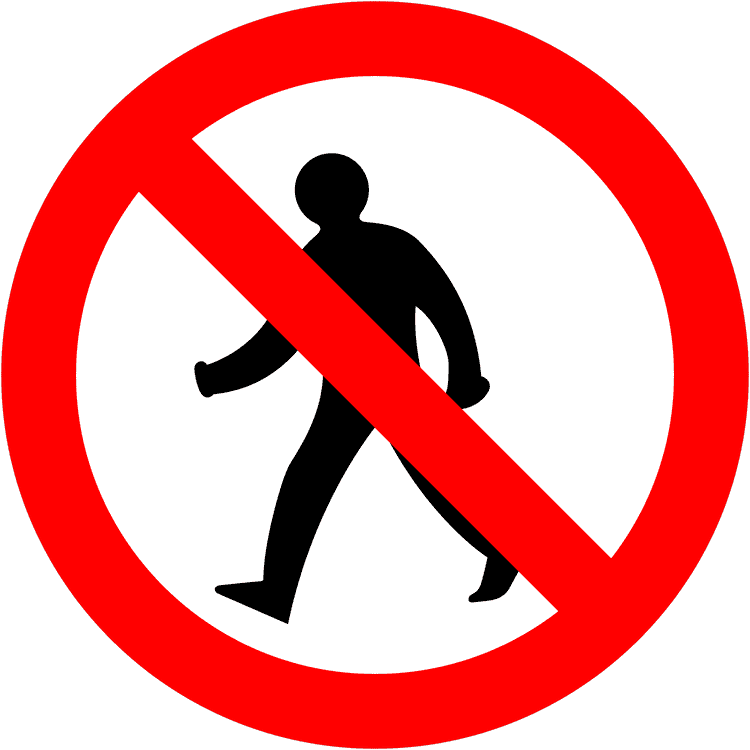 No Pedestrians
Prohibition Sign Violations: Penalty Points on Payment vs. Court Conviction
Source: RSA Fixed Charge Notice Schedule & Garda.ie, 2026
Access Restriction Signs: No Entry, Vehicle Bans & One-Way Rules
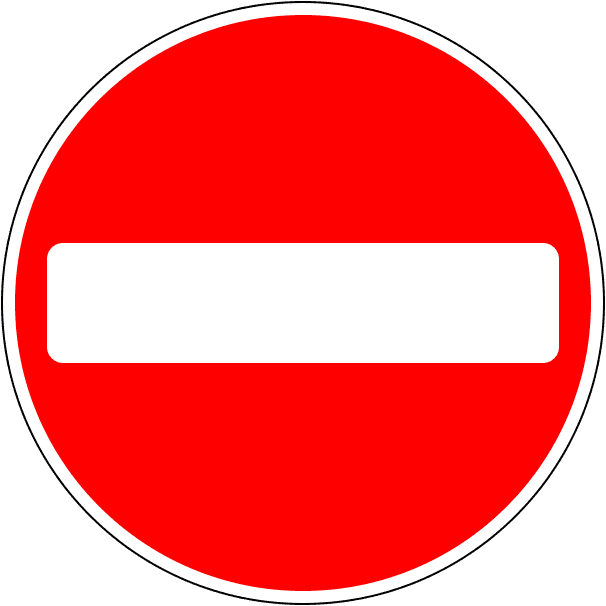
Access restriction signs control where you can go. The No Entry sign — a red circle with a white horizontal bar — is probably the most recognisable. Drive past one and you're committing an offence: €60 fine, 1 penalty point on payment, and 3 points if the case goes to court (RSA, 2026). These signs appear at one-way street entrances, pedestrianised zones, and motorway off-ramps where wrong-way driving is a serious safety risk.
No Entry Sign
The No Entry sign features a solid white horizontal bar inside a red circle. It means no vehicle — car, motorcycle, bicycle — may enter from that direction. You'll often see it paired with a One-Way sign to create a clear system. Many drivers are caught going the wrong way on one-way streets in town centres, particularly after unfamiliar diversions.
Vehicle Type Prohibition Signs
Beyond access restrictions, Ireland uses a set of vehicle-specific prohibitions: No Cycles (red circle, bicycle symbol), No Pedestrians, No Horse-Drawn Vehicles, and No Vehicles Carrying Explosives. These are commonly seen near tunnel entrances, school zones, and pedestrian-priority areas.
Restriction & Weight Limit Signs
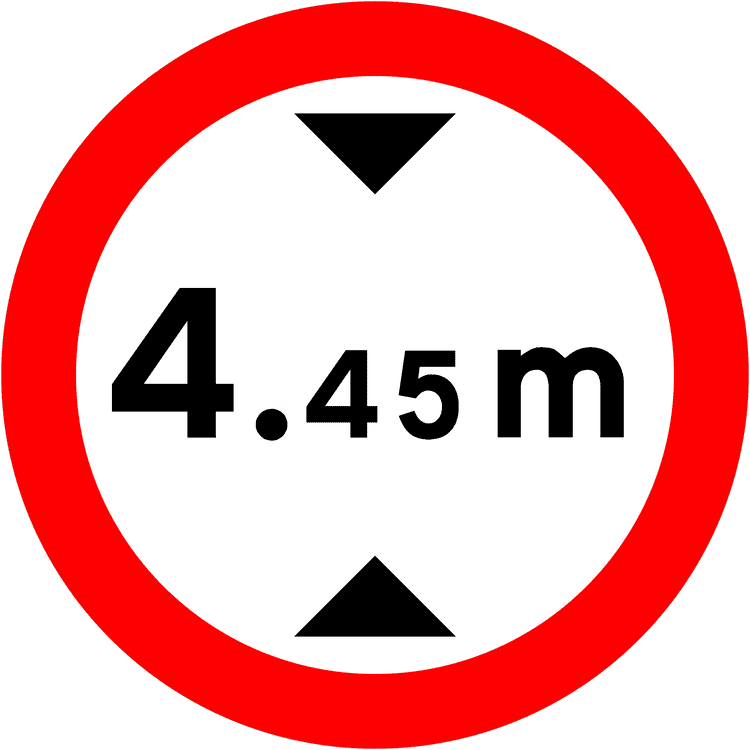 Height Restriction
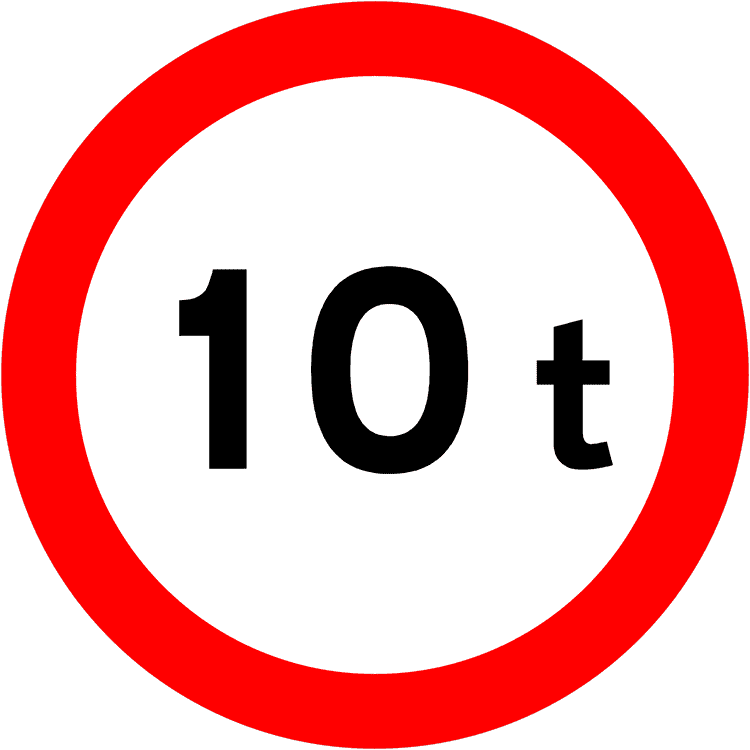 Maximum Gross Weight
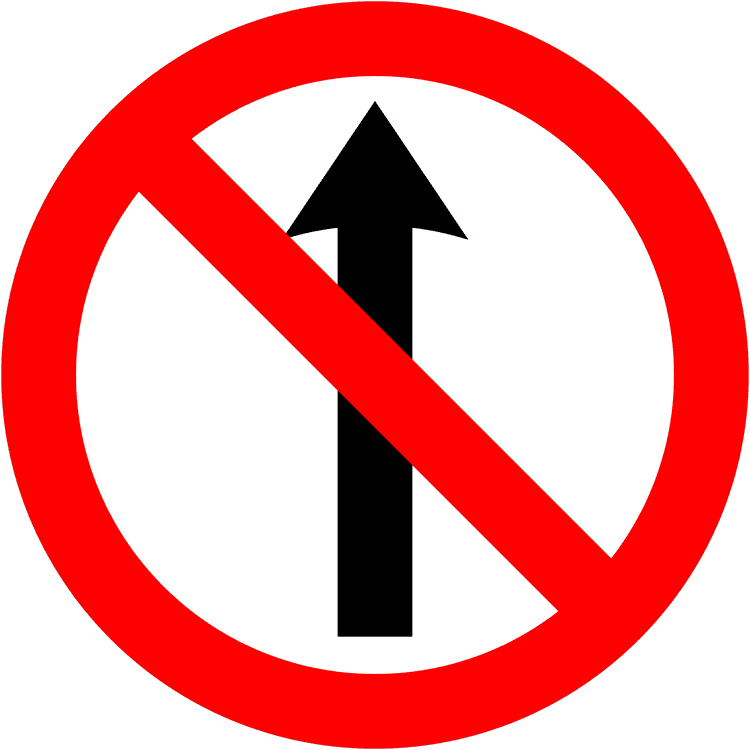 No Straight Ahead
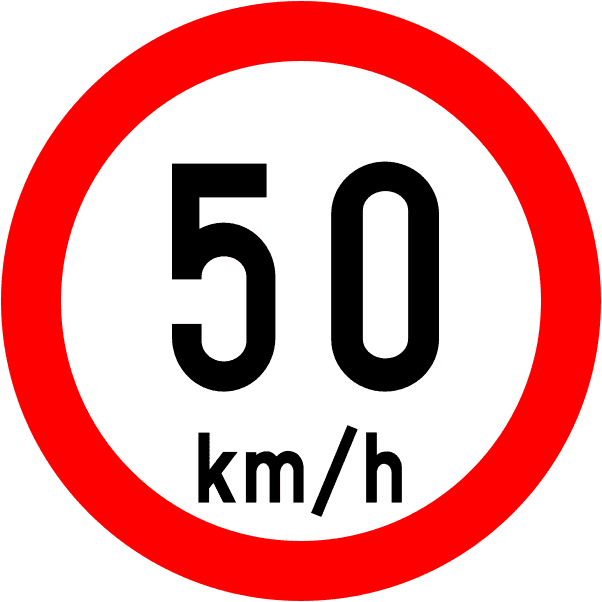 Speed Limit 50 Km
Some prohibition signs restrict specific vehicle types rather than all traffic. A red-bordered circle showing a goods vehicle silhouette bans HGVs. One showing a motorcycle silhouette bans motorbikes. These are common near low bridges, residential areas, and school zones. Check the sign carefully — the restriction only applies to the vehicle type shown, not all traffic.
Weight and Height Limit Signs
Weight limit signs (a number inside a red circle, in tonnes) and height limit signs (a bridge icon with a measurement) ban vehicles exceeding those dimensions. Ignore a 3.5t weight limit sign in a van and you could face prosecution under the Road Traffic Act, not just a fixed charge — penalties include significant fines and potential vehicle seizure.
Speed Prohibition Signs: Speed Limits and What They Really Mean
Speed limit signs are prohibition signs — they set the maximum speed you must not exceed. In 2025, speeding was the primary factor in Irish road fatalities, contributing to a decade-high of 185 deaths on Irish roads (RSA Road Safety Report, 2025). Ireland uses a circular sign with a red border displaying the speed in km/h. The national speed limit default is 100 km/h on national roads, 50 km/h in built-up areas, and 120 km/h on motorways.
National Speed Limit vs. Posted Limits
When there's no posted sign, default national speed limits apply. But posted limits override them instantly. A 30 km/h zone sign near a school means exactly that — it's not advisory. Exceeding a posted speed limit by any margin is a fixed charge offence: typically €160 and 3 penalty points on payment, rising to 5 points on court conviction (Citizens Information, 2026).
End of Speed Restriction Signs
A circular sign with diagonal lines through a speed number signals the end of that restriction — not the end of all restrictions. You revert to the national default speed limit for that road type, not to unlimited driving. This catches drivers off guard, especially on rural roads where the national limit of 80 km/h (regional roads) or 100 km/h (national roads) still applies.
Movement Prohibition Signs: No Turns, No Overtaking, No U-Turns
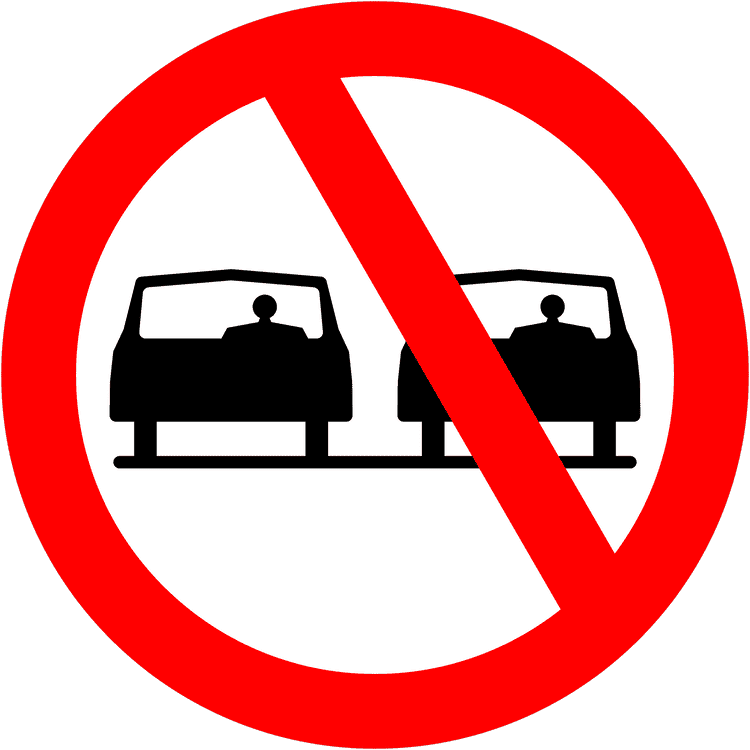
Movement prohibition signs restrict specific manoeuvres. Ignoring a No U-Turn sign carries 2 penalty points on payment and 4 on conviction. Overtaking where prohibited carries the same — and dangerous overtaking can escalate to prosecution under the Road Traffic Act rather than a simple fixed charge (An Garda Síochána, 2026).
No Overtaking Sign
The No Overtaking sign shows two cars side by side — one black, one red — inside a red-bordered circle. This sign appears where overtaking is genuinely dangerous: blind bends, crests of hills, narrow sections with oncoming traffic. Solid white centre lines often accompany this sign but are not a substitute for it. If you see the sign, you don't overtake — full stop.
No Left Turn and No Right Turn Signs
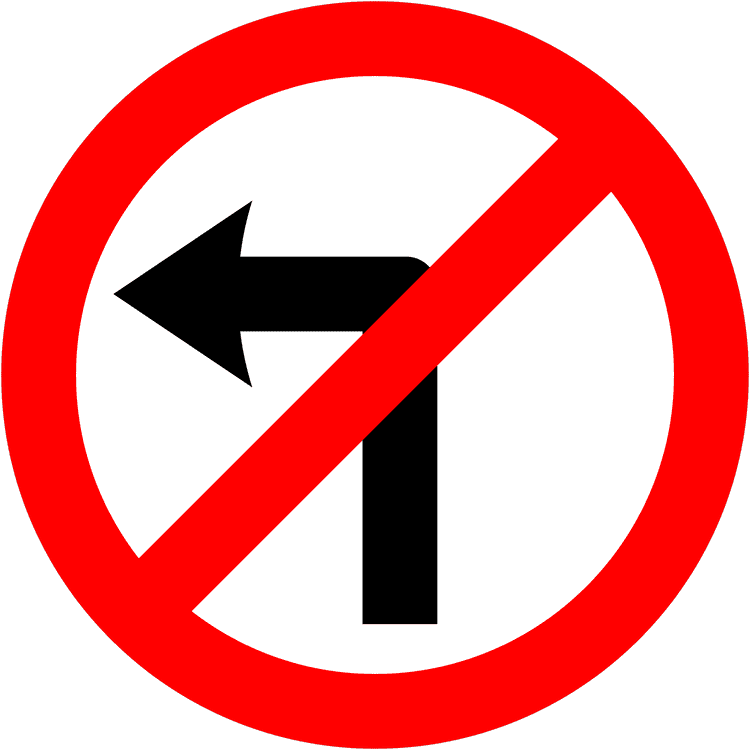
These show a directional arrow inside a red circle with a diagonal bar across it. They appear at junctions where one direction creates a conflict or danger — often at busy crossroads, bus lanes, or one-way systems. Many drivers misread these signs at speed, particularly when unfamiliar with a route. Taking the prohibited turn is a fixed charge offence even if no one is harmed.
No U-Turn Sign
A curved arrow pointing back on itself, crossed out with a red bar. U-turns are banned where they'd block traffic, cut across lanes, or create hazards. City centre streets, dual carriageways, and many arterial roads have these signs. The penalty on payment is 2 points; on conviction, 4 points (RSA, 2026).
Stopping and Parking Prohibition Signs: The Rules You're Most Likely to Break
Stopping and parking prohibition signs are the ones drivers most commonly ignore — sometimes without even noticing. Double yellow lines, clearway signs, and No Stopping signs are all part of this category. Parking offences alone account for a significant portion of fixed charge notices issued annually by local authorities and Gardaí across Ireland.
No Parking Sign
A blue circle with a red border and a single red diagonal bar. No Parking means exactly that — you may not leave your vehicle unattended here. This differs from No Stopping (which is stricter). You can still drop off or pick up a passenger momentarily in a No Parking zone, but you cannot park and walk away. Double yellow lines along the kerb serve the same prohibition without a sign.
No Stopping Sign (Clearway)
A blue circle with a red border and a red cross means No Stopping at any time during the hours shown. This is stricter than No Parking — you can't even pull over to check your phone or let a passenger out. Clearway signs on main roads typically operate during peak commuter hours. Stopping in a clearway can block traffic and result in your vehicle being towed, on top of the fine.
Time-Limited Parking Restrictions
Some prohibition signs have a supplementary plate showing hours of operation — for example, "Mon–Sat 08:00–18:30." Outside those hours, the restriction doesn't apply. Drivers often get caught by assuming that because it's quiet, the restriction is lifted. Always check the hours on the plate, not just the sign symbol.
What Happens When You Violate a Prohibition Sign?
Violating a prohibition sign triggers Ireland's Fixed Charge Notice (FCN) system. You have 28 days to pay at the discounted rate. Miss that window and the fine rises by 50%. Ignore it entirely and you face a court summons — where both the fine and penalty points increase significantly. Here's what the numbers look like in practice (RSA Fixed Charge Schedule, 2026):
Reach 12 penalty points in a 3-year period and you face an automatic 6-month disqualification. Learner permit holders and novice drivers hit that threshold at just 7 points (Citizens Information, 2026).
How to Identify Any Prohibition Sign in Seconds
You don't need to memorise every sign individually. Once you know the visual code, you can read any prohibition sign at a glance. The system is consistent across Ireland — and across most of Europe under the Vienna Convention on Road Signs and Signals.
Prohibition Signs on the Irish Driving Test
On the RSA practical driving test, failing to obey a prohibition sign is classified as a Grade 3 fault — an immediate, automatic failure. There's no second chance, no matter how well you drove for the rest of the test. The test examiner will ask you to stop the vehicle and the test ends. This is why examiners watch closely at junctions, one-way streets, and any location where a prohibition sign might require a specific response.
In the theory test, prohibition signs appear regularly in the traffic signs section — which also has among the lower pass rates. Knowing the visual code (red circle = prohibition) rather than trying to memorise individual signs gives you a significant advantage.
Frequently Asked Questions
What does a red circle sign mean in Ireland?
A red circle means prohibition — it tells you what you must not do. This includes signs like No Entry, No Overtaking, No U-Turn, speed limits, weight limits, and height limits. These are legally binding under the Road Traffic Acts and carry fines and penalty points for non-compliance.
What is the fine for ignoring a No Entry sign in Ireland?
Proceeding beyond a No Entry sign in Ireland results in a €60 Fixed Charge Notice and 1 penalty point if paid within 28 days. If the fixed charge is not paid and the case goes to court, the penalty increases to 3 penalty points and a higher fine set by the court (RSA, 2026).
Is a speed limit sign a prohibition sign?
Yes. Speed limit signs are prohibition signs — they restrict how fast you may drive. They're circular with a red border, just like other prohibition signs. Ireland's default limits are 50 km/h in built-up areas, 80 km/h on regional roads, 100 km/h on national roads, and 120 km/h on motorways. A posted sign overrides the default limit instantly.
Can emergency vehicles ignore prohibition signs?
Emergency vehicles responding to an emergency may legally pass through certain restrictions — including No Entry signs — when using blue lights and sirens. However, they must still proceed with care and cannot endanger other road users. Private vehicles must never follow an emergency vehicle through a prohibition sign.
How long do penalty points last in Ireland?
Penalty points remain on your driving licence record for 3 years from the date they are imposed. They do not affect your record after this period expires. You can check your current penalty points status through a driver statement from the NDLS (National Driver Licence Service) (NDLS, 2026).