True road safety extends far beyond traffic sign recognition. While understanding signs is essential, knowing how to anticipate hazards, manage your speed, and keep a safe following distance is what prevents accidents. In 2025, road fatalities in Ireland reached a decade-high of 185 deaths, with speeding and driver distraction being the leading factors (RSA Road Safety Report, 2025). As of June 2026, An Garda Síochána has increased speed van enforcement zones to over 1,300 locations across Ireland to curb these rising numbers. To stay safe and protect your licence, you must master the core principles of defensive driving.
Key Takeaways
- ⏱️ The 2-second rule is mandatory: Maintain a minimum 2-second gap behind the vehicle in front in dry conditions, and double it to 4 seconds in wet or icy weather.
- 📱 Distraction carries heavy fines: Holding a mobile phone while driving increases your crash risk by 4 times and carries a €60 fine and 3 penalty points (RSA, 2026).
- 🌧️ Rain doubles braking distance: Wet roads reduce tyre grip, meaning your vehicle takes twice as long to stop compared to dry conditions.
- 🔍 Vehicle checks prevent failures: Driving with worn tyres (tread depth below 1.6 mm) is a driving test fail and results in a €80 fine and up to 4 penalty points.
What is Defensive Driving — and Why Is It Key?
Defensive driving is the practice of driving to save lives, time, and money, in spite of the conditions around you and the actions of others. It requires an active attitude of anticipation. Instead of simply reacting to events, defensive drivers look 10 to 15 seconds ahead to spot potential hazards before they develop. For example, if you see a delivery truck stopped ahead, you should immediately check your mirrors, reduce your speed, and prepare for a pedestrian to step out from behind it. This proactive mindset is what distinguishes safe drivers from those who are constantly caught by surprise.
According to safety audits from An Garda Síochána, over 70% of multi-vehicle collisions in urban areas could be avoided if drivers maintained a proper space cushion and practiced active hazard scanning (Garda.ie, 2026). Defensive driving is not about driving slowly: it is about driving with complete awareness.
Hazard Management & The 2-Second Rule
A hazard is anything that requires you to change your speed or direction. To manage hazards safely, drivers use the 2-second rule to maintain a safe space cushion. To apply this, choose a stationary object ahead, like a road sign or bridge. When the vehicle in front of you passes that object, count "one thousand and one, one thousand and two." If you pass the same object before you finish counting, you are following too closely. In wet or icy conditions, tyre grip is severely compromised. In these situations, you must double this gap to a minimum of 4 seconds.
Essential Road Safety Warning Signs
 Roadworks Ahead
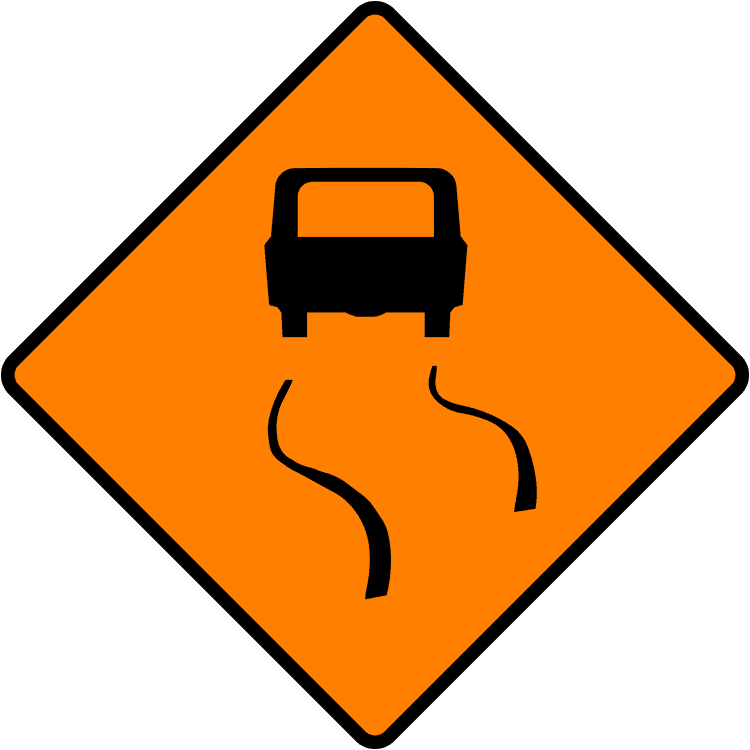 Slippery Road
 Children Crossing
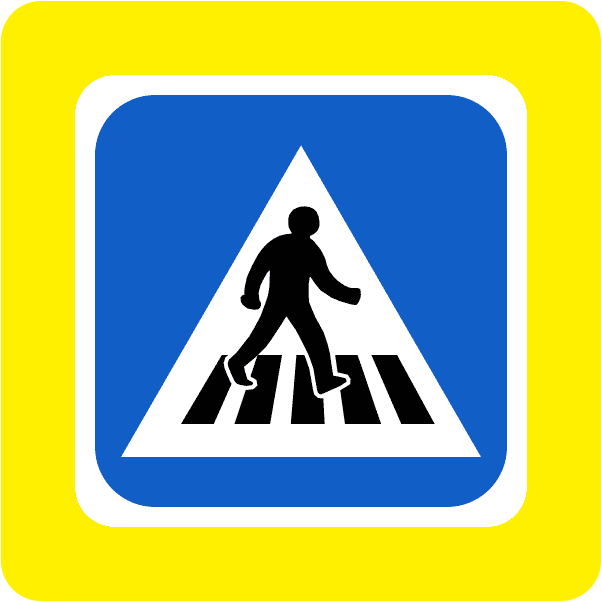 Pedestrian Crossing
 School Ahead
 Hazard
Braking physics
Many drivers assume that modern ABS (Anti-lock Braking Systems) allow vehicles to stop in the same distance regardless of weather. In reality, ABS only prevents wheel lockup to allow steering control. Wet road surfaces still reduce the friction coefficient by up to 50%, making your physical stopping distance twice as long even with ABS active.
Speed Management: Speed Limits vs. Braking Distances
Speed is the single most critical factor in determining the severity of a collision. As your speed increases, your stopping distance grows exponentially. Total stopping distance consists of two parts: thinking distance (the distance travelled while you react to a hazard) and braking distance (the distance travelled after you apply the brakes). At 50 km/h under dry conditions, your vehicle travels about 10 metres during reaction time and another 15 metres during braking, resulting in a 25-metre total stopping distance. At 120 km/h, that total stopping distance balloons to over 106 metres.
Braking distance is directly tied to kinetic energy. Because kinetic energy increases with the square of your speed, doubling your speed from 50 km/h to 100 km/h does not double your braking distance: it quadruples it (RSA, 2026). This physical reality is why speed limits in residential areas are kept strictly at 30 km/h or 50 km/h.
Stopping Distance Comparison: Dry vs. Wet Conditions
Source: RSA Driver Manual & Road Safety Authority, 2026
Driver Distraction: The Legal and Physical Toll
Driver distraction is a major contributor to road accidents in Ireland. Using a mobile phone while driving is strictly illegal and increases your crash risk by 4 times (RSA, 2026). Holding or supporting a phone is a fixed charge offence: €60 fine and 3 penalty points on payment, rising to 5 points if convicted in court. Distraction is not limited to phones: interacting with touchscreens, eating, or passenger distraction are equally dangerous.
From what we have seen in road safety surveys, a driver looking at a phone screen for just 2 seconds at 50 km/h will travel nearly 28 metres completely blind. Always keep your phone out of reach, preferably in the glovebox or connected to a hands-free system before starting your journey.
Essential Vehicle Safety & Maintenance Checks
Your vehicle is your primary line of safety on the road. Regular maintenance checks ensure that your brakes, steering, and tyres respond correctly in an emergency. Tyres are the only contact point between your car and the road. Under Irish law, the minimum legal tread depth for car tyres is 1.6 mm (Citizens Information, 2026). However, safety experts recommend replacing tyres when tread depth falls below 3 mm, as performance on wet roads drops significantly below this level.
In addition to tyre tread, you must check tyre pressure weekly when the tyres are cold. Under-inflated tyres increase fuel consumption, cause uneven wear, and reduce vehicle stability during cornering. Regularly check that all lights, including indicators and brake lights, are clean and working correctly. Ensure your windscreen washer fluid is topped up and your wiper blades are replaced annually to maintain clear visibility.
Defensive Driving Tips for the RSA Practical Test
To pass your RSA driving test, you must show the examiner that you are a safe, defensive driver. Examiners grade your driving based on specific criteria, and hazard observation is critical. You must perform frequent, visible mirror checks, especially before braking, changing lanes, or turning. Always check your blind spots before moving off or changing position. Adjust your speed to suit road conditions: driving at the speed limit on a narrow, wet country road is considered progress-inappropriate and will result in a fault.
Examiners want to see that you respond early to hazards. If you see a cyclist ahead, do not overtake until it is safe to do so, leaving at least 1.0 to 1.5 metres of clearance. By executing maneuvers smoothly and giving yourself time to react, you will show the examiner that you possess the safety mindset required to drive independently.
Frequently Asked Questions
What is the 2-second rule for driving in Ireland?
The 2-second rule is a defensive driving technique used to maintain a safe following distance. In dry conditions, you should stay at least 2 seconds behind the vehicle in front of you. This distance should be doubled to 4 seconds in wet or icy conditions.
How does speeding affect braking distance?
Braking distance increases exponentially with speed. Doubling your speed quadruples your braking distance. For example, at 50 km/h under dry conditions, total stopping distance is about 25 metres, but this increases to over 100 metres at 120 km/h.
What is defensive driving in Irish road safety?
Defensive driving is driving to save lives, time, and money, in spite of the conditions around you and the actions of others. Key principles include anticipation of hazards, keeping a safe space cushion, and adjusting speed based on weather and road conditions.
Is using a mobile phone while driving illegal in Ireland?
Yes, it is strictly illegal to hold or support a mobile phone while driving in Ireland. Conviction carries an automatic 3 penalty points and a €60 Fixed Charge Notice, rising to 5 penalty points and court prosecution if not paid.