Warning signs are your first line of defense against unexpected hazards on the road. Unlike regulatory signs which command action, warning signs alert you to dangers ahead, giving you time to adjust your speed and driving position. According to RSA collision reports, over 40% of serious accidents on regional and local Irish roads occur on sharp bends or hidden junctions where warning signs are actively posted (RSA Collision Data, 2025). As of June 2026, Garda speed check audits reveal that lane departure crashes are twice as likely to occur at locations where warning signs were ignored. Recognizing these yellow and orange diamond signs early is essential to safe driving.
Key Takeaways
- 🔶 Yellow diamonds are permanent: Diamond-shaped signs with a yellow background and black symbols indicate permanent road hazards like bends, crossings, or narrow roads.
- 🚧 Orange diamonds are temporary: Orange diamond signs indicate temporary road hazards, such as roadworks or road layout changes. These are legally binding.
- ⚠️ Roadworks compliance is low: Surveys show only 34% of Irish drivers comply with temporary speed limits at roadworks warning areas, resulting in increased enforcement (RSA, 2026).
- 🚗 Test faults are common: Failing to adjust your speed or check your mirrors when passing a warning sign is marked as a Grade 2 fault on the RSA driving test.
What Are Warning Signs?
Warning signs tell you about hazards that may be present on or near the road. In Ireland, warning signs are diamond-shaped. Most have a yellow background with a black border and symbol. The diamond shape itself is a visual warning: it indicates caution. When you see a yellow diamond, it means you must scan the road ahead and prepare to slow down. These signs cover a wide range of situations, including upcoming junctions, sharp curves, pedestrian crossings, and farm animals crossing the road.
Worth noting: according to the NDLS driver curriculum, mistaking a warning sign for an information sign is one of the most common errors made by candidates during the verbal theory check (NDLS, 2026). Always remember: if it is a diamond and it has a red or black border, it is warning you of hazard.
Key Warning Signs on Irish Roads
Ireland has unique warning signs tailored to its rural road network. Animal-related warnings are common, indicating areas where accompanied horses, cattle, or wild deer may cross the road. Road condition warning signs alert drivers to slippery roads, steep descents, or low-flying aircraft. When passing these signs, you must increase your following distance and check your mirrors to prepare for sudden stops.
Traffic Sign Examples
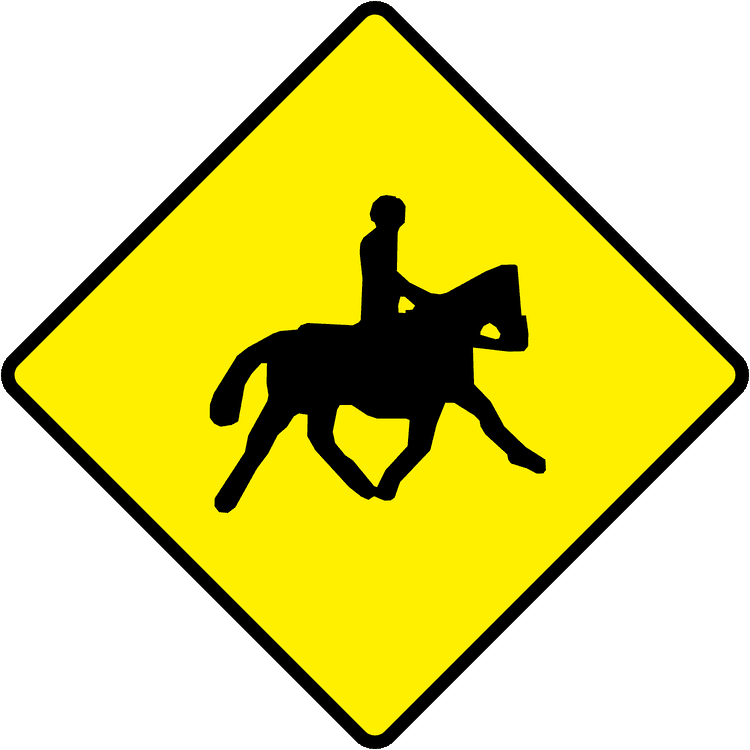 Accompanied Horses
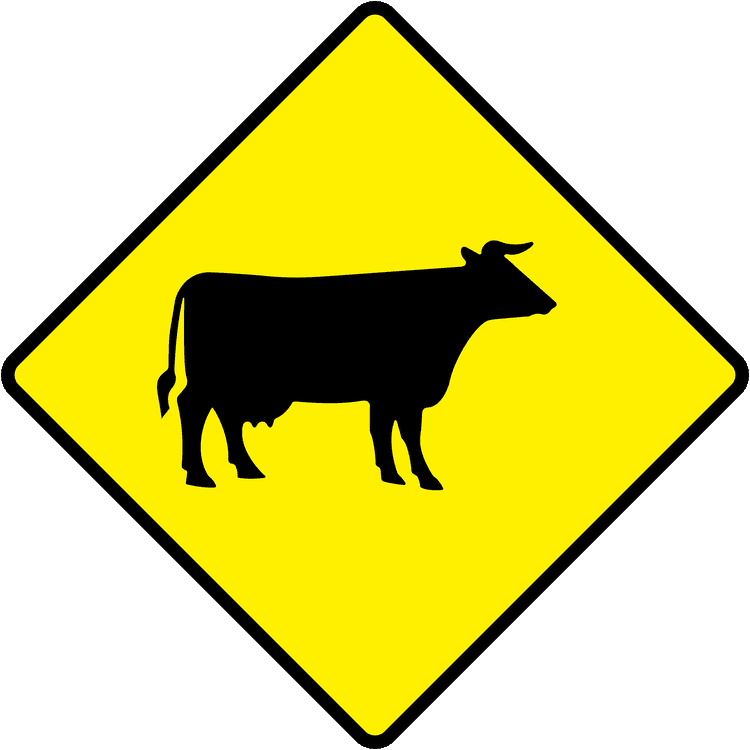 Cattle Or Farm Animals
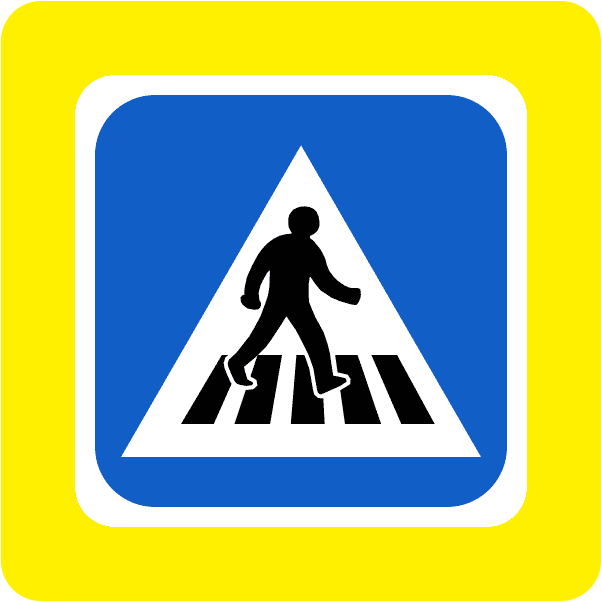 Pedestrian Crossing
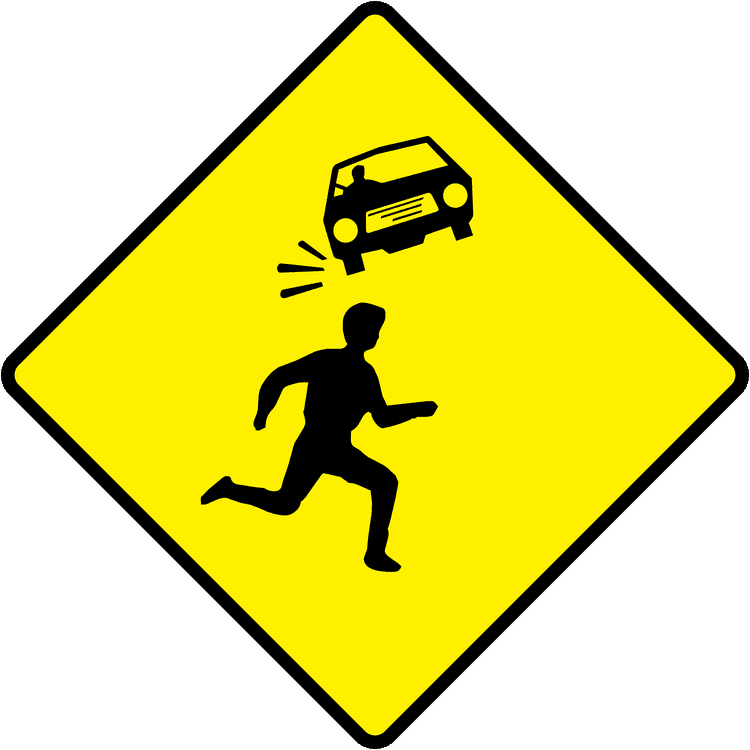 Children Crossing
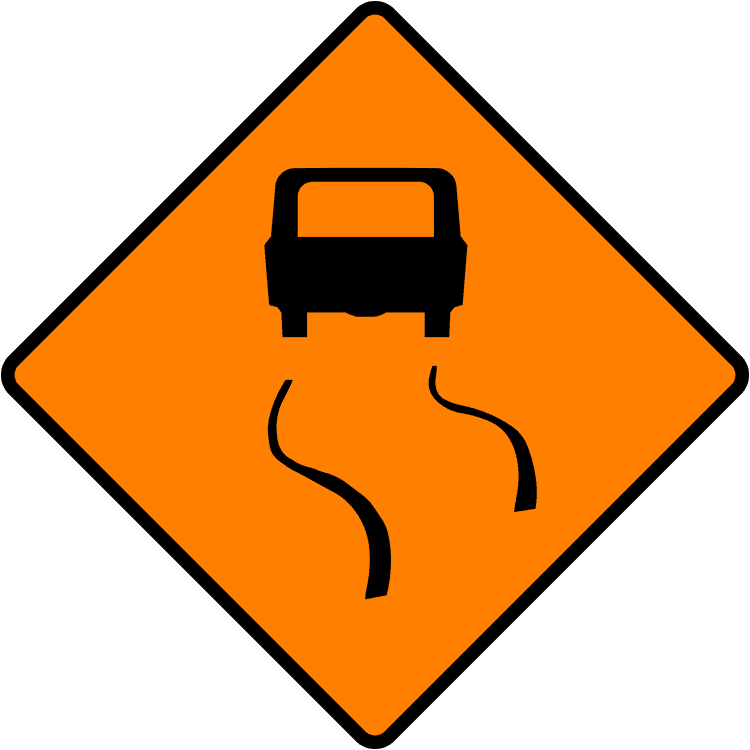 Slippery Road
Irish warning coding
Unlike continental Europe where warning signs are red-bordered triangles with white backgrounds, Ireland uses yellow and orange diamonds. This coding was introduced to provide higher visibility under poor weather conditions, such as dense fog or heavy rain, which are common on Irish roads. The yellow backing reflects headlights much better than white backgrounds.
Roadworks & Speed Limit Compliance
Temporary warning signs are used to protect road workers and drivers. These signs have an orange background with a black border and symbol. They warn you of roadworks ahead, lane restrictions, or temporary road layouts. When roadworks are active, temporary speed limits are usually put in place. These limits are legally binding: ignoring a temporary warning speed limit carries a standard €80 fine and 3 penalty points (Garda.ie, 2026).
In spite of the safety risks, compliance with these temporary limits is historically low. RSA speed audits reveal that only 34% of drivers respect the reduced limits, with over 28% exceeding the limit by more than 10 km/h. This low compliance has led to increased speed van enforcement near major roadworks projects.
Driver Speed Compliance at Roadworks (50 km/h Zone)
Source: RSA Free-Speed Survey & Road Safety Authority, 2026
Respond to Warning Signs Like a Pro
Your response to a warning sign determines its effectiveness. When you spot a warning diamond, you must take immediate action. Check your mirrors to see what is behind you, ease off the accelerator, and hover your foot over the brake pedal. This reaction prepares you to stop if the hazard appears. Do not wait until you see the hazard to reduce your speed: by then, it may be too late to stop safely.
Increase your following distance behind the vehicle in front to at least 3 seconds. Giving yourself more space gives you a buffer zone if the car ahead stops suddenly. Maintain high observation, scanning the hedges and junctions for pedestrian or animal movement.
Warning Signs on the RSA Driving Test
Driving test examiners monitor how you respond to warning signs. If you pass a warning sign and fail to react, the examiner will mark a fault. For example, if you drive past a "School Ahead" or "Pedestrian Crossing" sign without checking your mirrors and reducing your speed, you will receive a Grade 2 fault for lack of observation or progress. Overtaking a cyclist or agricultural vehicle near a sharp bend warning sign is classified as dangerous driving, resulting in an automatic Grade 3 fail.
To pass, you must show the examiner that you actively read the road. Look ahead to spot warning signs early, adjust your speed smoothly, and keep your vehicle under complete control. This safe driving style shows the examiner that you are ready to drive independently.
Frequently Asked Questions
What shape and color are warning signs in Ireland?
In Ireland, warning signs are yellow diamonds with a black border and symbol. However, temporary warning signs (such as roadworks signs) are orange diamonds with a black border and symbol.
What should you do when you see a warning sign?
When you see a warning sign, you should check your mirrors, reduce your speed to suit the upcoming hazard, increase your space cushion, and be prepared to take evasive action.
What is the penalty for ignoring a warning sign in Ireland?
While warning signs themselves are advisory, ignoring them often leads to dangerous driving or speeding violations. For instance, failing to respect temporary speed limits at roadworks warning areas results in a €80 fine and 3 penalty points.
Are warning signs tested on the RSA driving test?
Yes. Examiners test warning signs during the verbal sign check before driving, and monitor your practical reactions to warning signs (like slowing down for bends or school crossings) on the road. Failing to respond is a Grade 2 fault.