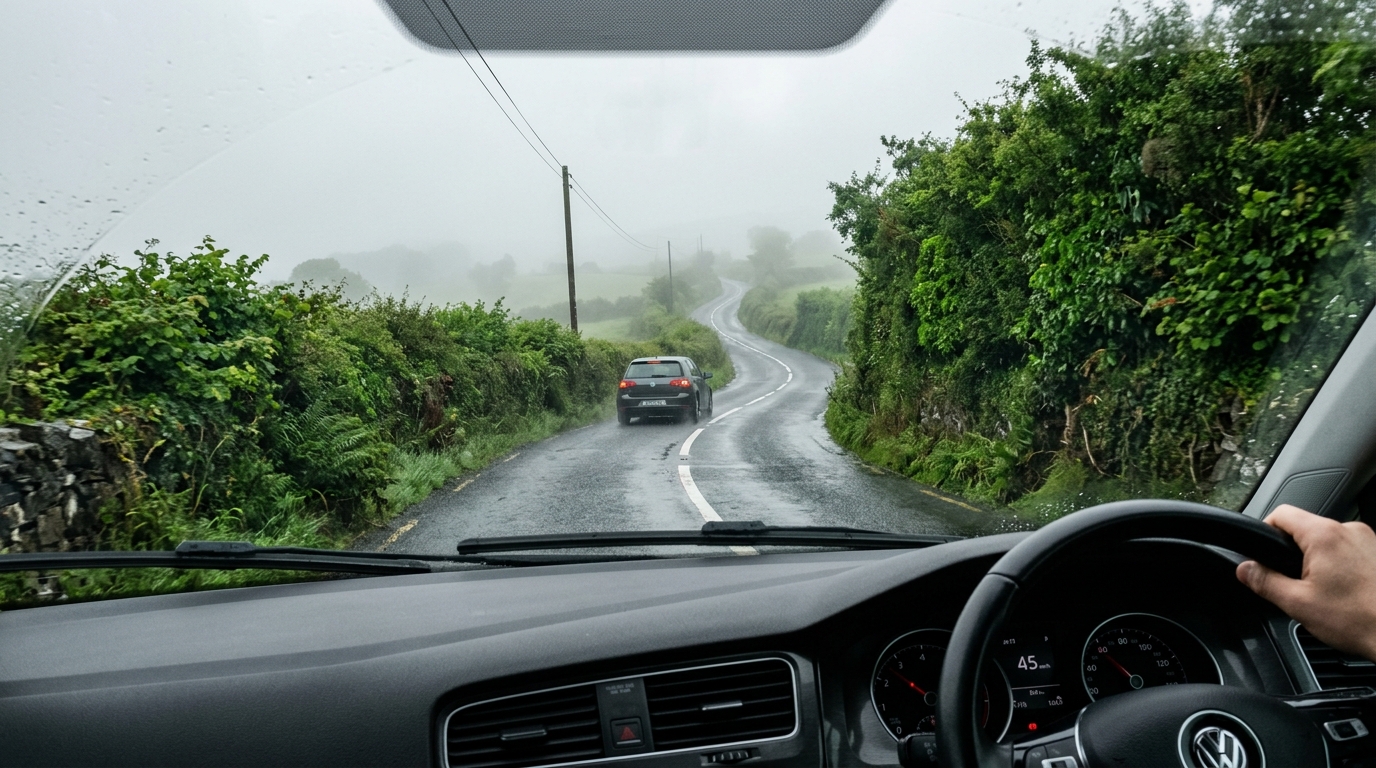
Irish regional and local roads are famous for their scenic views, but they are also notoriously challenging to drive. When you throw heavy rain, standing water, and thick fog into the mix, these narrow, winding lanes can become hazardous.
According to the Road Safety Authority (RSA), rural regional roads account for approximately 70% of all fatal collisions in Ireland. Adjusting your speed and driving techniques to suit wet and foggy conditions is crucial for protecting yourself and other road users.
Key Takeaways
- •Double Distance: Wet roads double your vehicle's stopping distance. Apply the "4-Second Rule".
- •Fog Lights: Use rear fog lights only when visibility drops below 100 meters, and switch them off once conditions clear.
- •Aquaplaning: If your tires lose grip, ease off the accelerator and steer straight. Do not brake hard.
- •Rural Hazards: Look out for farm machinery mud, standing water, and fallen leaves on regional lanes.
Wet Weather & The 4-Second Rule
When asphalt becomes wet, tire grip decreases, and your stopping distance doubles. Under standard dry conditions, you should leave a 2-second gap between your car and the vehicle in front.
In wet weather, you must expand this gap to at least 4 seconds. Pick a fixed object like a road sign or telephone pole. Once the vehicle ahead passes it, count: "one thousand and one, one thousand and two, one thousand and three, one thousand and four." If you pass the object before you finish, you are too close.
Tire Depth Citation Capsule
RSA safety studies show that tires with less than 3mm tread depth experience a 30% increase in wet weather stopping distances. While the legal minimum is 1.6mm, driving instructors recommend replacing tires once they drop below 3mm.
Navigating Low Visibility: How to Use Fog Lights
Thick fog can reduce visibility to dangerous levels within seconds. Here is the step-by-step action plan to handle fog safely:
Switch on Dipped Headlights
Always use dipped headlights in fog. Never use full beams, as the light reflects off the water droplets in the fog, creating blinding glare.
Activate Rear Fog Lights
Switch on your rear fog lights if you cannot see more than 100 meters (about 25 car lengths) ahead of your vehicle.
Deactivate Once Visibility Clears
Turn your fog lights off once visibility improves. Keeping them on in clear weather dazzles drivers behind you, which is a traffic offence.
How to Prevent and Recover from Aquaplaning
Aquaplaning occurs when a layer of water builds up between your car tires and the road surface, causing your steering and brakes to lose all response. You will feel the steering wheel suddenly go light and loose.
If your car begins to aquaplane, follow these steps to recover control safely:
- Do not hit the brakes: Braking hard locks your wheels, which will cause your vehicle to spin once the tires regain grip.
- Ease off the accelerator: Gently release the gas pedal to let the vehicle slow down naturally.
- Keep the steering wheel straight: Do not turn the wheel. Keep it pointed straight in the direction of the road until your tires cut through the water and regain grip.
Frequently Asked Questions
Can I drive with fog lights on when it is raining heavily?
No. Fog lights should only be activated when visibility drops below 100 meters. Using them in normal rain causes severe reflection off wet asphalt, blinding drivers behind you.
What is the safe speed limit on rural roads in the wet?
While rural regional roads have a 80 km/h ceiling, speed limits are maximums for ideal conditions. In rain or fog, you must reduce speed to match visibility and road surface traction.
What is the 4-second rule in Irish driving?
The 4-second rule doubles the standard 2-second gap between your car and the vehicle ahead during wet weather to account for increased stopping distance.
What should I do if my car starts aquaplaning?
Ease off the accelerator gently, hold the steering wheel straight, and avoid slamming on the brakes until your tires regain traction with the road surface.
Conclusion
Safe driving on Irish regional roads in bad weather requires caution and slow speeds. By keeping a 4-second gap, using your dipped headlights and fog lights correctly, and knowing how to handle standing water, you will stay safe and avoid collisions.