Irish Traffic Signs Logo
Irish Traffic Signs
SignsBlogPenalty PointsAppFAQHelp CenterFavorites
Irish Traffic Signs

Learn Irish traffic signs with visual matching quizzes and detailed explanations. Free platform for drivers preparing for their test.

Learn

  • Traffic Signs
  • Interactive Quiz
  • Mobile App

Support

  • Help Center
  • FAQ
  • Penalty Points

Company

  • About Us
  • Privacy Policy
  • Terms of Service

© 2026 Irish Traffic Signs. All rights reserved.

This is not an official application. It is prepared for educational purposes.

Made with ❤️ for Irish drivers

HomeRegulatory SignsLRT Speed Limit
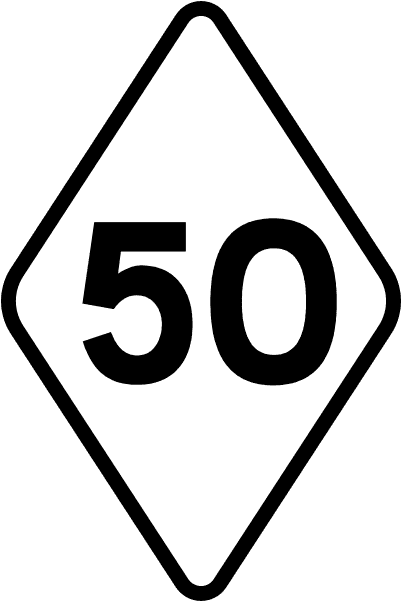
A regulatory road sign in Ireland enforcing lrt speed limit. Essential for the Driving Theory Test.

LRT Speed Limit

Category

Regulatory

Difficulty

Intermediate

What Does This Sign Mean?

Maximum permitted speed for light rail transit vehicles.

Key Points:

🚋 This sign indicates a mandatory speed limit for trams only.
🚗 It does not apply to regular road traffic.
🔢 The speed is shown in km/h.

Related Regulatory signs

  • A regulatory road sign in Ireland enforcing rural speed limit. Essential for the Driving Theory Test.

    Rural Speed Limit

  • A regulatory road sign in Ireland enforcing speed limit 60 km. Essential for the Driving Theory Test.

    Speed Limit 60 km

  • A regulatory road sign in Ireland enforcing speed limit 40 km. Essential for the Driving Theory Test.

    Speed Limit 40 km

  • A regulatory road sign in Ireland enforcing speed limit 30 km. Essential for the Driving Theory Test.

    Speed Limit 30 km

  • A regulatory road sign in Ireland enforcing speed limit 20 km. Essential for the Driving Theory Test.

    Speed Limit 20 km

  • A regulatory road sign in Ireland enforcing speed limit 120 km. Essential for the Driving Theory Test.

    Speed Limit 120 km

Complete Guide to This Sign

Where You'll Find This Sign

LRT (Light Rail Transit) Speed Limit signs appear along Dublin's Luas tram network—the Red Line (Tallaght/Saggart to The Point) and Green Line (Broombridge to Bride's Glen)—displaying tram-specific speed restrictions.

These signs feature tram symbols distinguishing them from general traffic speed limits.

Common locations include street-running sections through Dublin city center where trams share road space with general traffic (O'Connell Street, Abbey Street, Harcourt Street), curves where tram speed restrictions prevent derailment risks, platform approach zones requiring reduced speeds for passenger safety, and junctions where tram movements interact with vehicular and pedestrian traffic.

Speed limits vary by section: 30km/h in busy pedestrian areas, 50-60km/h in street-running sections with mixed traffic, and up to 70km/h on dedicated segregated track sections.

Signs are positioned track-side at points where speed restrictions change, visible to tram drivers but sometimes also visible to road users sharing the same streets.

What This Means for Drivers

This regulatory sign establishes mandatory maximum speeds specifically for Luas tram operators—it does not apply to general road traffic.

The tram symbol on the sign (or LRT designation) clearly indicates applicability only to light rail vehicles.

Tram drivers must comply with these speed restrictions enforced through onboard monitoring systems that log speeds and trigger alarms if limits are exceeded.

The separate speed regime for trams reflects different safety considerations: tram braking distances, passenger comfort during acceleration/deceleration, pedestrian safety in shared spaces, and track geometry constraints.

Road users sharing streets with trams (Abbey Street, O'Connell Street) should be aware that tram speed limits differ from general traffic limits—trams may travel at different speeds than surrounding traffic.

While the sign doesn't regulate road traffic directly, awareness of tram speed restrictions helps drivers anticipate tram movements and understand why trams may travel faster or slower than road traffic in various sections.

Penalties & Legal Consequences

LRT speed limit violations are enforced through Transdev (Luas operator) internal systems rather than Road Traffic Act provisions applying to road vehicles.

Tram drivers exceeding speed limits face employment disciplinary procedures including warnings, retraining, suspension, or termination depending on severity and frequency.

All trams have onboard data recorders logging speeds continuously—supervisors review data for compliance.

Excessive speed violations creating safety hazards or incidents trigger Railway Safety Commission investigations and potential individual driver sanctions.

While general road traffic isn't subject to LRT speed limit signs, drivers should be aware that trams have separate regulatory frameworks.

Collisions between road vehicles and trams are investigated considering whether trams complied with their speed limits—tram speed violations may affect liability determinations if excessive speed contributed to collision circumstances.

Insurance assessments of tram-vehicle collisions examine whether both parties complied with applicable regulations—tram speed data is typically subpoenaed in litigation.

Appears in Driving Test?

Theory test questions about LRT-specific signs emphasize understanding that certain signs apply only to trams, not general traffic.

Questions assess recognition of tram symbols and LRT designations indicating applicability, and understanding that trams operate under separate regulatory frameworks.

Questions might ask what an LRT Speed Limit sign means, whether it applies to road vehicles, or why separate tram speed limits exist.

Scenario questions test understanding that trams may travel at different speeds than surrounding traffic due to separate regulations.

Practical driving tests along Luas routes (Red and Green Lines) assess: awareness of tram presence and movements, understanding that trams follow separate traffic regulations, appropriate caution when sharing road space with trams, and recognition that tram behavior may differ from general traffic due to different regulatory requirements.

Examiners expect candidates to demonstrate awareness of tram priority, stopping patterns, and speed characteristics without confusion about which signs apply to road vehicles versus trams.

Frequently Asked Questions about the LRT Speed Limit Sign

What does the LRT Speed Limit sign mean in Ireland?

In Ireland, the LRT Speed Limit sign indicates: Maximum permitted speed for light rail transit vehicles. Understanding this is crucial for safe driving and passing your DTT.

What type of sign is the LRT Speed Limit?

The "LRT Speed Limit" is officially classified as part of the REGULATORY group in Ireland. Like other signs of this type, it alerts drivers to specific rules, hazards, or information they must immediately observe.

Will the LRT Speed Limit sign appear on the Irish Theory Test?

Yes, you should expect the LRT Speed Limit sign to appear on your Irish Driving Theory Test (DTT). You must be able to identify it as a REGULATORY and know what it requires from you as a driver.

●Live App Updates

Master Irish Signs on Mobile

Get instant access to 400+ signs, interactive quizzes, and progress tracking. Download the free app today!

🍎
Download on
App Store
🤖
Get it on
Google Play