Irish Traffic Signs Logo
Irish Traffic Signs
SignsBlogPenalty PointsAppFAQHelp CenterFavorites
Irish Traffic Signs

Learn Irish traffic signs with visual matching quizzes and detailed explanations. Free platform for drivers preparing for their test.

Learn

  • Traffic Signs
  • Interactive Quiz
  • Mobile App

Support

  • Help Center
  • FAQ
  • Penalty Points

Company

  • About Us
  • Privacy Policy
  • Terms of Service

© 2026 Irish Traffic Signs. All rights reserved.

This is not an official application. It is prepared for educational purposes.

Made with ❤️ for Irish drivers

HomeRegulatory SignsKeep Left
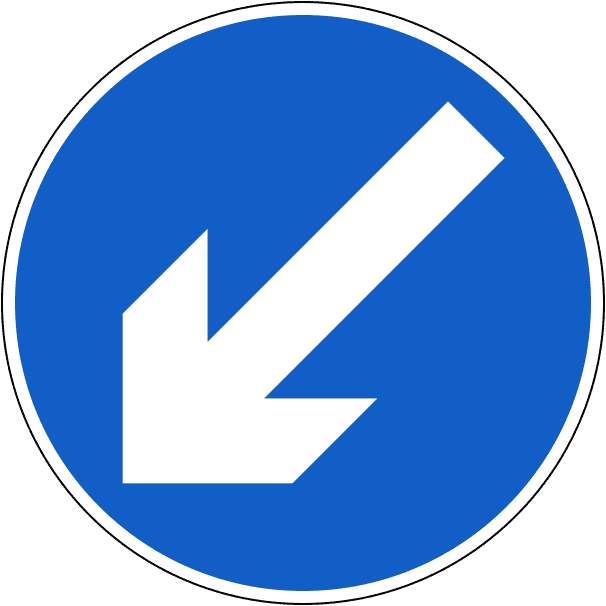
A regulatory road sign in Ireland enforcing keep left. Essential for the Driving Theory Test.

Keep Left

Category

Regulatory

Difficulty

Intermediate

What Does This Sign Mean?

Mandatory direction—pass on left side or stay left.

Key Points:

⬅️ You must keep to the left of this sign.
🚧 This is a compulsory instruction, often used to pass an island or obstruction.
🚗 Do not pass on the right.

Related Regulatory signs

  • A regulatory road sign in Ireland enforcing turn left. Essential for the Driving Theory Test.

    Turn Left

  • A regulatory road sign in Ireland enforcing turn left ahead. Essential for the Driving Theory Test.

    Turn Left Ahead

  • A regulatory road sign in Ireland enforcing keep straight ahead. Essential for the Driving Theory Test.

    Keep Straight Ahead

  • A regulatory road sign in Ireland enforcing keep right. Essential for the Driving Theory Test.

    Keep Right

  • A regulatory road sign in Ireland enforcing turn right. Essential for the Driving Theory Test.

    Turn Right

  • A regulatory road sign in Ireland enforcing turn right ahead. Essential for the Driving Theory Test.

    Turn Right Ahead

Complete Guide to This Sign

Where You'll Find This Sign

Keep Left signs appear at traffic islands, road narrowings, obstructions, and channelization points throughout Ireland where traffic must pass on specific sides for safety or traffic flow.

Common locations include approach sides of central refuges at pedestrian crossings, roundabout approach islands channelizing traffic into circulatory lanes, road narrowing points where construction or permanent features reduce carriageway width, and temporary traffic management at roadworks.

These signs often accompany physical features: bollards, kerbs, hatched road markings, or temporary barriers indicating which side traffic must pass.

Placement typically occurs on or immediately before the obstruction/island, with the circular blue mandatory sign (white arrow on blue background) indicating the required direction.

Urban areas feature these extensively at pedestrian refuge islands on arterial routes.

Roadworks sites use Keep Left signs on temporary barriers directing traffic around work areas.

What This Means for Drivers

This mandatory directional sign requires traffic to pass on the left side of the sign/obstruction/island, prohibiting passage on the right.

Unlike advisory signs, this is a legal requirement—drivers must comply regardless of apparent convenience of alternative routing.

The sign typically indicates situations where right-side passage would be dangerous (opposing traffic uses right side), inefficient (creates conflicting movements), or impossible (physical obstruction blocks right side).

Common scenarios include: approaching pedestrian refuge islands (traffic passes left, pedestrians use island protection), navigating roadworks channelization (left passage keeps traffic away from work zone), and entering roundabouts (keeping left of approach island directs traffic into circulatory lane correctly).

The mandatory nature means drivers cannot choose alternative routing based on preference—violation constitutes regulatory offense.

The sign works with road markings and physical features to guide traffic safely past obstructions or through constrained spaces.

Penalties & Legal Consequences

Violating Keep Left mandatory directions results in fixed penalties (€80, 2 penalty points) for failing to comply with mandatory traffic signs.

Violations creating dangerous situations (passing on wrong side into opposing traffic, or into work zones) may constitute dangerous driving (€5,000, 5 penalty points, disqualification).

Collisions resulting from wrong-side passage at signed obstructions typically establish primary liability (80-95%) against violating drivers—visible mandatory signs indicate proper routing, making violations clearly negligent.

Insurance companies examine whether drivers complied with mandatory directional signs—violations establish contributory negligence even if other factors contributed to collisions.

At roadworks, passing on prohibited sides may result in additional charges if vehicles enter work zones endangering workers.

Emergency vehicles may deviate from mandatory directions when necessary with emergency equipment activated, but general traffic must always comply.

Foreign drivers unfamiliar with Irish sign conventions face identical enforcement—circular blue signs with white arrows are internationally recognized as mandatory directions.

Appears in Driving Test?

Theory test questions about mandatory directional signs emphasize understanding that circular blue signs indicate compulsory directions, recognition of Keep Left signs and their meanings, and knowledge that violations constitute regulatory offenses.

Questions assess understanding of why mandatory directions exist (safety, traffic flow, preventing dangerous movements), differences between mandatory signs (must obey) and advisory signs (should obey), and appropriate compliance at various sign locations (islands, narrowings, obstructions).

Scenario questions test whether candidates recognize Keep Left signs and understand that passage on other sides is prohibited.

Practical driving tests include numerous locations with Keep Left signs (pedestrian refuge islands, roadworks, roundabout approaches); examiners assess: recognition of mandatory directional signs, compliance with signed directions (passing on correct sides), smooth execution without hesitation, and understanding that mandatory signs require specific routing regardless of apparent alternatives.

Common faults include passing on wrong sides of obstructions despite clear mandatory signs, or treating mandatory signs as advisory suggestions.

Frequently Asked Questions about the Keep Left Sign

What does the Keep Left sign mean in Ireland?

In Ireland, the Keep Left sign indicates: Mandatory direction—pass on left side or stay left. Understanding this is crucial for safe driving and passing your DTT.

What type of sign is the Keep Left?

The "Keep Left" is officially classified as part of the REGULATORY group in Ireland. Like other signs of this type, it alerts drivers to specific rules, hazards, or information they must immediately observe.

Will the Keep Left sign appear on the Irish Theory Test?

Yes, you should expect the Keep Left sign to appear on your Irish Driving Theory Test (DTT). You must be able to identify it as a REGULATORY and know what it requires from you as a driver.

●Live App Updates

Master Irish Signs on Mobile

Get instant access to 400+ signs, interactive quizzes, and progress tracking. Download the free app today!

🍎
Download on
App Store
🤖
Get it on
Google Play