Irish Traffic Signs Logo
Irish Traffic Signs
SignsBlogPenalty PointsAppFAQHelp CenterFavorites
Irish Traffic Signs

Learn Irish traffic signs with visual matching quizzes and detailed explanations. Free platform for drivers preparing for their test.

Learn

  • Traffic Signs
  • Interactive Quiz
  • Mobile App

Support

  • Help Center
  • FAQ
  • Penalty Points

Company

  • About Us
  • Privacy Policy
  • Terms of Service

© 2026 Irish Traffic Signs. All rights reserved.

This is not an official application. It is prepared for educational purposes.

Made with ❤️ for Irish drivers

HomeWarning SignsSide Road on Dual C'way - (No CR Break)
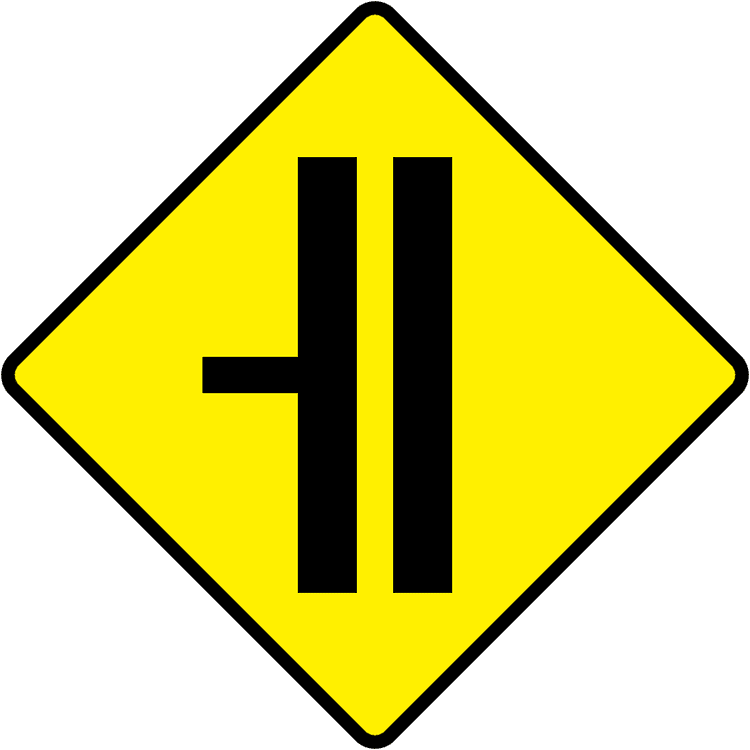
A triangular warning traffic sign in Ireland depicting side road on dual c'way - (no cr break). Memorize for DTT.

Side Road on Dual C'way - (No CR Break)

Category

Warning

Difficulty

Intermediate

What Does This Sign Mean?

Side road joins dual carriageway without median break.

Key Points:

🛣️ A side road joins the dual carriageway from the left.
⛔ There is no gap in the central reserve, so traffic cannot cross.
🚗 Watch for traffic merging from the left only.

Related Warning signs

  • A triangular warning traffic sign in Ireland depicting side road on dual c'way - left (with cr break). Memorize for DTT.

    Side Road on Dual C'way - Left (with CR Break)

  • A triangular warning traffic sign in Ireland depicting side road on dual c'way - right (with cr break). Memorize for DTT.

    Side Road on Dual C'way - Right (with CR Break)

  • A triangular warning traffic sign in Ireland depicting t junction ahead at dual c'way (no cr break). Memorize for DTT.

    T Junction Ahead at Dual C'way (No CR Break)

  • A triangular warning traffic sign in Ireland depicting side road on outside of bend - right. Memorize for DTT.

    Side Road on Outside of Bend - Right

  • A triangular warning traffic sign in Ireland depicting side road on outside of bend - left. Memorize for DTT.

    Side Road on Outside of Bend - Left

  • A triangular warning traffic sign in Ireland depicting side road on inside of bend - right. Memorize for DTT.

    Side Road on Inside of Bend - Right

Complete Guide to This Sign

Where You'll Find This Sign

Side Road on Dual Carriageway (No Central Reserve Break) signs appear on motorways and dual carriageways where minor roads join without median breaks allowing cross-traffic.

Common on the M50 where distributor roads join, sections of the N11 and N7 with restricted access junctions, and dual carriageway bypasses around towns.

The absence of a central reserve break means side road traffic can only turn left onto the dual carriageway and traffic on the dual carriageway can only exit left.

No crossing movements or right turns are possible.

What This Means for Drivers

A side road joins from the left ahead but the central reservation (median) is continuous without a break.

This means vehicles from the side road can only turn left into your nearside lane.

There is no possibility of vehicles crossing from the opposite carriageway or making right turns at this junction.

Maintain awareness for merging traffic from the left.

If you intend to exit left onto the side road, signal early, check mirrors, and move to the left lane well in advance.

This junction type is safer than junctions with central reserve breaks.

Penalties & Legal Consequences

Attempting to turn right onto a side road where no central reserve break exists requires crossing the median illegally, constituting dangerous driving: 5 penalty points, fines to €5,000, imprisonment, and disqualification for minimum 2 years.

Many dual carriageway medians have barriers making such violations physically impossible.

If merging traffic from the side road causes collision by failing to yield, primary liability falls on the merging driver.

Main carriageway drivers must still demonstrate defensive awareness—contributory negligence applies if avoidance was possible.

Appears in Driving Test?

Understanding different junction types on dual carriageways is essential for theory test success.

Questions test knowledge that junctions without central reserve breaks restrict turning movements to left turns only.

You must recognize that No CR Break means simpler traffic patterns with hazards only from the nearside.

Practical tests on dual carriageways assess whether you identify junction types correctly and respond appropriately.

When passing left-side junctions, examiners expect mirror checks and awareness of potential merging traffic.

Incorrect understanding of junction types can lead to dangerous maneuvers resulting in Grade 3 failure.

Frequently Asked Questions about the Side Road on Dual C'way - (No CR Break) Sign

What does the Side Road on Dual C'way - (No CR Break) sign mean in Ireland?

In Ireland, the Side Road on Dual C'way - (No CR Break) sign indicates: Side road joins dual carriageway without median break. Understanding this is crucial for safe driving and passing your DTT.

What type of sign is the Side Road on Dual C'way - (No CR Break)?

The "Side Road on Dual C'way - (No CR Break)" is officially classified as part of the WARNING group in Ireland. Like other signs of this type, it alerts drivers to specific rules, hazards, or information they must immediately observe.

Will the Side Road on Dual C'way - (No CR Break) sign appear on the Irish Theory Test?

Yes, you should expect the Side Road on Dual C'way - (No CR Break) sign to appear on your Irish Driving Theory Test (DTT). You must be able to identify it as a WARNING and know what it requires from you as a driver.

●Live App Updates

Master Irish Signs on Mobile

Get instant access to 400+ signs, interactive quizzes, and progress tracking. Download the free app today!

🍎
Download on
App Store
🤖
Get it on
Google Play