Irish Traffic Signs Logo
Irish Traffic Signs
SignsBlogPenalty PointsAppFAQHelp CenterFavorites
Irish Traffic Signs

Learn Irish traffic signs with visual matching quizzes and detailed explanations. Free platform for drivers preparing for their test.

Learn

  • Traffic Signs
  • Interactive Quiz
  • Mobile App

Support

  • Help Center
  • FAQ
  • Penalty Points

Company

  • About Us
  • Privacy Policy
  • Terms of Service

© 2026 Irish Traffic Signs. All rights reserved.

This is not an official application. It is prepared for educational purposes.

Made with ❤️ for Irish drivers

HomeWarning SignsSteep Descent
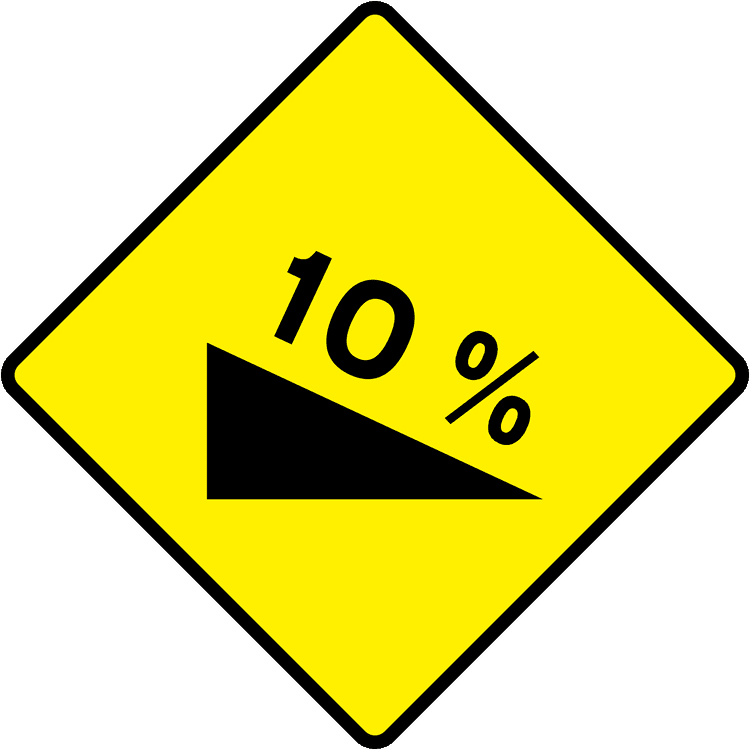
A triangular warning traffic sign in Ireland depicting steep descent. Memorize for DTT.

Steep Descent

Category

Warning

Difficulty

Intermediate

What Does This Sign Mean?

Significant downhill gradient—brake fade risk.

Key Points:

📉 Warns of a steep downhill slope ahead.
⚙️ Select a low gear to use engine braking.
🚫 Avoid over-relying on brakes to avoid overheating.

Related Warning signs

  • A triangular warning traffic sign in Ireland depicting steep ascent. Memorize for DTT.

    Steep Ascent

  • A triangular warning traffic sign in Ireland depicting y-junction - left. Memorize for DTT.

    Y-Junction - Left

  • A triangular warning traffic sign in Ireland depicting tunnel. Memorize for DTT.

    Tunnel

  • A triangular warning traffic sign in Ireland depicting tram crossing. Memorize for DTT.

    Tram Crossing

  • A triangular warning traffic sign in Ireland depicting t-junction (type 1) - right. Memorize for DTT.

    T-Junction (Type 1) - Right

  • A triangular warning traffic sign in Ireland depicting t-junction (type 1) - left. Memorize for DTT.

    T-Junction (Type 1) - Left

Complete Guide to This Sign

Where You'll Find This Sign

Steep descent warnings appear before significant downhill gradients on the same mountain routes featuring steep ascent signs—Kerry mountain passes (Conor Pass descent toward Dingle, Healy Pass descent into Glengarriff), Wicklow (Sally Gap northbound, Military Road sections), Donegal (Glengesh Pass southbound, Mamore Gap), and Cork-Kerry border routes.

These signs indicate sustained downward gradients typically 10-14% or steeper, often continuing for 1-3km.

Placement occurs 100-200 metres before the descent begins, frequently supplemented by percentage gradient plates.

You'll see these particularly on tourist routes where coastal roads descend from elevated inland sections to sea level, and on historical mountain passes where direct descent routes were prioritized over gentler modern engineering.

Emergency escape lanes (sand-filled uphill ramps) sometimes accompany the steepest descents for vehicles with brake failures.

What This Means for Drivers

This sign warns of steep downhill gradients requiring specific driving techniques to maintain control and prevent brake failure.

The primary hazard is brake fade—brake components overheating from prolonged use, reducing braking effectiveness potentially to dangerous or zero levels.

Proper technique involves selecting a low gear before the descent begins, using engine braking (compression forces) to control speed rather than relying on foot brakes.

Lower gears provide significant speed control—second gear on steep descents, third on moderate descents.

Automatic transmission vehicles allow manual gear selection for descents.

The steeper the gradient and the heavier the vehicle, the lower the gear required.

Continuous brake application on long steep descents can heat brake components to 400-600°C, causing fade, and potentially igniting brake fluid or damaging brake systems requiring expensive repairs.

Penalties & Legal Consequences

Poor gradient management causing loss of control on steep descents frequently results in serious charges.

Vehicles that run away downhill due to inadequate engine braking face dangerous driving charges (€5,000, 5 penalty points, disqualification), especially if property damage or injuries result.

Collisions caused by brake fade on signed steep descents typically establish negligence—visible warnings indicate drivers should have used engine braking.

Commercial vehicle operators whose brake systems overheat to the point of smoke or fire face prosecution under Road Traffic Act vehicle condition provisions (€5,000 fines) plus commercial vehicle regulations violations.

Insurance claims examine whether drivers used appropriate techniques—failure to engage low gears on warned steep descents establishes contributory negligence of 40-70%.

Fatal accidents involving runaway vehicles on steep descents often result in vehicular manslaughter charges with potential prison sentences.

Appears in Driving Test?

Theory test questions about steep descents emphasize proper techniques for brake preservation and vehicle control.

Questions assess understanding of engine braking principles, appropriate gear selection for descents, risks of brake fade, and differences between techniques for various vehicle types.

Questions might ask what you should do when seeing this sign, why low gears are necessary, or what happens if you rely solely on foot brakes.

Practical tests in mountainous areas require demonstration of proper descent techniques: selecting low gear before descent begins, controlled steady speed using engine braking, minimal foot brake use, smooth gear changes if additional braking needed, and awareness of increased stopping distances.

Common faults include entering descents in too high a gear, over-relying on foot brakes causing brake smell or smoke, or harsh sudden braking indicating poor anticipation.

Frequently Asked Questions about the Steep Descent Sign

What does the Steep Descent sign mean in Ireland?

In Ireland, the Steep Descent sign indicates: Significant downhill gradient—brake fade risk. Understanding this is crucial for safe driving and passing your DTT.

What type of sign is the Steep Descent?

The "Steep Descent" is officially classified as part of the WARNING group in Ireland. Like other signs of this type, it alerts drivers to specific rules, hazards, or information they must immediately observe.

Will the Steep Descent sign appear on the Irish Theory Test?

Yes, you should expect the Steep Descent sign to appear on your Irish Driving Theory Test (DTT). You must be able to identify it as a WARNING and know what it requires from you as a driver.

●Live App Updates

Master Irish Signs on Mobile

Get instant access to 400+ signs, interactive quizzes, and progress tracking. Download the free app today!

🍎
Download on
App Store
🤖
Get it on
Google Play