Irish Traffic Signs Logo
Irish Traffic Signs
SignsBlogPenalty PointsAppFAQHelp CenterFavorites
Irish Traffic Signs

Learn Irish traffic signs with visual matching quizzes and detailed explanations. Free platform for drivers preparing for their test.

Learn

  • Traffic Signs
  • Interactive Quiz
  • Mobile App

Support

  • Help Center
  • FAQ
  • Penalty Points

Company

  • About Us
  • Privacy Policy
  • Terms of Service

© 2026 Irish Traffic Signs. All rights reserved.

This is not an official application. It is prepared for educational purposes.

Made with ❤️ for Irish drivers

HomeWarning SignsTwo-way Traffic Crossing
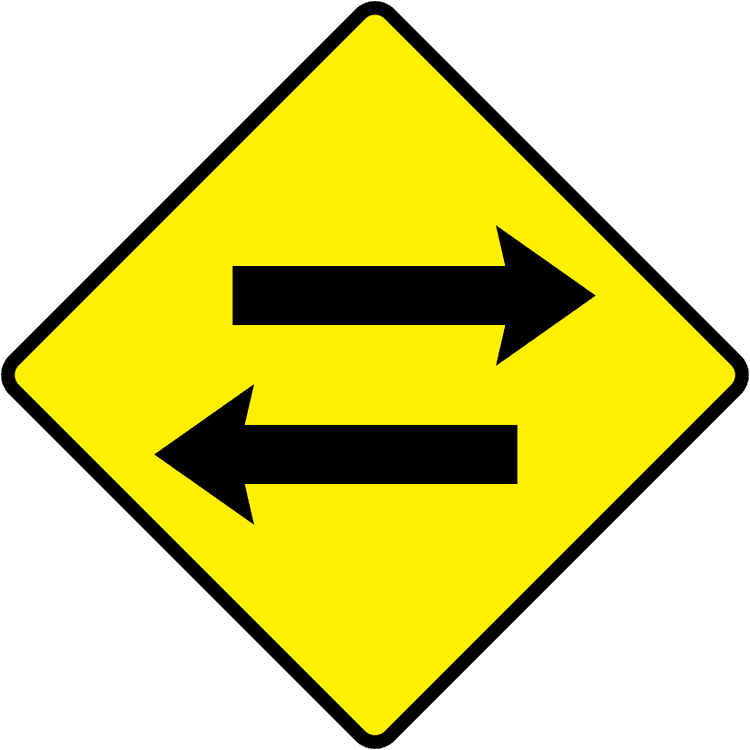
A triangular warning traffic sign in Ireland depicting two-way traffic crossing. Memorize for DTT.

Two-way Traffic Crossing

Category

Warning

Difficulty

Intermediate

What Does This Sign Mean?

Two-way traffic route crosses ahead.

Key Points:

↔️ Warns that you are about to cross a road with two-way traffic.
🚗 This is often used when exiting a one-way system.
👀 Look for traffic from both left and right.

Related Warning signs

  • A triangular warning traffic sign in Ireland depicting two-way traffic. Memorize for DTT.

    Two-way Traffic

  • A triangular warning traffic sign in Ireland depicting tram crossing. Memorize for DTT.

    Tram Crossing

  • A triangular warning traffic sign in Ireland depicting stop ahead. Memorize for DTT.

    Stop Ahead

  • A triangular warning traffic sign in Ireland depicting school ahead. Memorize for DTT.

    School Ahead

  • A triangular warning traffic sign in Ireland depicting roundabout ahead. Memorize for DTT.

    Roundabout Ahead

  • A triangular warning traffic sign in Ireland depicting pedestrians crossing. Memorize for DTT.

    Pedestrians Crossing

Complete Guide to This Sign

Where You'll Find This Sign

Two-way traffic crossing signs appear where one-way street systems intersect with two-way roads, most common in Dublin city center where extensive one-way networks meet two-way arterial routes, and in Cork, Limerick, and Galway city centers with similar one-way system configurations.

Typical locations include exits from one-way streets onto quays along the Liffey in Dublin, transitions from one-way shopping streets to two-way through-routes in Cork, and one-way system boundaries in Galway's Latin Quarter area.

These signs also appear at some unusual junction configurations where one-way industrial estate roads meet public two-way roads.

Placement occurs 30-60 metres before the junction where one-way traffic encounters two-way cross traffic, providing advance warning that observation requirements change significantly from typical one-way junction practice.

What This Means for Drivers

This sign warns that your one-way street intersects ahead with a two-way road, requiring observation for traffic approaching from both directions on the cross street—a critical behavioral shift from typical one-way junctions where cross traffic may approach from only one direction.

After traveling in one-way systems where all surrounding traffic moves in your direction or perpendicular predictable patterns, encountering two-way cross traffic requires mental adjustment: you must check both left and right for approaching vehicles, not just the direction that one-way system logic would suggest.

The warning is particularly important where driver expectation based on one-way system geometry might suggest traffic approaches from only one direction.

The sign prompts comprehensive observation (look both ways regardless of apparent priority), awareness that traffic flow patterns differ from one-way system norms, and caution recognizing that your one-way system familiarity doesn't apply to the cross street.

Penalties & Legal Consequences

Failing to observe appropriately at warned two-way traffic crossings can result in serious collisions and charges.

Emerging into two-way cross traffic without checking both directions—common error when one-way system experience creates expectation of traffic from one direction only—typically results in careless driving charges (€80-€120, 2-3 penalty points), escalating to dangerous driving (€5,000, 5 penalty points, disqualification) if collisions occur. 'Failed to observe' collisions at such junctions often establish primary liability (70-90%) against the emerging driver despite any cross traffic speed issues.

Insurance companies heavily scrutinize incidents at signed two-way crossings—visible warnings establish drivers should have recognized that observation requirements differed from typical one-way junctions.

The RSA identifies transitions from one-way to two-way configurations as locations where driver expectation errors create collision risks, making such incidents strongly indicative of careless driving.

Appears in Driving Test?

Theory test questions about two-way traffic crossings emphasize the mental shift required when exiting one-way systems and the importance of comprehensive observation.

Questions assess understanding that cross streets may have traffic from both directions despite one-way system geometry suggesting otherwise, and that observation must check both ways regardless of apparent priority or junction layout.

Scenario questions test whether candidates recognize hazards created by transitioning from one-way to two-way traffic environments.

Practical driving tests in Dublin, Cork, Galway, or Limerick commonly include one-way system navigation with exits onto two-way roads; examiners assess: recognition of two-way crossing warnings, comprehensive observation checking both directions regardless of junction geometry or apparent priority, appropriate caution at transitions, and demonstration that candidates haven't developed one-way system observation patterns that ignore possible two-way cross traffic.

Common faults include checking only one direction based on one-way system logic, or failing to recognize that observation requirements change at warned crossings.

Frequently Asked Questions about the Two-way Traffic Crossing Sign

What does the Two-way Traffic Crossing sign mean in Ireland?

In Ireland, the Two-way Traffic Crossing sign indicates: Two-way traffic route crosses ahead. Understanding this is crucial for safe driving and passing your DTT.

What type of sign is the Two-way Traffic Crossing?

The "Two-way Traffic Crossing" is officially classified as part of the WARNING group in Ireland. Like other signs of this type, it alerts drivers to specific rules, hazards, or information they must immediately observe.

Will the Two-way Traffic Crossing sign appear on the Irish Theory Test?

Yes, you should expect the Two-way Traffic Crossing sign to appear on your Irish Driving Theory Test (DTT). You must be able to identify it as a WARNING and know what it requires from you as a driver.

●Live App Updates

Master Irish Signs on Mobile

Get instant access to 400+ signs, interactive quizzes, and progress tracking. Download the free app today!

🍎
Download on
App Store
🤖
Get it on
Google Play