Irish Traffic Signs Logo
Irish Traffic Signs
SignsBlogPenalty PointsAppFAQHelp CenterFavorites
Irish Traffic Signs

Learn Irish traffic signs with visual matching quizzes and detailed explanations. Free platform for drivers preparing for their test.

Learn

  • Traffic Signs
  • Interactive Quiz
  • Mobile App

Support

  • Help Center
  • FAQ
  • Penalty Points

Company

  • About Us
  • Privacy Policy
  • Terms of Service

© 2026 Irish Traffic Signs. All rights reserved.

This is not an official application. It is prepared for educational purposes.

Made with ❤️ for Irish drivers

HomeWarning SignsTwo-way Traffic
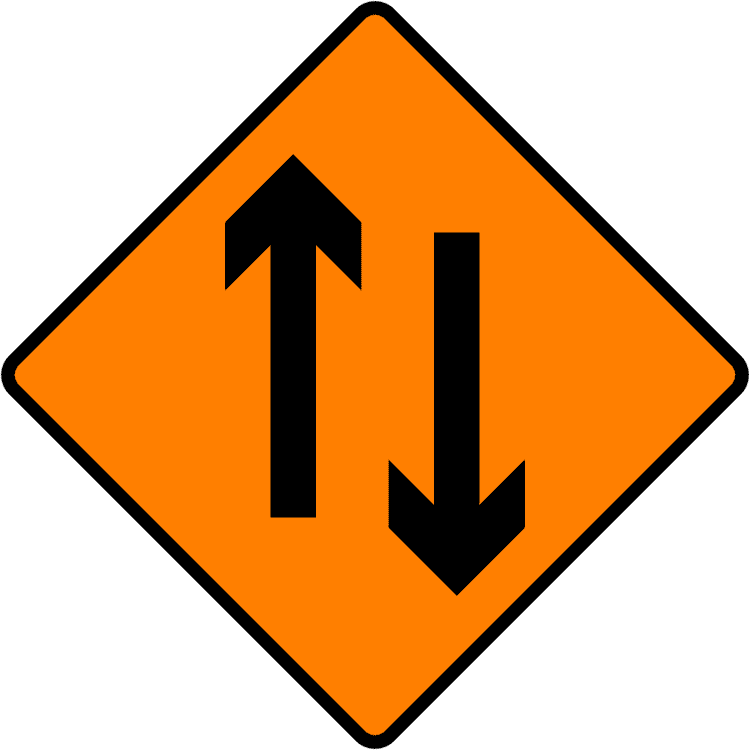
A triangular warning traffic sign in Ireland depicting two-way traffic. Memorize for DTT.

Two-way Traffic

Category

Warning

Difficulty

Intermediate

What Does This Sign Mean?

Start of opposing two-way traffic after separated section.

Key Points:

↔️ The road ahead has two-way traffic.
🚗 You will now face oncoming vehicles.
🛣️ This usually marks the end of a dual carriageway or one-way street.

Related Warning signs

  • A triangular warning traffic sign in Ireland depicting two-way traffic crossing. Memorize for DTT.

    Two-way Traffic Crossing

  • A triangular warning traffic sign in Ireland depicting three lanes of traffic (one with, two against). Memorize for DTT.

    Three Lanes of Traffic (One With, Two Against)

  • A triangular warning traffic sign in Ireland depicting traffic signals. Memorize for DTT.

    Traffic Signals

  • A triangular warning traffic sign in Ireland depicting start of passing lane. Memorize for DTT.

    Start of Passing Lane

  • A triangular warning traffic sign in Ireland depicting start of climbing lane. Memorize for DTT.

    Start of Climbing Lane

  • A triangular warning traffic sign in Ireland depicting queues likely. Memorize for DTT.

    Queues Likely

Complete Guide to This Sign

Where You'll Find This Sign

Two-way traffic warnings appear where dual carriageways narrow to single carriageway or where one-way street systems terminate, common throughout Ireland at major road transitions.

Typical locations include dual carriageway terminations on N7 approaching Naas, N8 north of Mitchelstown, N11 south of Bray, and other N-roads where modern dual carriageway sections end and older single carriageway sections begin.

You'll also encounter these in Dublin, Cork, Limerick, and Galway where one-way street systems end and two-way traffic resumes—particularly important where extended one-way sections habituate drivers to absent oncoming traffic.

Sign placement occurs 200-300 metres before configuration change from dual carriageway (central reservation separating opposing traffic) or one-way system to traditional two-way road with opposing traffic sharing the same road space.

The warning is critical for drivers who have traveled extended distances on separated roadways and must mentally adjust for oncoming traffic.

What This Means for Drivers

This sign warns that the road ahead transitions from separated traffic (dual carriageway or one-way) to two-way configuration where oncoming traffic will occupy lanes on the same road surface.

After dual carriageways where opposing traffic was physically separated by median barriers, or one-way streets where all traffic moved in your direction, the transition to two-way roads requires significant behavioral and mental adjustments: awareness that oncoming vehicles now approach directly toward you, need for strict lane discipline (staying left, no drifting toward center), reduced speed limits (typically from 100-120km/h to 80-100km/h), overtaking only when safe gaps exist and opposing traffic allows, and heightened observation for oncoming traffic particularly at bends.

The warning indicates that driving strategies appropriate for separated roadways no longer apply—lane positioning, speed, and overtaking behavior must adjust for shared road space with oncoming traffic.

Penalties & Legal Consequences

Failure to adjust behavior after signed two-way traffic warnings frequently results in head-on collisions and serious charges.

Continuing dual carriageway behaviors (high speeds, aggressive overtaking, lax lane discipline) after transitioning to signed two-way sections typically results in dangerous driving charges (€5,000, 5 penalty points, disqualification), particularly if head-on collisions or near-misses occur.

Head-on collisions on sections marked by two-way traffic warnings often result in vehicular manslaughter investigations if fatalities occur—visible warnings establish drivers should have adjusted behavior, making continued separated-roadway driving demonstrably negligent.

Insurance liability assessments typically assign primary fault (70-95%) to drivers whose behavior demonstrated failure to adjust for warned two-way traffic.

Speed limit violations immediately after two-way transitions are common enforcement targets as drivers fail to reduce speeds from dual carriageway limits.

The RSA identifies dual carriageway terminations as high-risk locations where driver expectation errors create serious collision potential.

Appears in Driving Test?

Theory test questions about two-way traffic warnings emphasize understanding the mental and behavioral shifts required when transitioning from separated to shared roadways.

Questions assess recognition of the sign, understanding what behaviors must change when exiting dual carriageways or one-way systems, typical speed limit reductions, and hazards created by oncoming traffic after extended separated sections.

Scenario questions test whether candidates understand risks when drivers fail to adjust for two-way traffic after dual carriageway habituation.

Practical driving tests occasionally include two-way transitions where dual carriageway or one-way sections exist in test areas; examiners assess: recognition of two-way traffic warnings, appropriate speed reduction, immediate adjustment to left-side positioning, heightened observation for oncoming traffic, modified overtaking behavior (only when safe, proper use of oncoming lanes), and demonstration of mental adjustment from separated to shared road environment.

Common faults include maintaining dual carriageway speeds after transition, lax lane discipline drifting toward center, or attempting aggressive overtaking inappropriate for two-way roads.

Frequently Asked Questions about the Two-way Traffic Sign

What does the Two-way Traffic sign mean in Ireland?

In Ireland, the Two-way Traffic sign indicates: Start of opposing two-way traffic after separated section. Understanding this is crucial for safe driving and passing your DTT.

What type of sign is the Two-way Traffic?

The "Two-way Traffic" is officially classified as part of the WARNING group in Ireland. Like other signs of this type, it alerts drivers to specific rules, hazards, or information they must immediately observe.

Will the Two-way Traffic sign appear on the Irish Theory Test?

Yes, you should expect the Two-way Traffic sign to appear on your Irish Driving Theory Test (DTT). You must be able to identify it as a WARNING and know what it requires from you as a driver.

●Live App Updates

Master Irish Signs on Mobile

Get instant access to 400+ signs, interactive quizzes, and progress tracking. Download the free app today!

🍎
Download on
App Store
🤖
Get it on
Google Play