Irish Traffic Signs Logo
Irish Traffic Signs
SignsBlogPenalty PointsAppFAQHelp CenterFavorites
Irish Traffic Signs

Learn Irish traffic signs with visual matching quizzes and detailed explanations. Free platform for drivers preparing for their test.

Learn

  • Traffic Signs
  • Interactive Quiz
  • Mobile App

Support

  • Help Center
  • FAQ
  • Penalty Points

Company

  • About Us
  • Privacy Policy
  • Terms of Service

© 2026 Irish Traffic Signs. All rights reserved.

This is not an official application. It is prepared for educational purposes.

Made with ❤️ for Irish drivers

HomeWarning SignsUnprotected Water
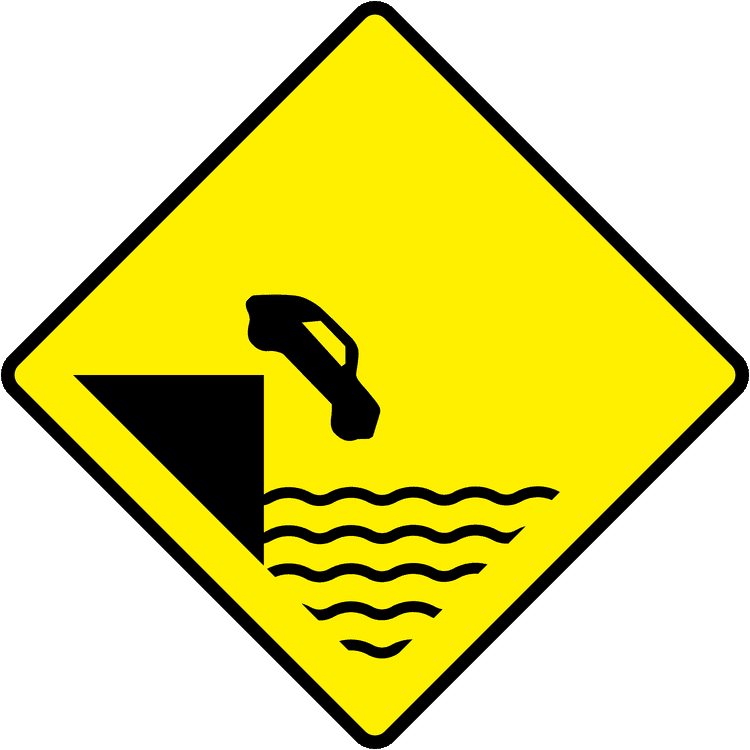
A triangular warning traffic sign in Ireland depicting unprotected water. Memorize for DTT.

Unprotected Water

Category

Warning

Difficulty

Intermediate

What Does This Sign Mean?

Water body close without barrier.

Key Points:

🌊 The road is close to a river, canal, or deep water without a safety barrier.
🚗 Drive with extreme caution, especially in bad weather.
⚠️ Be mindful of the risk of entering the water.

Related Warning signs

  • A triangular warning traffic sign in Ireland depicting ford. Memorize for DTT.

    Ford

  • A triangular warning traffic sign in Ireland depicting barrier board - 5 bars. Memorize for DTT.

    Barrier Board - 5 Bars

  • A triangular warning traffic sign in Ireland depicting barrier board - 4 bars. Memorize for DTT.

    Barrier Board - 4 Bars

  • A triangular warning traffic sign in Ireland depicting barrier board - 3 bars. Memorize for DTT.

    Barrier Board - 3 Bars

  • A triangular warning traffic sign in Ireland depicting y-junction - left. Memorize for DTT.

    Y-Junction - Left

  • A triangular warning traffic sign in Ireland depicting tunnel. Memorize for DTT.

    Tunnel

Complete Guide to This Sign

Where You'll Find This Sign

Unprotected water warnings appear where roads run immediately adjacent to rivers, canals, lakes, or harbors without guard rails or barriers, common throughout rural Ireland on narrow roads beside waterways.

Typical locations include canal towpaths converted to public roads along the Grand Canal and Royal Canal in Kildare, Offaly, and Westmeath; narrow coastal roads in Kerry, West Cork, and Donegal where roads hug shorelines with drops directly to sea; and mountain pass roads beside lakes or reservoirs.

You'll encounter these on approach roads to ferry terminals, fishing harbors, and marina areas where turning areas extend to water edges.

Historical bridge approaches sometimes feature these warnings where original road alignments placed carriageways directly beside rivers without modern safety barriers.

Sign placement occurs 50-100 metres before sections where vehicle excursions would enter water, particularly important at curves where centrifugal forces or poor weather could cause vehicles to leave the carriageway.

What This Means for Drivers

This sign warns that the road edge borders deep water without protective barriers—vehicles leaving the carriageway would enter water with potentially fatal consequences.

Immersion in water creates specific life-threatening hazards: vehicle windows and doors become extremely difficult to open due to water pressure, electrical systems fail quickly eliminating power windows, vehicles sink within minutes, and cold water (common in Irish waterways year-round) causes rapid hypothermia and drowning.

The warning indicates need for extreme caution: significant speed reduction (particularly on curves), strict lane discipline staying away from water-side edge, heightened alertness in adverse weather when visibility and traction reduce, and awareness that recovery is often impossible—water entry typically proves fatal.

Children should be secured properly as water immersion creates urgent escape requirements incompatible with loose occupants.

The sign prompts mental rehearsal of escape procedures: windows open immediately, doors opened while vehicle floats (first 30-60 seconds), escape through windows if doors won't open.

Penalties & Legal Consequences

No direct penalties exist for encountering unprotected water hazards, but loss of control resulting in water entry typically triggers extensive investigations and serious charges if fatalities occur.

Dangerous driving causing death (vehicular manslaughter) charges under Section 4 of the Road Traffic Act 2010 carry prison sentences up to 10 years when drivers maintained inappropriate speeds approaching signed water hazards or drove carelessly near warned unprotected edges.

Collisions pushing other vehicles into water result in the most serious charges possible—prosecutors view water immersion as creating circumstances likely to cause death, supporting dangerous driving prosecutions even if impacts seemed minor.

Insurance liability assessments assign 70-95% fault to drivers who lost control at signed water hazards.

However, local authorities may bear contributory liability if road conditions (surface defects, inadequate drainage, missing barriers where installation was reasonable) contributed to water entry incidents.

Serious injury or fatal accidents at unprotected water locations often trigger Roads Act reviews of whether barriers should have been installed.

Appears in Driving Test?

Theory test questions about unprotected water hazards emphasize extreme caution requirements and escape procedures if water entry occurs.

Questions assess understanding of why water immersion is life-threatening, what makes escape difficult, and what precautions drivers should take when seeing this warning.

Questions might ask about appropriate speed reductions, lane positioning strategies (favoring land side of road), or escape procedures (open windows immediately, exit through windows if necessary).

Scenario questions test understanding that water entry creates urgent life-threatening situations requiring immediate decisive action.

Practical driving tests avoid unprotected water sections due to safety considerations, but in coastal or canal areas where unavoidable, examiners assess: recognition of warnings, significant speed reduction, positioning toward land side of road, controlled smooth driving without sudden inputs that could cause loss of control, and appropriate caution in adverse weather.

Common theoretical faults include underestimating water entry dangers or believing vehicles float indefinitely allowing leisurely escape.

Frequently Asked Questions about the Unprotected Water Sign

What does the Unprotected Water sign mean in Ireland?

In Ireland, the Unprotected Water sign indicates: Water body close without barrier. Understanding this is crucial for safe driving and passing your DTT.

What type of sign is the Unprotected Water?

The "Unprotected Water" is officially classified as part of the WARNING group in Ireland. Like other signs of this type, it alerts drivers to specific rules, hazards, or information they must immediately observe.

Will the Unprotected Water sign appear on the Irish Theory Test?

Yes, you should expect the Unprotected Water sign to appear on your Irish Driving Theory Test (DTT). You must be able to identify it as a WARNING and know what it requires from you as a driver.

●Live App Updates

Master Irish Signs on Mobile

Get instant access to 400+ signs, interactive quizzes, and progress tracking. Download the free app today!

🍎
Download on
App Store
🤖
Get it on
Google Play