Sitting your practical driving test in Ireland can feel like an incredibly stressful event. With the examiner watching your every move, even experienced drivers can freeze up and make simple mistakes.
According to the Road Safety Authority (RSA), the national driving test pass rate consistently hovers between 50% and 53%. To ensure you pass on your first attempt, you need a systematic approach that guarantees your vehicle is compliant and your driving matches what the examiner is looking for.
Key Takeaways
- •Pre-Test Checks: Make sure your Tax, Insurance, and NCT discs are in date and clearly displayed.
- •Under the Bonnet: Be prepared to explain engine fluid levels (oil, coolant, screenwash) to the examiner.
- •Maneuvers: Perfect the reverse-around-corner and turnabout routines with clear, obvious observation checks.
- •Fault Limits: You can have up to 8 Grade 2 faults, but a single Grade 3 fault results in automatic failure.
The Ultimate 12-Step Test Preparation Checklist
Follow this 12-step chronological guide to cover all administrative, theoretical, and practical areas of the driving test:
Phase 1: Admin & Vehicle Inspection
Check Your Vehicle Discs
Ensure your insurance, motor tax, and NCT (National Car Test) discs are current, valid, and clearly visible in the windscreen.
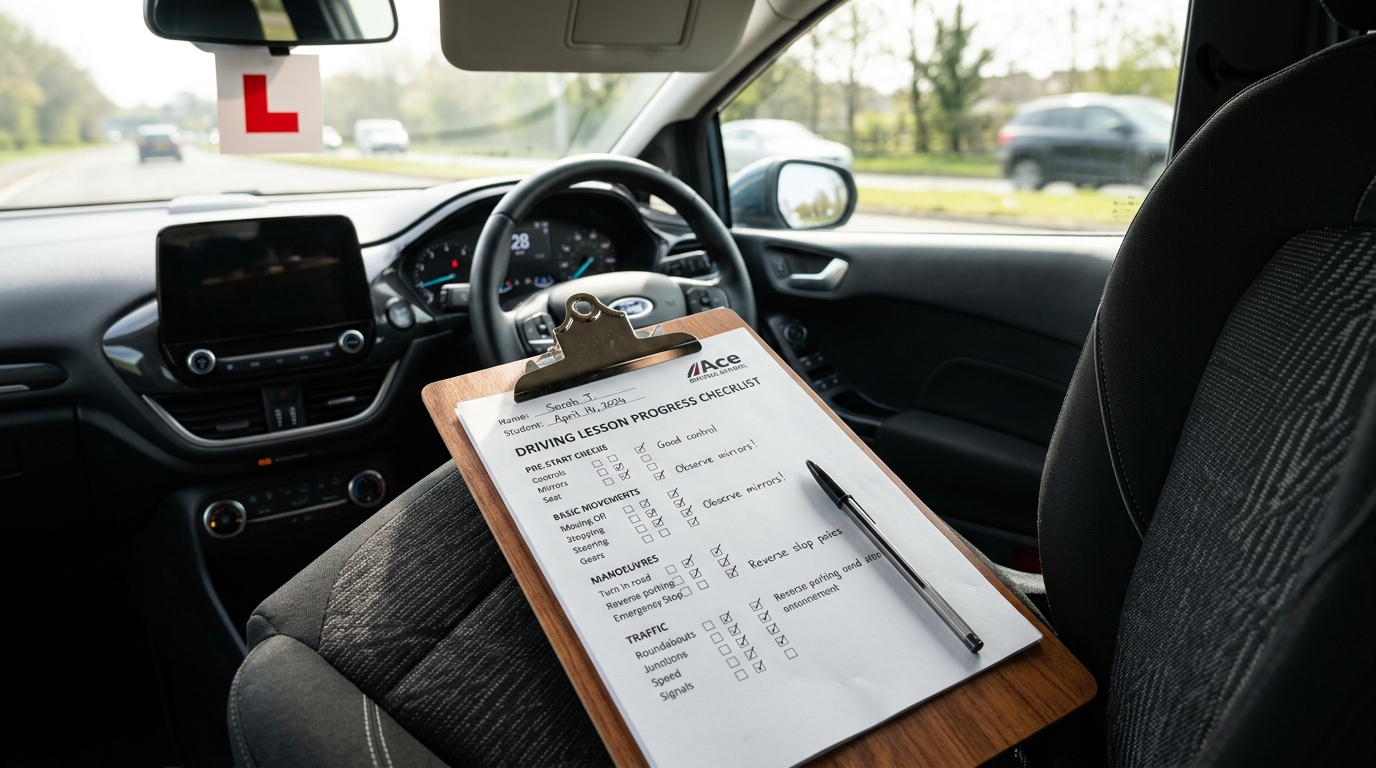
Display "L" Plates
Mount solid red "L" plates on a white background on both the front and rear of your vehicle. They must be clearly visible to others.
Verify Tyres & Lights
Inspect your tyres for damage and ensure they have at least 1.6mm tread depth. Confirm all indicator, brake, and headlights work.
Practice Under the Bonnet Checks
Locate the dipstick, engine oil cap, coolant tank, brake fluid reservoir, and windshield washer cap. Examiners will ask you to show how to check these.
Phase 2: In-Car Control & Theory Questions
Master Secondary Controls
Know how to operate your hazard lights, front/rear demisters, air conditioning, rear fog lights, and windshield wipers.
Review Hand Signals
Be ready to demonstrate hand signals out the window for turning left, turning right, slowing down, and stopping.
Adjust Seat, Mirrors & Seatbelts
Begin the test by demonstrating safety checks: adjust your seat, check your headrest, configure mirrors, and fasten your seatbelt.
Prepare Road Rules & Signs Questions
The examiner will show you signs and ask you general questions about speed limits, road signs, and junction priorities.
Phase 3: The Practical Drive
Observation (Obvious Mirror Checks)
When moving off, turning, or changing lanes, make clear head movements to check your mirrors and blind spots. If the examiner doesn't see you look, it's a fault.
Practice Key Maneuvers
Perfect your reverse around a corner and your turnabout (three-point turn). Prioritize safety, control, and constant observation check cycles.
Road Positioning & Lane Discipline
Keep to the left side of your lane. When entering roundabouts, select the correct lane and maintain it without cutting corners.
Maintain Safe Clearance
Leave at least 1.5 meters clearance when passing cyclists at 50 km/h, and leave a car-door's width of space when passing parked vehicles.
Understanding the Fault Grading System
During your driving test, the examiner will mark faults on a tablet. Understanding the grading system will help you stay calm if you make a mistake:
Junction Observation Citation Capsule
RSA test records state that inadequate observation at junctions and roundabouts is the leading cause of test failures. Doing a rolling stop or failing to yield counts as a Grade 3 dangerous fault, resulting in immediate failure.
- Grade 1 (Minor): Small mistakes like minor hesitation. These do not count against you passing.
- Grade 2 (Serious): Significant errors that affect safety if repeated, like poor roundabout positioning. You are allowed a maximum of 8 Grade 2 faults, but no more than 4 in the same category.
- Grade 3 (Dangerous): Immediate failure. Recorded if you cause another vehicle to slow down or swerve, block a yellow box, or ignore regulatory signs.
Frequently Asked Questions
What documents must I bring to the driving test centre?
You must bring your current Irish Learner Permit. Ensure your vehicle has valid Tax, Insurance, and NCT discs clearly displayed.
What maneuvers are tested on the practical exam?
The examiner will test three mandatory maneuvers: moving off on a hill, reversing around a left corner, and executing a turnabout (three-point turn).
What happens if my car has a warning light during the test?
If your car displays an engine warning light, ABS warning, or tire pressure warning light, the examiner will cancel the test and you will forfeit your test fee.
How long does the practical driving test last?
The practical Category B test lasts approximately 30 to 45 minutes, including the in-office theory questions and under-bonnet inspection.
Conclusion
Passing the driving test is a matter of preparation. By checking your vehicle, mastering secondary controls, and focusing on clear, visible observation and correct lane positioning, you will go into the exam with confidence and secure your full driving license.