Irish Traffic Signs Logo
Irish Traffic Signs
SignsBlogPenalty PointsAppFAQHelp CenterFavorites
Irish Traffic Signs

Learn Irish traffic signs with visual matching quizzes and detailed explanations. Free platform for drivers preparing for their test.

Learn

  • Traffic Signs
  • Interactive Quiz
  • Mobile App

Support

  • Help Center
  • FAQ
  • Penalty Points

Company

  • About Us
  • Privacy Policy
  • Terms of Service

© 2026 Irish Traffic Signs. All rights reserved.

This is not an official application. It is prepared for educational purposes.

Made with ❤️ for Irish drivers

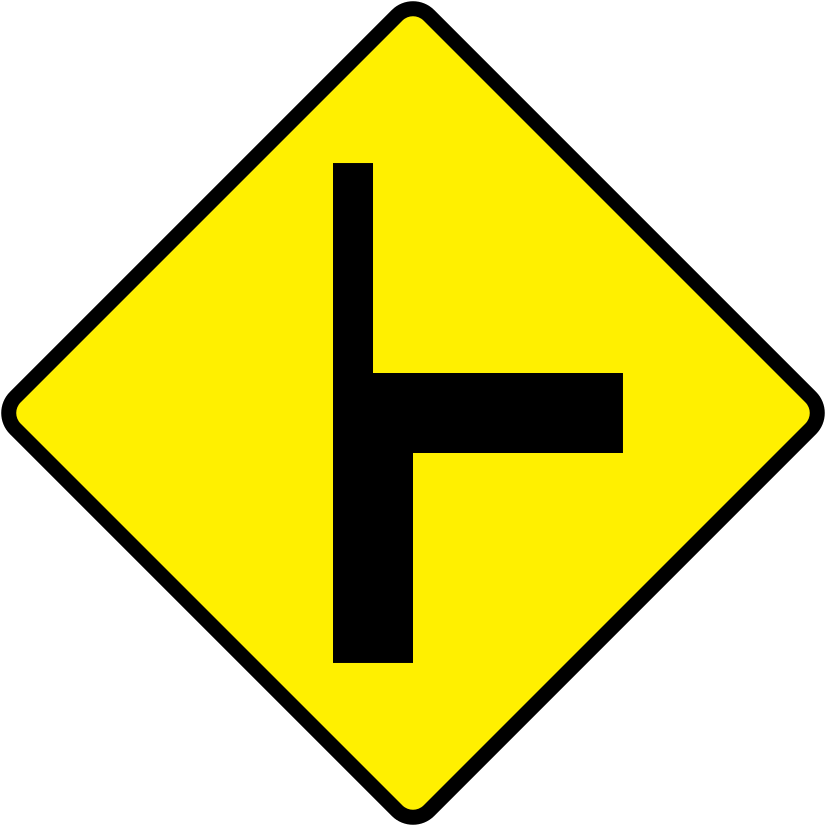
HomeWarning SignsT-Junction (Type 2) - Left
A triangular warning traffic sign in Ireland depicting t-junction (type 2) - left. Memorize for DTT.

T-Junction (Type 2) - Left

Category

Warning

Difficulty

Intermediate

What Does This Sign Mean?

Left variant T‑junction geometry.

Key Points:

T-junction with a specific layout.
🚗 The side road joins from the left.
🛑 Prepare to give way to traffic on the major road.

Related Warning signs

  • A triangular warning traffic sign in Ireland depicting t-junction (type 2) - right. Memorize for DTT.

    T-Junction (Type 2) - Right

  • A triangular warning traffic sign in Ireland depicting t-junction (type 1) - left. Memorize for DTT.

    T-Junction (Type 1) - Left

  • A triangular warning traffic sign in Ireland depicting t-junction (type 1) - right. Memorize for DTT.

    T-Junction (Type 1) - Right

  • A triangular warning traffic sign in Ireland depicting y-junction - left. Memorize for DTT.

    Y-Junction - Left

  • A triangular warning traffic sign in Ireland depicting t junction ahead at dual c'way (no cr break). Memorize for DTT.

    T Junction Ahead at Dual C'way (No CR Break)

  • A triangular warning traffic sign in Ireland depicting t junction (major road) ahead. Memorize for DTT.

    T Junction (Major Road) Ahead

Complete Guide to This Sign

Where You'll Find This Sign

Type 2 T-junction warnings represent a specific geometric configuration where junction angles or layouts differ from standard perpendicular junctions, common on roads where terrain, property boundaries, or historical development created unusual junction geometries.

You'll find these throughout rural Ireland in counties Donegal, Sligo, Leitrim, and Roscommon where mountainous terrain and bog constraints influenced road alignment.

These signs appear where side roads join at acute or obtuse angles rather than 90-degree approaches, or where junction visibility is particularly compromised by geometry.

Placement occurs 60-100 metres before the junction, sometimes supplemented by chevron markers or junction angle information.

Coastal routes frequently feature Type 2 junctions where roads follow irregular terrain contours.

The specific 'Type 2' designation indicates geometric characteristics that create enhanced hazards compared to standard T-junctions.

What This Means for Drivers

This warning indicates a T-junction with non-standard geometry—typically acute or obtuse junction angles, offset alignments, or unusual approach configurations that create visibility challenges or require modified driving techniques.

The 'Type 2' designation (versus Type 1 standard perpendicular junctions) alerts drivers to expect geometric complications requiring extra caution.

Acute-angle junctions may restrict turning circles, requiring wider swings or multiple-point turns for larger vehicles.

Obtuse-angle junctions may create blind zones where approaching traffic remains hidden longer.

The left-side designation indicates the side road joins from your left, but the geometry means emerging vehicles' paths and visibility differ from standard junctions.

Drivers should reduce speed more than for standard T-junctions, increase observation time, and be prepared for vehicles emerging from unexpected positions or angles due to the geometric configuration.

Penalties & Legal Consequences

Penalties for Type 2 T-junction incidents mirror standard junction offenses but warnings establish that drivers had notice of enhanced hazards.

Collisions at signed geometrically complex junctions often result in higher contributory negligence findings—30-50% for priority road drivers who failed to reduce speed appropriately for warned unusual geometry, and 70-90% for emerging drivers who misjudged visibility or gaps.

Insurance companies scrutinize behavior at Type 2 junctions more closely than standard junctions—the specific warning indicates reasonable drivers should exercise enhanced caution.

Dangerous driving charges (€5,000, 5 penalty points, disqualification) may apply where drivers maintained inappropriate speed approaching signed complex junctions, particularly if collisions cause serious injuries given that visible warnings indicated heightened risks.

Appears in Driving Test?

Theory test questions about junction types assess understanding that different geometric configurations create varying hazard levels.

Questions might ask why some junctions have Type 2 designations, what additional hazards exist at geometrically complex junctions, or what modifications to normal junction procedure are appropriate.

Practical tests occasionally include Type 2 junctions in areas where they exist; examiners assess whether candidates recognize warnings indicating enhanced hazards, apply appropriate caution (greater speed reduction, extended observation, modified positioning for unusual geometries), and execute junction maneuvers safely despite geometric complications.

Common faults include treating Type 2 junctions identically to standard junctions, or excessive hesitation indicating uncertainty about how to navigate unusual geometries.

Frequently Asked Questions about the T-Junction (Type 2) - Left Sign

What does the T-Junction (Type 2) - Left sign mean in Ireland?

In Ireland, the T-Junction (Type 2) - Left sign indicates: Left variant T‑junction geometry. Understanding this is crucial for safe driving and passing your DTT.

What type of sign is the T-Junction (Type 2) - Left?

The "T-Junction (Type 2) - Left" is officially classified as part of the WARNING group in Ireland. Like other signs of this type, it alerts drivers to specific rules, hazards, or information they must immediately observe.

Will the T-Junction (Type 2) - Left sign appear on the Irish Theory Test?

Yes, you should expect the T-Junction (Type 2) - Left sign to appear on your Irish Driving Theory Test (DTT). You must be able to identify it as a WARNING and know what it requires from you as a driver.

●Live App Updates

Master Irish Signs on Mobile

Get instant access to 400+ signs, interactive quizzes, and progress tracking. Download the free app today!

🍎
Download on
App Store
🤖
Get it on
Google Play