Irish Traffic Signs Logo
Irish Traffic Signs
SignsBlogPenalty PointsAppFAQHelp CenterFavorites
Irish Traffic Signs

Learn Irish traffic signs with visual matching quizzes and detailed explanations. Free platform for drivers preparing for their test.

Learn

  • Traffic Signs
  • Interactive Quiz
  • Mobile App

Support

  • Help Center
  • FAQ
  • Penalty Points

Company

  • About Us
  • Privacy Policy
  • Terms of Service

© 2026 Irish Traffic Signs. All rights reserved.

This is not an official application. It is prepared for educational purposes.

Made with ❤️ for Irish drivers

HomeRegulatory SignsMaximum Axle Weight
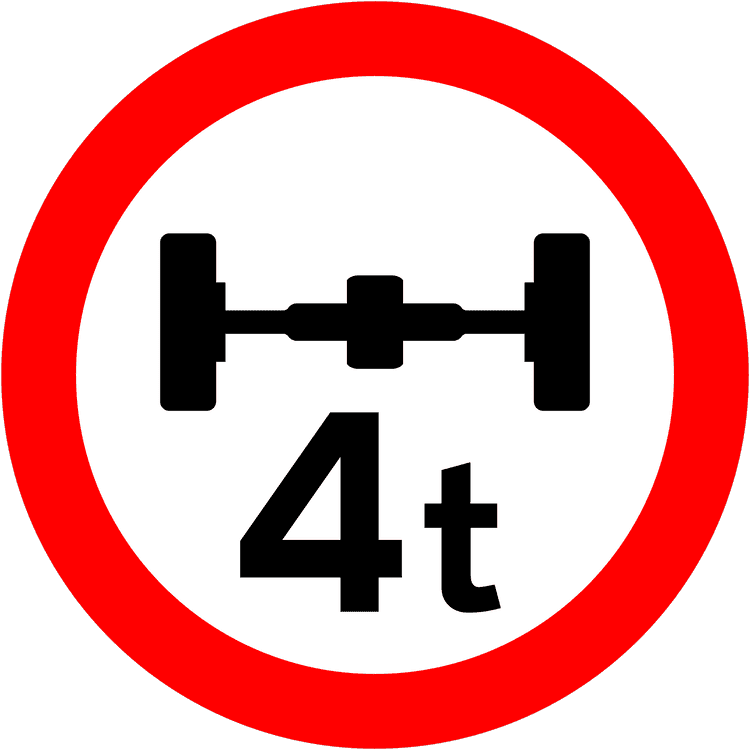
A regulatory road sign in Ireland enforcing maximum axle weight. Essential for the Driving Theory Test.

Maximum Axle Weight

Category

Regulatory

Difficulty

Intermediate

What Does This Sign Mean?

Axle load limit to protect structure or road.

Key Points:

⛔ Vehicles with an axle weight exceeding the amount shown are prohibited.
⚖️ This is to protect weak bridges or road surfaces.
🚚 Check your vehicle's specifications before proceeding.

Related Regulatory signs

  • A regulatory road sign in Ireland enforcing rural speed limit. Essential for the Driving Theory Test.

    Rural Speed Limit

  • A regulatory road sign in Ireland enforcing maximum vehicle length. Essential for the Driving Theory Test.

    Maximum Vehicle Length

  • A regulatory road sign in Ireland enforcing maximum gross weight. Essential for the Driving Theory Test.

    Maximum Gross Weight

  • A regulatory road sign in Ireland enforcing maximum gross weight (traffic management). Essential for the Driving Theory Test.

    Maximum Gross Weight (Traffic Management)

  • A regulatory road sign in Ireland enforcing lrt speed limit. Essential for the Driving Theory Test.

    LRT Speed Limit

  • A regulatory road sign in Ireland enforcing speed limit 60 km. Essential for the Driving Theory Test.

    Speed Limit 60 km

Complete Guide to This Sign

Where You'll Find This Sign

Maximum Axle Weight restriction signs appear before structurally weak bridges, particularly historical stone arch bridges and older concrete bridges with limited load capacity, common throughout rural Ireland.

Typical locations include heritage bridges over rivers in counties Kerry, Cork, Clare, Galway, and Donegal where 18th and 19th century construction cannot support modern heavy vehicle axle loads.

The Grand Canal and Royal Canal crossings feature numerous axle weight restrictions where historical bridge engineering limits heavy vehicle access.

Common restrictions range from 8-12 tonnes per axle, displayed in tonnes on circular red-bordered prohibition signs.

Signs are positioned 100-200 metres before bridges with repeat signs immediately before the structure.

Local roads (L-class) and minor regional roads (R-class) serving agricultural areas often feature these restrictions where farm vehicle access necessitates bridge preservation.

Alternative routing signs typically accompany axle weight restrictions directing heavy vehicles to suitable bridges, sometimes requiring significant detours.

What This Means for Drivers

This sign prohibits vehicles with individual axle weights exceeding the displayed tonnage from crossing the bridge or using the road section.

Axle weight (load per axle) differs from gross vehicle weight (total vehicle mass)—a 20-tonne truck might have acceptable 8-tonne axle weights if weight is distributed across multiple axles, but a 15-tonne truck with weight concentrated on fewer axles might exceed 8-tonne per-axle limits.

Professional drivers must know their vehicle's axle weight distribution, typically marked on HGV cab plates.

The restriction protects structural integrity—excessive axle loads create concentrated stress points that can damage bridge decks, crack arch keystones, or cause structural failures.

Violations risk catastrophic bridge collapse with potential fatalities.

Drivers of heavy vehicles encountering axle weight restrictions must find alternative routes using bridges with adequate capacity, often adding considerable journey time in rural areas with limited bridge options.

Penalties & Legal Consequences

Axle weight restriction violations carry serious penalties: dangerous driving charges (€5,000, 5 penalty points, disqualification) given the obvious and severe risks of bridge collapse.

Drivers whose violations cause structural damage face infrastructure damage recovery costs (€50,000-€500,000+ for bridge repairs or reconstruction) billed to vehicle owners/operators.

Commercial vehicle operators face operator license suspensions and reviews for axle weight violations indicating inadequate route planning or vehicle specification knowledge.

RSA and Gardaí conduct enforcement at axle weight restricted locations using portable weighing equipment—violations result in prohibition orders preventing further movement until loads are redistributed or alternative vehicles arranged.

Insurance policies may exclude coverage for damage resulting from regulatory violations—axle weight breaches typically void coverage.

Bridge collapses or serious structural damage resulting from axle weight violations can result in corporate manslaughter charges against operators and gross negligence charges against individual drivers, carrying prison sentences up to 10 years under Section 4 of the Road Traffic Act 2010.

Appears in Driving Test?

Theory test questions about weight restrictions emphasize understanding differences between axle weight and gross vehicle weight, recognition that axle weight limits protect bridge structures, and knowledge that professional drivers must know vehicle axle configurations.

Questions assess why axle weight restrictions exist separately from gross weight limits, and consequences of violations.

HGV and commercial vehicle theory tests include detailed questions about calculating axle weights, understanding load distribution, and route planning avoiding restricted bridges.

Practical HGV tests assess whether candidates demonstrate: knowledge of their test vehicle's axle weights, ability to recognize and interpret axle weight restriction signs, understanding of when restrictions apply to their vehicle type, and appropriate route planning avoiding restricted bridges.

Car driving tests don't assess axle weight knowledge directly (standard cars always have acceptable axle weights), but theory tests cover basic understanding that heavy vehicles face restrictions protecting infrastructure.

Frequently Asked Questions about the Maximum Axle Weight Sign

What does the Maximum Axle Weight sign mean in Ireland?

In Ireland, the Maximum Axle Weight sign indicates: Axle load limit to protect structure or road. Understanding this is crucial for safe driving and passing your DTT.

What type of sign is the Maximum Axle Weight?

The "Maximum Axle Weight" is officially classified as part of the REGULATORY group in Ireland. Like other signs of this type, it alerts drivers to specific rules, hazards, or information they must immediately observe.

Will the Maximum Axle Weight sign appear on the Irish Theory Test?

Yes, you should expect the Maximum Axle Weight sign to appear on your Irish Driving Theory Test (DTT). You must be able to identify it as a REGULATORY and know what it requires from you as a driver.

●Live App Updates

Master Irish Signs on Mobile

Get instant access to 400+ signs, interactive quizzes, and progress tracking. Download the free app today!

🍎
Download on
App Store
🤖
Get it on
Google Play