Irish Traffic Signs Logo
Irish Traffic Signs
SignsBlogPenalty PointsAppFAQHelp CenterFavorites
Irish Traffic Signs

Learn Irish traffic signs with visual matching quizzes and detailed explanations. Free platform for drivers preparing for their test.

Learn

  • Traffic Signs
  • Interactive Quiz
  • Mobile App

Support

  • Help Center
  • FAQ
  • Penalty Points

Company

  • About Us
  • Privacy Policy
  • Terms of Service

© 2026 Irish Traffic Signs. All rights reserved.

This is not an official application. It is prepared for educational purposes.

Made with ❤️ for Irish drivers

HomeRegulatory SignsMaximum Gross Weight
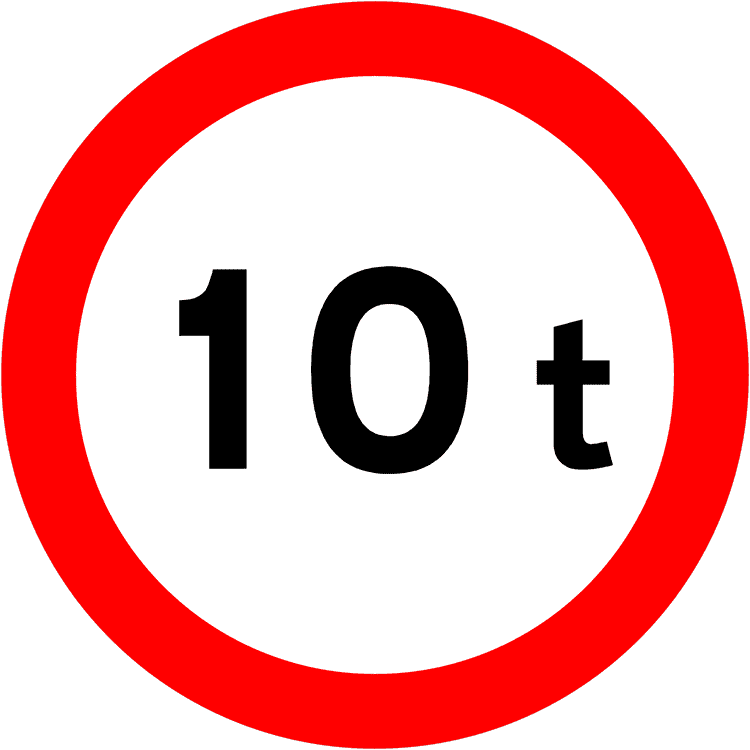
A regulatory road sign in Ireland enforcing maximum gross weight. Essential for the Driving Theory Test.

Maximum Gross Weight

Category

Regulatory

Difficulty

Intermediate

What Does This Sign Mean?

Structural gross weight limit.

Key Points:

⛔ Vehicles with a total weight exceeding the amount shown are prohibited.
🌉 This is a structural limit, typically for a weak bridge.
🚚 Exceeding this limit is dangerous and illegal.

Related Regulatory signs

  • A regulatory road sign in Ireland enforcing maximum gross weight (traffic management). Essential for the Driving Theory Test.

    Maximum Gross Weight (Traffic Management)

  • A regulatory road sign in Ireland enforcing maximum axle weight. Essential for the Driving Theory Test.

    Maximum Axle Weight

  • A regulatory road sign in Ireland enforcing rural speed limit. Essential for the Driving Theory Test.

    Rural Speed Limit

  • A regulatory road sign in Ireland enforcing maximum vehicle width. Essential for the Driving Theory Test.

    Maximum Vehicle Width

  • A regulatory road sign in Ireland enforcing maximum vehicle length. Essential for the Driving Theory Test.

    Maximum Vehicle Length

  • A regulatory road sign in Ireland enforcing lrt speed limit. Essential for the Driving Theory Test.

    LRT Speed Limit

Complete Guide to This Sign

Where You'll Find This Sign

Maximum Gross Weight (structural) restrictions appear before bridges with limited load-bearing capacity, particularly common on rural roads throughout Ireland where heritage bridges cannot support modern heavy vehicles.

Typical locations include stone arch bridges over rivers in Kerry (Blackwater, Maine), Cork (Lee, Bandon), Clare (Fergus, Shannon tributaries), and Galway (Corrib system) where 18th-19th century engineering established load limits.

Canal crossing bridges (Grand Canal, Royal Canal) frequently display gross weight limits protecting historical structures.

Common restrictions range from 10-20 tonnes gross vehicle weight depending on bridge age, materials, and condition.

Signs are positioned 100-200 metres before bridges, with repeat signs immediately before the structure often accompanied by warning plates showing bridge age or structural classification.

Local roads serving agricultural areas balance need for farm vehicle access against bridge preservation.

Unlike traffic management weight restrictions, structural limits reflect absolute physical constraints—violations risk catastrophic collapse.

What This Means for Drivers

This sign prohibits vehicles with gross vehicle weight (total laden weight) exceeding the displayed tonnage from crossing the bridge, implemented because the structure cannot safely support heavier loads.

Gross vehicle weight includes chassis, body, fuel, cargo, passengers, and all equipment—the total mass the bridge must support.

Professional drivers must know their vehicle's gross weight including current load, typically marked on HGV cab plates and calculated by weighing at certified weighbridges.

The restriction protects against structural failure—excessive weight can crack bridge decks, damage support members, compromise foundations, or cause immediate collapse.

These are absolute prohibitions without exemptions—no vehicle may exceed the limit regardless of purpose.

Drivers encountering gross weight restrictions must find alternative routes using bridges with adequate capacity, potentially requiring significant detours in rural areas with limited suitable bridges.

Some restrictions vary by vehicle configuration—tandem axle vehicles may have higher limits than single axle vehicles of equivalent weight due to load distribution.

Penalties & Legal Consequences

Gross weight restriction violations carry severe penalties given catastrophic failure risks: dangerous driving charges (€5,000, 5 penalty points, disqualification) as standard, escalating to gross negligence causing death charges if collapses result in fatalities (up to 10 years imprisonment under Section 4 Road Traffic Act 2010).

Drivers whose violations cause bridge damage face full infrastructure repair/replacement costs (€100,000-€1,000,000+) billed to vehicle owners/operators.

Commercial operators face immediate operator license suspensions pending investigations, with permanent revocations possible for serious violations.

RSA and Gardaí conduct targeted enforcement at structurally restricted bridges using portable weighbridges—overweight vehicles receive prohibition orders preventing movement until loads are reduced or transferred.

Insurance policies typically exclude coverage for structural restriction violations—gross weight breaches void coverage for damage and liability.

Engineers' reports on collapsed or damaged bridges are routinely provided to prosecutors supporting criminal charges.

Corporate manslaughter charges apply to operators whose systemic failures enabled gross weight violations causing fatalities.

Appears in Driving Test?

Theory test questions about structural weight limits emphasize understanding that these restrictions protect bridge integrity, recognition that violations risk catastrophic collapse, and knowledge that professional drivers must know vehicle gross weights including cargo.

Questions assess differences between gross weight and axle weight restrictions, why both types exist, and consequences of structural limit violations.

HGV theory tests include detailed questions about: calculating gross vehicle weight including cargo and equipment, using weighbridges to verify weights, route planning avoiding structurally restricted bridges, and load distribution affecting bridge stress.

Practical HGV tests assess whether candidates demonstrate: knowledge of test vehicle gross weight, ability to recognize structural weight restriction signs (versus traffic management restrictions), understanding of absolute nature of structural limits (no exemptions), and route planning awareness.

Examiners expect candidates to articulate understanding that structural limits protect lives and infrastructure with zero tolerance for violations.

Frequently Asked Questions about the Maximum Gross Weight Sign

What does the Maximum Gross Weight sign mean in Ireland?

In Ireland, the Maximum Gross Weight sign indicates: Structural gross weight limit. Understanding this is crucial for safe driving and passing your DTT.

What type of sign is the Maximum Gross Weight?

The "Maximum Gross Weight" is officially classified as part of the REGULATORY group in Ireland. Like other signs of this type, it alerts drivers to specific rules, hazards, or information they must immediately observe.

Will the Maximum Gross Weight sign appear on the Irish Theory Test?

Yes, you should expect the Maximum Gross Weight sign to appear on your Irish Driving Theory Test (DTT). You must be able to identify it as a REGULATORY and know what it requires from you as a driver.

●Live App Updates

Master Irish Signs on Mobile

Get instant access to 400+ signs, interactive quizzes, and progress tracking. Download the free app today!

🍎
Download on
App Store
🤖
Get it on
Google Play