Irish Traffic Signs Logo
Irish Traffic Signs
SignsBlogPenalty PointsAppFAQHelp CenterFavorites
Irish Traffic Signs

Learn Irish traffic signs with visual matching quizzes and detailed explanations. Free platform for drivers preparing for their test.

Learn

  • Traffic Signs
  • Interactive Quiz
  • Mobile App

Support

  • Help Center
  • FAQ
  • Penalty Points

Company

  • About Us
  • Privacy Policy
  • Terms of Service

© 2026 Irish Traffic Signs. All rights reserved.

This is not an official application. It is prepared for educational purposes.

Made with ❤️ for Irish drivers

HomeRegulatory SignsMaximum Vehicle Width
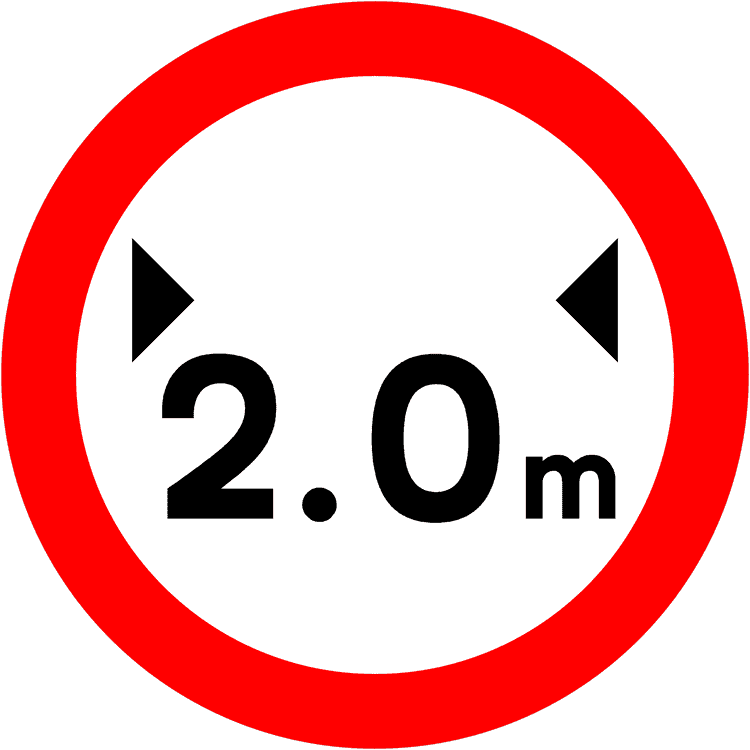
A regulatory road sign in Ireland enforcing maximum vehicle width. Essential for the Driving Theory Test.

Maximum Vehicle Width

Category

Regulatory

Difficulty

Intermediate

What Does This Sign Mean?

Width restriction enforced ahead.

Key Points:

⛔ Vehicles wider than the width shown are prohibited.
↔️ This restriction is often for a narrow lane, bridge, or gate.
🚚 Drivers of wide vehicles must not proceed.

Related Regulatory signs

  • A regulatory road sign in Ireland enforcing height restriction. Essential for the Driving Theory Test.

    Height Restriction

  • A regulatory road sign in Ireland enforcing maximum vehicle length. Essential for the Driving Theory Test.

    Maximum Vehicle Length

  • A regulatory road sign in Ireland enforcing rural speed limit. Essential for the Driving Theory Test.

    Rural Speed Limit

  • A regulatory road sign in Ireland enforcing maximum gross weight. Essential for the Driving Theory Test.

    Maximum Gross Weight

  • A regulatory road sign in Ireland enforcing maximum gross weight (traffic management). Essential for the Driving Theory Test.

    Maximum Gross Weight (Traffic Management)

  • A regulatory road sign in Ireland enforcing maximum axle weight. Essential for the Driving Theory Test.

    Maximum Axle Weight

Complete Guide to This Sign

Where You'll Find This Sign

Maximum Vehicle Width restrictions appear before narrow bridges, gates, lanes, and built-up areas where physical width constraints prevent wide vehicles passing safely.

Common locations include narrow stone arch bridges (particularly canal bridges on Royal Canal and Grand Canal towpath access points), medieval town gates (Waterford city walls, historical town entrances), narrow lanes in rural areas (West Cork boreen networks, Connemara single-track roads), and covered loading areas.

Typical restrictions range from 2.0-2.5 metres, accommodating standard cars and vans but excluding wide commercial vehicles, agricultural equipment, and vehicles with wide loads.

Signs appear 100-200 metres before the restriction, often with physical width restriction structures (bollards, posts) enforcing compliance.

Some locations feature width gauges (vertical posts at restriction width) allowing drivers to verify clearance before committing to narrow sections.

Rural areas serving agricultural communities sometimes have seasonal width restrictions protecting road edges during wet periods.

What This Means for Drivers

This sign prohibits vehicles exceeding the displayed width from proceeding due to physical width constraints ahead—narrow bridges, gates, or lanes where wider vehicles cannot physically pass or would cause damage attempting passage.

Vehicle width is measured at the widest point including mirrors, loads, and any equipment extending beyond vehicle body.

Standard cars typically measure 1.7-1.9 metres wide (within most restrictions), while commercial vehicles range from 2.0-2.55 metres (maximum legal width).

The restriction prevents vehicles becoming stuck between narrow constraints, damaging historic structures, or causing traffic blockages requiring complex reversing.

Drivers uncertain about vehicle width should measure before encountering restrictions—forcing passage attempts frequently result in vehicle damage (scraped sides, broken mirrors) and property damage (damaged bridge parapets, broken gate posts).

Some narrow sections have passing places but width restrictions still apply to the narrowest point.

Attempting passage at inappropriate speeds can cause damage even if static clearance exists—slow careful positioning is essential.

Penalties & Legal Consequences

Width restriction violations result in fixed penalties (€80, 2 penalty points) when detected before damage occurs, but most violations result in immediate consequences: vehicle damage (scraped bodywork, broken mirrors, chassis damage) at driver's expense, infrastructure damage (bridge parapet damage, broken gate posts, damaged walls) with full repair costs billed to vehicle owners (€1,000-€50,000 depending on heritage value), and recovery costs for stuck vehicles (€500-€3,000).

Insurance companies often deny coverage for damage during clear width restriction violations—policies exclude damage from willful regulatory breaches.

Heritage structure damage can result in additional charges under planning and heritage protection legislation.

Commercial vehicle operators whose drivers violate width restrictions face operator license reviews.

In tourist areas, stuck vehicles blocking narrow bridges or lanes create significant disruption leading to dangerous driving charges (€5,000, 5 penalty points, disqualification).

Some jurisdictions install automated width detection systems triggering enforcement cameras when overwidth vehicles proceed despite restrictions.

Appears in Driving Test?

Theory test questions about width restrictions assess understanding of physical width constraints, recognition of vehicle types affected, and consequences of violations.

Questions might ask what maximum width signs indicate, why restrictions exist, how drivers should verify vehicle widths, and appropriate responses when encountering unexpected width restrictions.

HGV and commercial vehicle theory tests include detailed questions about vehicle width measurement (including mirrors and loads), understanding clearances required beyond vehicle width, and route planning avoiding width-restricted routes.

Practical car tests don't assess width restrictions directly (standard test vehicles well within typical limits), but candidates may encounter such signs and should demonstrate recognition and understanding.

HGV practical tests in areas with width restrictions assess: knowledge of test vehicle width including mirrors, ability to recognize and interpret width restriction signs, understanding of when restrictions apply, and judgment about whether sufficient clearance exists.

Examiners expect candidates to demonstrate caution and measurement awareness rather than assumptions about clearances.

Frequently Asked Questions about the Maximum Vehicle Width Sign

What does the Maximum Vehicle Width sign mean in Ireland?

In Ireland, the Maximum Vehicle Width sign indicates: Width restriction enforced ahead. Understanding this is crucial for safe driving and passing your DTT.

What type of sign is the Maximum Vehicle Width?

The "Maximum Vehicle Width" is officially classified as part of the REGULATORY group in Ireland. Like other signs of this type, it alerts drivers to specific rules, hazards, or information they must immediately observe.

Will the Maximum Vehicle Width sign appear on the Irish Theory Test?

Yes, you should expect the Maximum Vehicle Width sign to appear on your Irish Driving Theory Test (DTT). You must be able to identify it as a REGULATORY and know what it requires from you as a driver.

●Live App Updates

Master Irish Signs on Mobile

Get instant access to 400+ signs, interactive quizzes, and progress tracking. Download the free app today!

🍎
Download on
App Store
🤖
Get it on
Google Play