Irish Traffic Signs Logo
Irish Traffic Signs
SignsBlogPenalty PointsAppFAQHelp CenterFavorites
Irish Traffic Signs

Learn Irish traffic signs with visual matching quizzes and detailed explanations. Free platform for drivers preparing for their test.

Learn

  • Traffic Signs
  • Interactive Quiz
  • Mobile App

Support

  • Help Center
  • FAQ
  • Penalty Points

Company

  • About Us
  • Privacy Policy
  • Terms of Service

© 2026 Irish Traffic Signs. All rights reserved.

This is not an official application. It is prepared for educational purposes.

Made with ❤️ for Irish drivers

HomeRegulatory SignsHeight Restriction
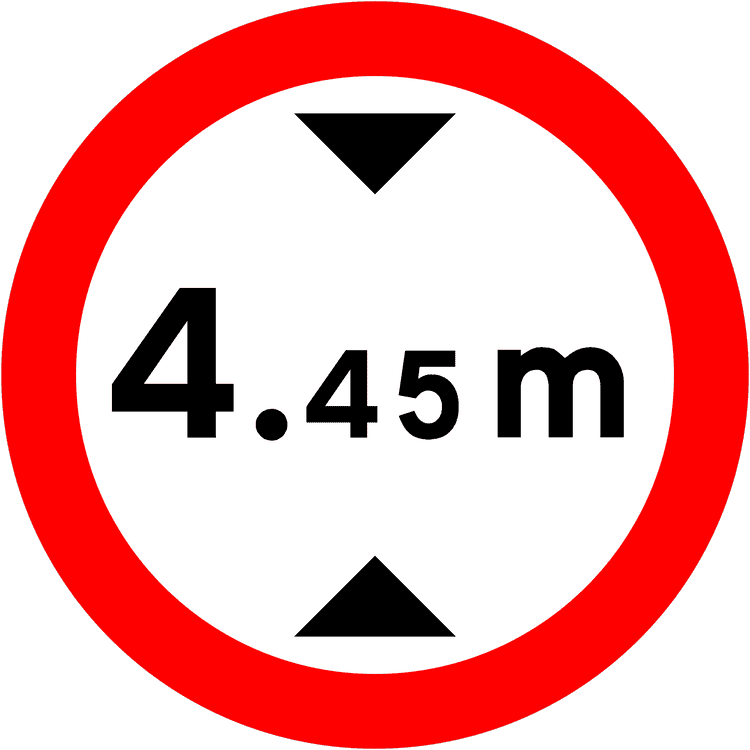
A regulatory road sign in Ireland enforcing height restriction. Essential for the Driving Theory Test.

Height Restriction

Category

Regulatory

Difficulty

Intermediate

What Does This Sign Mean?

Maximum vehicle height permitted under structure.

Key Points:

⛔ Vehicles taller than the height shown are prohibited.
🌉 This restriction is usually for a low bridge, tunnel, or car park.
🚚 Drivers of high vehicles must find an alternative route.

Related Regulatory signs

  • A regulatory road sign in Ireland enforcing maximum vehicle width. Essential for the Driving Theory Test.

    Maximum Vehicle Width

  • A regulatory road sign in Ireland enforcing maximum vehicle length. Essential for the Driving Theory Test.

    Maximum Vehicle Length

  • A regulatory road sign in Ireland enforcing restriction on parking – specified events. Essential for the Driving Theory Test.

    Restriction on Parking – Specified Events

  • A regulatory road sign in Ireland enforcing rural speed limit. Essential for the Driving Theory Test.

    Rural Speed Limit

  • A regulatory road sign in Ireland enforcing maximum gross weight. Essential for the Driving Theory Test.

    Maximum Gross Weight

  • A regulatory road sign in Ireland enforcing maximum gross weight (traffic management). Essential for the Driving Theory Test.

    Maximum Gross Weight (Traffic Management)

Complete Guide to This Sign

Where You'll Find This Sign

Height restriction signs appear before low bridges (particularly railway overbridges), tunnel entrances, multi-story car parks, and covered loading areas throughout Ireland.

Common locations include railway bridges on rural R-roads and L-roads where historical railway construction created low clearances (3.0-4.0 metres typical), Dublin Port Tunnel (4.65m restriction preventing most double-decker buses and tall trucks), multi-story car parks in urban centers (typically 2.0-2.2m clearance), and some heritage stone arch bridges.

The N11 through Bray features multiple low railway bridges with height restrictions.

Rural areas with narrow-gauge railway heritage (West Cork, parts of Kerry, Connemara) sometimes retain low bridge structures.

Signs display maximum permitted height in metres (e.g., '3.0m', '4.2m'), positioned 50-200 metres before the restriction with repeat signs immediately before the structure.

High-sided vehicles include double-decker buses, tall goods vehicles, coaches, horseboxes, caravans, vehicle transporters, and agricultural equipment.

What This Means for Drivers

This sign prohibits vehicles exceeding the displayed height from proceeding—the numerical value shows maximum clearance in metres from road surface to lowest point of the structure (bridge soffit, tunnel ceiling, car park ceiling).

The restriction applies to total vehicle height including any loads, roof racks, antennas, or equipment extending above the vehicle.

Drivers of high vehicles must know their vehicle heights: HGVs have heights marked on cab instruments, but van and car drivers with roof loads must estimate heights accurately.

The displayed restriction typically includes a small safety margin (10-20cm) below actual structural clearance, but drivers must not rely on this—vehicles matching or exceeding the signed height are prohibited.

High-sided vehicles encountering height restrictions must find alternative routes, often requiring significant detours particularly in areas with railway networks creating multiple low bridges.

The prohibition aims to prevent bridge strikes—collisions between vehicles and bridges causing structural damage, traffic delays, and potential collapses.

Penalties & Legal Consequences

Bridge strikes (collisions with height-restricted bridges) result in serious consequences: dangerous driving charges (€5,000, 5 penalty points, disqualification) given the obvious and avoidable nature of violations, infrastructure damage costs (€10,000-€500,000+ depending on damage severity) billed to vehicle owners/operators, and potential vehicular manslaughter charges if collapses cause fatalities.

Irish Rail, local authorities, and Transport Infrastructure Ireland pursue full cost recovery for bridge damage.

Commercial vehicle operators whose drivers cause bridge strikes face operator license reviews and potential suspensions.

Insurance companies may deny coverage for height restriction violations—policies often exclude damage from willful regulatory violations.

Vehicles stuck under bridges cause traffic disruptions potentially costing thousands in emergency response and traffic management.

Professional drivers (HGV, bus, coach) face particularly harsh scrutiny for bridge strikes as height awareness is fundamental professional competency.

Route planning failures leading to height restriction encounters may establish gross negligence in commercial operations.

Some bridge strike prosecutions result in prison sentences when negligence caused deaths.

Appears in Driving Test?

Theory test questions about height restrictions emphasize understanding that signs prohibit vehicles exceeding displayed heights, recognition that displayed heights include all loads and roof equipment, and knowledge that drivers must know their vehicle heights.

Questions assess understanding of why height restrictions exist (preventing bridge strikes, structural damage), consequences of violations (infrastructure damage, dangerous driving charges), and appropriate responses when encountering unexpected height restrictions (find alternative routes, not chance passage).

Scenario questions test whether candidates understand that height restrictions are absolute prohibitions, not advisory warnings.

Practical car driving tests don't assess height restriction compliance directly (standard test vehicles are well below typical restrictions), but theory knowledge covers professional driving standards.

HGV and bus practical tests specifically assess route planning including height restriction awareness, with examiners expecting candidates to demonstrate knowledge of vehicle heights and ability to recognize and respond to height restriction signs appropriately.

Frequently Asked Questions about the Height Restriction Sign

What does the Height Restriction sign mean in Ireland?

In Ireland, the Height Restriction sign indicates: Maximum vehicle height permitted under structure. Understanding this is crucial for safe driving and passing your DTT.

What type of sign is the Height Restriction?

The "Height Restriction" is officially classified as part of the REGULATORY group in Ireland. Like other signs of this type, it alerts drivers to specific rules, hazards, or information they must immediately observe.

Will the Height Restriction sign appear on the Irish Theory Test?

Yes, you should expect the Height Restriction sign to appear on your Irish Driving Theory Test (DTT). You must be able to identify it as a REGULATORY and know what it requires from you as a driver.

●Live App Updates

Master Irish Signs on Mobile

Get instant access to 400+ signs, interactive quizzes, and progress tracking. Download the free app today!

🍎
Download on
App Store
🤖
Get it on
Google Play