Irish Traffic Signs Logo
Irish Traffic Signs
SignsBlogPenalty PointsAppFAQHelp CenterFavorites
Irish Traffic Signs

Learn Irish traffic signs with visual matching quizzes and detailed explanations. Free platform for drivers preparing for their test.

Learn

  • Traffic Signs
  • Interactive Quiz
  • Mobile App

Support

  • Help Center
  • FAQ
  • Penalty Points

Company

  • About Us
  • Privacy Policy
  • Terms of Service

© 2026 Irish Traffic Signs. All rights reserved.

This is not an official application. It is prepared for educational purposes.

Made with ❤️ for Irish drivers

HomeRegulatory SignsMaximum Gross Weight (Traffic Management)
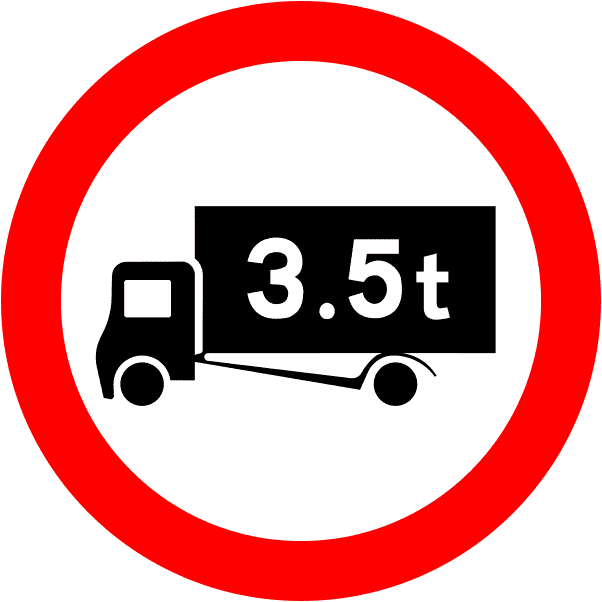
A regulatory road sign in Ireland enforcing maximum gross weight (traffic management). Essential for the Driving Theory Test.

Maximum Gross Weight (Traffic Management)

Category

Regulatory

Difficulty

Intermediate

What Does This Sign Mean?

Gross weight cap for flow or protection.

Key Points:

⛔ Vehicles with a total weight exceeding the amount shown are prohibited.
⚖️ This is often used to keep heavy traffic out of residential areas.
🗺️ Find an alternative route if your vehicle is overweight.

Related Regulatory signs

  • A regulatory road sign in Ireland enforcing maximum gross weight. Essential for the Driving Theory Test.

    Maximum Gross Weight

  • A regulatory road sign in Ireland enforcing maximum axle weight. Essential for the Driving Theory Test.

    Maximum Axle Weight

  • A regulatory road sign in Ireland enforcing height restriction. Essential for the Driving Theory Test.

    Height Restriction

  • A regulatory road sign in Ireland enforcing school warden. Essential for the Driving Theory Test.

    School Warden

  • A regulatory road sign in Ireland enforcing rural speed limit. Essential for the Driving Theory Test.

    Rural Speed Limit

  • A regulatory road sign in Ireland enforcing maximum vehicle width. Essential for the Driving Theory Test.

    Maximum Vehicle Width

Complete Guide to This Sign

Where You'll Find This Sign

Maximum Gross Weight (Traffic Management) restrictions appear at entry points to areas where heavy vehicle access is restricted for environmental, safety, or quality-of-life reasons rather than structural concerns.

Common locations include residential estates throughout Dublin suburbs (Rathfarnham, Terenure, Clontarf), Cork city residential areas, Galway suburbs, and village centers throughout Ireland where community pressure prompted heavy vehicle restrictions.

Typical restrictions range from 3-7.5 tonnes gross vehicle weight (GVW), prohibiting most trucks while allowing vans and light commercial vehicles.

You'll see these at town center entries (Kinsale, Dingle, Kilkenny historic quarter) protecting narrow streets and heritage buildings from heavy vehicle impacts, and on scenic routes (Ring of Kerry, Conor Pass at certain times) managing tourist traffic.

Time-based restrictions sometimes apply (7am-7pm weekdays, exempting evening/weekend deliveries).

Signs feature circular red borders with truck symbols and tonnage limits, often supplemented by 'Except for Access' or 'Except Loading' plates allowing local deliveries.

What This Means for Drivers

This sign prohibits vehicles with gross vehicle weight (total laden weight) exceeding the displayed limit from entering or using the signed road or area, implemented for traffic management rather than structural protection.

Gross vehicle weight includes vehicle chassis, body, fuel, cargo, passengers, and equipment—the total weight borne by all axles combined.

The restriction aims to keep heavy through-traffic out of inappropriate areas while sometimes allowing local access: deliveries to businesses within the zone, service vehicles (waste collection, utilities), and residents' vehicles. 'Except for Access' plates modify restrictions allowing vehicles serving destinations within the zone but prohibiting through-traffic.

Drivers of heavy vehicles must verify whether exemptions apply to their purposes, and must use shortest practicable routes when exemptions permit entry.

The distinction from structural weight limits: these restrictions could often accommodate heavy vehicles physically but prohibit them for environmental or community benefit.

Penalties & Legal Consequences

Violations of traffic management weight restrictions carry fixed penalties (€80, 2 penalty points) for non-compliance with traffic signs.

Commercial vehicle operators face additional sanctions: operator license reviews for repeated violations, and prohibition orders preventing further operation until compliance is assured.

Local authority traffic wardens and Gardaí enforce these restrictions, sometimes using automated number plate recognition (ANPR) cameras cross-referenced with vehicle registration databases identifying vehicle weights.

Vehicles claiming 'access' exemptions must prove legitimate business within the zone—through-traffic using access exemptions face full penalties without exemption.

Businesses repeatedly receiving unauthorized heavy vehicle deliveries may face planning enforcement issues.

Insurance assessments examine whether vehicles complied with weight restrictions—violations establish contributory negligence in collision scenarios.

Communities with heavy vehicle restrictions often have active residents' associations reporting violations, leading to targeted enforcement campaigns.

Appears in Driving Test?

Theory test questions about weight restrictions distinguish between structural limits (protecting bridges) and traffic management limits (protecting communities), and assess understanding of gross vehicle weight versus axle weight.

Questions cover recognition of weight restriction signs, understanding of 'Except for Access' exemptions, and appropriate compliance by different vehicle types.

HGV theory tests include detailed questions about when traffic management weight restrictions apply, what constitutes legitimate 'access,' and route planning avoiding restricted zones.

Practical HGV tests assess: knowledge of test vehicle gross weight, ability to recognize and interpret weight restriction signs, understanding of exemption conditions, and route planning complying with restrictions while maintaining operational efficiency.

Examiners expect candidates to demonstrate understanding that weight restrictions serve multiple purposes with different legal bases, and that compliance requires knowing vehicle specifications and restriction purposes.

Frequently Asked Questions about the Maximum Gross Weight (Traffic Management) Sign

What does the Maximum Gross Weight (Traffic Management) sign mean in Ireland?

In Ireland, the Maximum Gross Weight (Traffic Management) sign indicates: Gross weight cap for flow or protection. Understanding this is crucial for safe driving and passing your DTT.

What type of sign is the Maximum Gross Weight (Traffic Management)?

The "Maximum Gross Weight (Traffic Management)" is officially classified as part of the REGULATORY group in Ireland. Like other signs of this type, it alerts drivers to specific rules, hazards, or information they must immediately observe.

Will the Maximum Gross Weight (Traffic Management) sign appear on the Irish Theory Test?

Yes, you should expect the Maximum Gross Weight (Traffic Management) sign to appear on your Irish Driving Theory Test (DTT). You must be able to identify it as a REGULATORY and know what it requires from you as a driver.

●Live App Updates

Master Irish Signs on Mobile

Get instant access to 400+ signs, interactive quizzes, and progress tracking. Download the free app today!

🍎
Download on
App Store
🤖
Get it on
Google Play