Irish Traffic Signs Logo
Irish Traffic Signs
SignsBlogPenalty PointsAppFAQHelp CenterFavorites
Irish Traffic Signs

Learn Irish traffic signs with visual matching quizzes and detailed explanations. Free platform for drivers preparing for their test.

Learn

  • Traffic Signs
  • Interactive Quiz
  • Mobile App

Support

  • Help Center
  • FAQ
  • Penalty Points

Company

  • About Us
  • Privacy Policy
  • Terms of Service

© 2026 Irish Traffic Signs. All rights reserved.

This is not an official application. It is prepared for educational purposes.

Made with ❤️ for Irish drivers

HomeWarning SignsDual Carriageway Ends
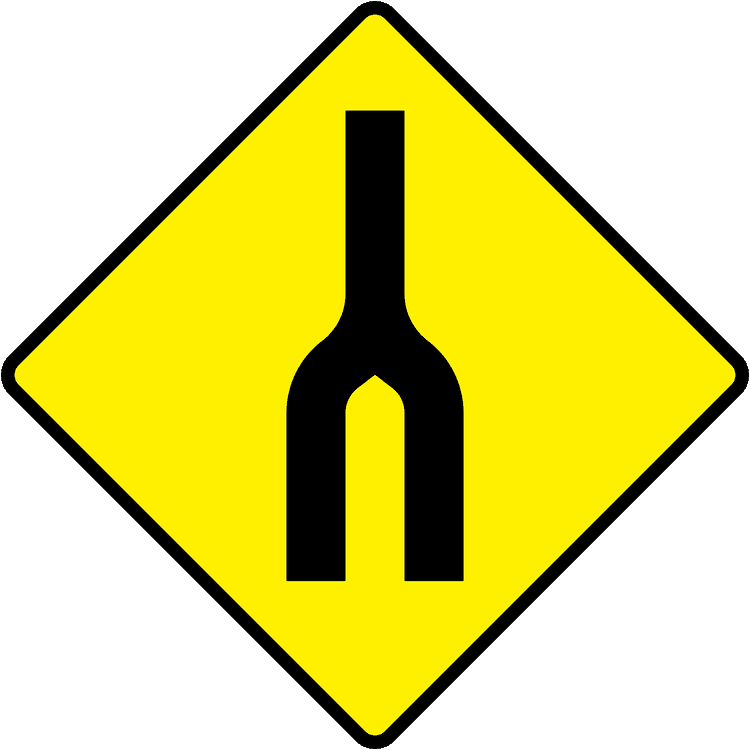
A triangular warning traffic sign in Ireland depicting dual carriageway ends. Memorize for DTT.

Dual Carriageway Ends

Category

Warning

Difficulty

Intermediate

What Does This Sign Mean?

Separation ends and two-way opposing traffic resumes.

Key Points:

↕️ The divided highway is ending ahead.
🚗 Prepare for two-way traffic with oncoming vehicles.
⚠️ Stay in your lane and be aware of opposing cars.

Related Warning signs

  • A triangular warning traffic sign in Ireland depicting crossroads ahead at dual c'way. Memorize for DTT.

    Crossroads Ahead at Dual C'way

  • A triangular warning traffic sign in Ireland depicting crossroads on dual c'way. Memorize for DTT.

    Crossroads on Dual C'way

  • A triangular warning traffic sign in Ireland depicting t junction ahead at dual c'way (no cr break). Memorize for DTT.

    T Junction Ahead at Dual C'way (No CR Break)

  • A triangular warning traffic sign in Ireland depicting two-way traffic. Memorize for DTT.

    Two-way Traffic

  • A triangular warning traffic sign in Ireland depicting two-way traffic crossing. Memorize for DTT.

    Two-way Traffic Crossing

  • A triangular warning traffic sign in Ireland depicting t junction ahead at dual c'way (with cr break). Memorize for DTT.

    T Junction Ahead at Dual C'way (With CR Break)

Complete Guide to This Sign

Where You'll Find This Sign

This sign appears where dual carriageways transition to single carriageways, common on National Primary Routes throughout Ireland.

Locations include the N7 where dual carriageway sections end near Limerick, the N11 Wexford route transitions, sections of the N25 between Cork and Waterford, and where M50 slip roads merge onto single-carriageway distributor roads.

The sign also appears where dual carriageway bypasses around towns transition back to older single-carriageway routes.

What This Means for Drivers

The physical barrier or median separating opposing traffic lanes is about to end.

You will transition from a divided highway to a single carriageway with oncoming traffic sharing the same road surface.

Check your position—ensure you are in the correct lane for your direction.

Do not drift toward the center.

Reduce speed if you have been traveling at motorway speeds.

Be prepared for a significant change in road character—the single carriageway may have bends, junctions, and lower speed limits.

Penalties & Legal Consequences

Failing to adjust to single-carriageway conditions can result in serious charges.

Continuing at dual carriageway speeds where inappropriate for the new road constitutes careless driving: 2 penalty points and fines to €2,000.

Drifting across the center line into oncoming traffic results in dangerous driving charges: 5 penalty points, fines to €5,000, imprisonment, and disqualification.

Head-on collisions caused by failure to observe this transition often result in dangerous driving causing death charges with up to 10 years imprisonment.

Appears in Driving Test?

Theory test questions cover the meaning of dual carriageway transition signs and appropriate driver responses.

You must understand that dual carriageway ends means oncoming traffic will share your road surface.

During practical tests, if you encounter this transition, examiners assess whether you recognize the sign early, check your lane position, adjust speed appropriately for single-carriageway conditions, and demonstrate heightened awareness for oncoming traffic.

Maintaining dual carriageway speeds beyond the transition results in Grade 2 faults.

Incorrect positioning near the center line results in Grade 3 failure.

Frequently Asked Questions about the Dual Carriageway Ends Sign

What does the Dual Carriageway Ends sign mean in Ireland?

In Ireland, the Dual Carriageway Ends sign indicates: Separation ends and two-way opposing traffic resumes. Understanding this is crucial for safe driving and passing your DTT.

What type of sign is the Dual Carriageway Ends?

The "Dual Carriageway Ends" is officially classified as part of the WARNING group in Ireland. Like other signs of this type, it alerts drivers to specific rules, hazards, or information they must immediately observe.

Will the Dual Carriageway Ends sign appear on the Irish Theory Test?

Yes, you should expect the Dual Carriageway Ends sign to appear on your Irish Driving Theory Test (DTT). You must be able to identify it as a WARNING and know what it requires from you as a driver.

●Live App Updates

Master Irish Signs on Mobile

Get instant access to 400+ signs, interactive quizzes, and progress tracking. Download the free app today!

🍎
Download on
App Store
🤖
Get it on
Google Play